
picapauzinho-pintado vs picapauzinho-da-várzea
Picumnus pygmaeus versus Picumnus varzeae
Jogue um quiz com picapauzinho-pintado e picapauzinho-da-várzea
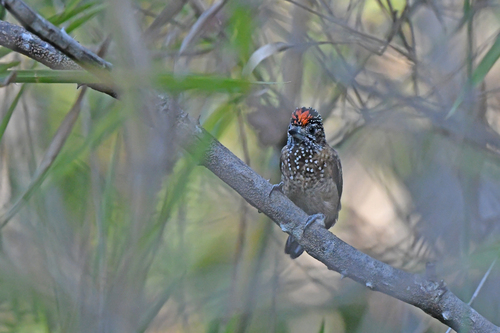 picapauzinho-pintado
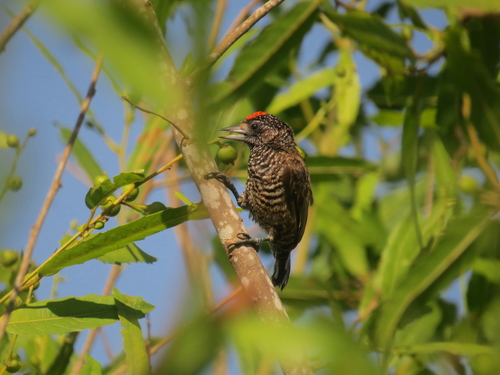 picapauzinho-da-várzea
Em resumo
A marca de campo mais confiável entre o picapauzinho-pintado e o picapauzinho-da-várzea é o tom geral das partes superiores e o padrão das partes inferiores, especialmente em juvenis e aves empoleiradas. O picapauzinho-pintado é ligeiramente maior e apresenta um marrom mais escuro e uniforme acima, com manchas pretas e brancas proeminentes abaixo, enquanto o picapauzinho-da-várzea é menor, tem um tom mais verde ou marrom-oliva nas partes superiores, e suas partes inferiores frequentemente mostram mais listras ou fileiras de pontas pretas e brancas, especialmente em juvenis. Ambas as espécies compartilham um padrão de touca semelhante em machos adultos, mas diferenças sutis no padrão da cauda e na qualidade das marcas das partes inferiores ajudam a separá-las. Em voo, observe o tom das partes superiores e a extensão do branco na cauda.
Dicas de identificação
- Padrão das partes inferiores em juvenis: O juvenil do picapauzinho-pintado apresenta partes inferiores mais apagadas, mas ainda manchadas, enquanto o juvenil do picapauzinho-da-várzea tem mais listras ou fileiras de pontas pretas e brancas. Procure por manchas (Pintado) versus listras/fileiras (Várzea) na barriga e flancos.
- Tom das partes superiores em adultos: O picapauzinho-pintado é marrom escuro acima, enquanto o picapauzinho-da-várzea é marrom-oliva escuro ou verde. Em boa luz, um tom mais verde ou oliva sugere Várzea.
- Partes inferiores em adultos: O picapauzinho-pintado tem grandes e ousadas manchas pretas e brancas em partes inferiores marrons a ruivas. O picapauzinho-da-várzea mostra fileiras mais sutis de pontas pretas e brancas, frequentemente dando um efeito listrado ou alinhado em vez de manchas discretas.
- Padrão da touca (machos): Ambos têm uma touca preta com uma mancha vermelha, mas o vermelho do picapauzinho-da-várzea se estende mais para trás na coroa, enquanto o do picapauzinho-pintado é restrito à testa. Isso é sutil e pode ser difícil de julgar, a menos que o pássaro esteja parado e próximo.
- Padrão da cauda: Ambos têm branco na cauda, mas o picapauzinho-pintado mostra manchas brancas maiores perto da extremidade das penas da cauda externa, enquanto o picapauzinho-da-várzea tem uma faixa branca mais estreita. Isso é melhor visto em aves empoleiradas com caudas abertas ou em voo.
- Padrão do rosto: Ambos têm um rosto predominantemente marrom escuro, mas o do picapauzinho-pintado tem pontas brancas em algumas penas, enquanto o do picapauzinho-da-várzea tem pontas pretas e brancas. Essa é uma diferença menor e nem sempre confiável.
- Queixo e garganta: O queixo e a garganta do picapauzinho-pintado são pretos e brancos em um padrão variável; os do picapauzinho-da-várzea são marrom-preto com finas marcas brancas. Procure por uma garganta mais uniforme e finamente marcada em Várzea.
- Diferenças sexuais: As fêmeas de ambas as espécies não têm vermelho na cabeça, portanto, não confie nisso para a separação das espécies.
- Bico e pernas: Apenas as cores das partes nuas do picapauzinho-da-várzea são descritas (bico preto com base azul-acinzentada, pernas cinzas), mas essas não são contrastadas para o picapauzinho-pintado e podem não ser confiáveis em campo.
- Tamanho: O picapauzinho-pintado é ligeiramente maior (10 cm vs. 8–9 cm), mas isso é sutil e não sempre útil, a menos que ambas as espécies estejam presentes.
- Habitat: Na várzea amazônica (floresta sazonalmente alagada), o picapauzinho-da-várzea é mais provável. Em outros habitats brasileiros, espera-se o picapauzinho-pintado.
- Visões em voo: Em voo, observe o tom geral das partes superiores (marrom vs. oliva/verde) e o padrão de branco na cauda (manchas mais largas no Pintado, faixas mais estreitas na Várzea).
- Desgaste e muda da plumagem: Os juvenis de ambas as espécies diferem dos adultos, então tenha cautela com aves que mostram marcas mais apagadas ou menos distintas—verifique por listras (Várzea) versus manchas (Pintado).
- Armadilhas: Ambas as espécies podem parecer semelhantes à primeira vista, especialmente fêmeas e juvenis. Foque no padrão das partes inferiores e no tom das partes superiores como as marcas de campo mais consistentes.
- Não diagnóstico: Nenhuma diferença em vocalizações ou comportamento é dada, então não use isso para separação.
Tamanho
O picapauzinho-pintado é ligeiramente maior, com uma média de cerca de 10 cm (3,9 pol.) de comprimento, enquanto o picapauzinho-da-várzea é menor, com 8–9 cm (3,1–3,5 pol.). Essa diferença pode ser sutil em campo, mas pode ser notável se ambos forem vistos juntos ou com referências diretas de tamanho. Ambos são pequenos pica-paus, mas o picapauzinho-pintado pode parecer um pouco mais robusto ou ter um bico mais longo, embora as notas não especifiquem diferenças no bico.
Plumagem
- Juvenis: Os juvenis do picapauzinho-pintado são mais apagados do que os adultos, com manchas inferiores menos distintas, mas ainda mostram grandes manchas pretas e brancas nas partes inferiores. Os juvenis do picapauzinho-da-várzea são semelhantes aos adultos, mas têm mais listras nas partes inferiores, que podem aparecer como fileiras de pontas pretas e brancas em vez de manchas discretas. Essa diferença no padrão das partes inferiores é frequentemente a melhor pista em aves imaturas.
- Adultos (machos): Ambos têm uma touca preta com uma mancha vermelha na testa, mas o vermelho do picapauzinho-da-várzea se estende mais para trás na coroa. As partes superiores do picapauzinho-pintado são marrom escuro com pontas pretas e brancas, enquanto as do picapauzinho-da-várzea são marrom-oliva escuro a marrom-esverdeado, às vezes com barras pretas fracas. As partes inferiores do picapauzinho-pintado são de marrom claro a escuro (frequentemente com tons ruivos) com grandes manchas pretas e brancas; as do picapauzinho-da-várzea são marrons ou marrom-esverdeadas com pontas de penas pretas e brancas em fileiras, dando uma aparência mais alinhada ou listrada.
- Cauda: Ambas as espécies têm caudas escuras com branco nas teias internas do par mais interno e manchas ou faixas brancas nos pares externos, mas as manchas brancas do picapauzinho-pintado são mais proeminentes, enquanto as do picapauzinho-da-várzea são faixas mais estreitas.
- Fêmeas: Ambas não têm vermelho na testa/coroa, mas seguem as mesmas distinções de padrão que os machos.
Comportamento
Nenhuma diferença comportamental diagnóstica é descrita nas notas. Ambas as espécies são pequenos pica-paus ativos, propensos a forragear de maneiras semelhantes, e nenhuma diferença no estilo de voo ou comportamento de forrageio é notada.
Habitat
Ambas as espécies são endêmicas do Brasil, mas o picapauzinho-da-várzea é especificamente notado como ocorrendo na bacia amazônica, frequentemente associado a habitats de florestas de várzea (sazonalmente alagadas). O picapauzinho-pintado também é endêmico do Brasil, mas não é especificado como restrito a habitats de várzea ou amazônicos. Se a localização for uma floresta amazônica sazonalmente alagada, o picapauzinho-da-várzea é mais provável; em outros lugares do Brasil, espera-se o picapauzinho-pintado.
picapauzinho-pintado · picapauzinho-da-várzea · Minhas aves difíceis