
Tawny-winged Woodcreeper vs Wedge-billed Woodcreeper
Dendrocincla anabatina contro Glyphorynchus spirurus
Fai un quiz con Tawny-winged Woodcreeper e Wedge-billed Woodcreeper
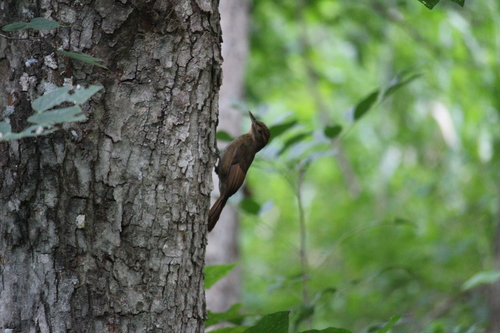 Tawny-winged Woodcreeper
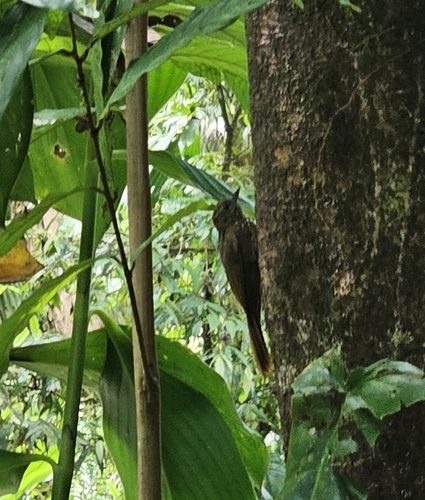 Wedge-billed Woodcreeper
In breve
Il Tawny-winged Woodcreeper e il Wedge-billed Woodcreeper possono essere distinti principalmente dalla forma del becco e dal piumaggio. Il Tawny-winged ha un becco dritto e un aspetto leggermente crestato, mentre il Wedge-billed presenta un becco distintivo a forma di cuneo. Entrambe le specie si trovano in habitat forestali ma differiscono nelle loro vocalizzazioni e nelle preferenze specifiche dell'habitat.
Consigli di identificazione
La forma del becco è il segno di campo più affidabile: cerca il becco dritto del Tawny-winged Woodcreeper rispetto al becco a forma di cuneo del Wedge-billed Woodcreeper. Nota l'aspetto leggermente crestato del Tawny-winged. Ascolta il richiamo secco e graffiante del Wedge-billed, specialmente in gruppi misti.
Piumaggio
Il Tawny-winged Woodcreeper è di un marrone oliva scuro con un supercilium e una gola marginalmente più chiari. Al contrario, i dettagli del piumaggio del Wedge-billed Woodcreeper non sono specificati, ma si implica che possa avere più variazioni a causa delle sue 13 sottospecie.
Habitat
Il Tawny-winged Woodcreeper preferisce le foreste sempreverdi umide, le mangrovie e la vegetazione semi-decidua, prevalentemente nelle pianure ma può salire fino a 1500 m. Il Wedge-billed Woodcreeper si trova spesso in gruppi misti di specie, indicando una gamma più ampia di habitat forestali.
Voce
Il Wedge-billed Woodcreeper è noto per il suo richiamo secco e graffiante, che si sente regolarmente, mentre le vocalizzazioni del Tawny-winged Woodcreeper non sono dettagliate.
Tawny-winged Woodcreeper · Wedge-billed Woodcreeper · I miei uccelli difficili