
Birdr

Tawny-winged Woodcreeper vs Wedge-billed Woodcreeper

Dendrocincla anabatina versus Glyphorynchus spirurus

Play a quiz with Tawny-winged Woodcreeper and Wedge-billed Woodcreeper
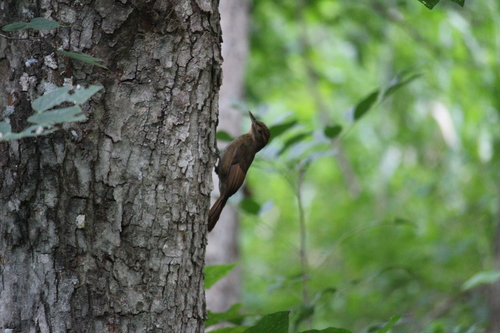
Tawny-winged Woodcreeper (Dendrocincla anabatina) Tawny-winged Woodcreeper
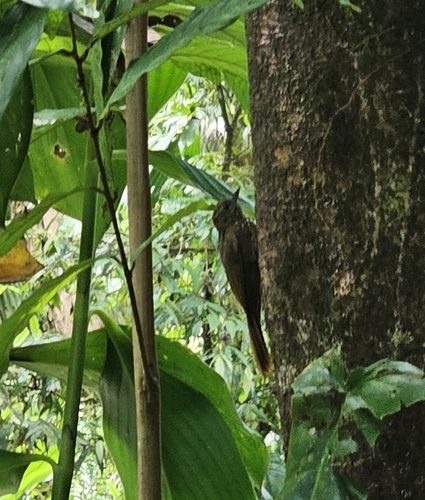
Wedge-billed Woodcreeper (Glyphorynchus spirurus) Wedge-billed Woodcreeper

Media

Loading…

In short

The Wedge-billed Woodcreeper (Glyphorynchus spirurus) and the Tawny-winged Woodcreeper (Dendrocincla anabatina) can be distinguished by their size, plumage characteristics, and preferred habitats. The Wedge-billed Woodcreeper has a more slender build with a distinctive wedge-shaped bill and a varied plumage based on subspecies, while the Tawny-winged Woodcreeper features a darker olive-brown coloration with tawny wings and a straight bill, often found in more humid environments.

Identification tips

  1. Birds of the World Similar-Species Diagnostics:
  2. "The Tawny-winged Woodcreeper is characterized by its dark olive-brown plumage, slightly crested appearance, and straight bill, which contrast with the Wedge-billed Woodcreeper’s more variable coloration and wedge-shaped bill." (Based on the expert references)

  3. AI Field Diagnostics:

  4. Look for size differences: the Tawny-winged Woodcreeper is generally larger than the Wedge-billed Woodcreeper.
  5. Pay attention to the bill shape: the Wedge-billed Woodcreeper has a wedge-shaped bill that is easily noticeable, while the Tawny-winged has a straight bill.
  6. Observe plumage: the Tawny-winged Woodcreeper’s olive-brown coloration with tawny wings is a significant identifier, compared to the more streaky and variable plumage of the Wedge-billed Woodcreeper.
  7. Consider habitat: if you are in a humid evergreen forest or mangrove, it’s more likely you’re observing a Tawny-winged Woodcreeper. In more varied forest types, you might encounter the Wedge-billed Woodcreeper.
  8. Listen for calls: the dry, scratchy call of the Wedge-billed Woodcreeper is often heard more frequently than the calls of the Tawny-winged Woodcreeper, which tends to be less vocal.

Utilizing these identifying features will significantly enhance the birdwatcher's ability to distinguish between these two woodcreeper species in the field.

Size

The Wedge-billed Woodcreeper typically measures about 20-25 cm in length, with a relatively slender body. In contrast, the Tawny-winged Woodcreeper is slightly larger, averaging around 23-27 cm. Both species exhibit a similar wingspan, but the Wedge-billed Woodcreeper's more elongated bill gives it a distinct profile.

Plumage

The Wedge-billed Woodcreeper generally has a variable coloration depending on its subspecies but is often characterized by a brown and white streaked pattern. Its most distinctive feature is its wedge-shaped bill. The Tawny-winged Woodcreeper, however, has a uniform dark olive-brown plumage with slightly paler underparts and a notable tawny color on the wings. The Tawny-winged Woodcreeper also exhibits a slight crest, which can help differentiate it from the flatter-headed Wedge-billed Woodcreeper.

Behaviour

Both species are known for their foraging habits, gleaning insects and arthropods from tree bark and lichen. However, the Wedge-billed Woodcreeper is often found in mixed-species flocks, indicating a more social feeding strategy. The Tawny-winged Woodcreeper tends to be more solitary or found in pairs and is often seen in lower forest strata.

Habitat

The Wedge-billed Woodcreeper is adaptable and can be found in a variety of forest types, including both humid and semi-deciduous forests. It is, however, predominantly associated with lowland areas. The Tawny-winged Woodcreeper prefers humid evergreen forests and mangroves, showing a strong affinity for lowland forests but can ascend to higher elevations up to 1500 m in some regions.

Voice

The Wedge-billed Woodcreeper produces a dry, scratchy call that is frequently heard in its habitat, with a less common song that varies regionally. The Tawny-winged Woodcreeper, while it also has a distinct call, is less vocal overall, typically using its calls to communicate in the dense foliage of its humid forest habitat.

Submit a better description

Use the same sections as the comparison. Your text is published immediately.

The Wedge-billed Woodcreeper (Glyphorynchus spirurus) and the Tawny-winged Woodcreeper (Dendrocincla anabatina) can be distinguished by their size, plumage characteristics, and preferred habitats. The Wedge-billed Woodcreeper has a more slender build with a distinctive wedge-shaped bill and a varied plumage based on subspecies, while the Tawny-winged Woodcreeper features a darker olive-brown coloration with tawny wings and a straight bill, often found in more humid environments.

  1. Birds of the World Similar-Species Diagnostics:
  2. "The Tawny-winged Woodcreeper is characterized by its dark olive-brown plumage, slightly crested appearance, and straight bill, which contrast with the Wedge-billed Woodcreeper’s more variable coloration and wedge-shaped bill." (Based on the expert references)

  3. AI Field Diagnostics:

  4. Look for size differences: the Tawny-winged Woodcreeper is generally larger than the Wedge-billed Woodcreeper.
  5. Pay attention to the bill shape: the Wedge-billed Woodcreeper has a wedge-shaped bill that is easily noticeable, while the Tawny-winged has a straight bill.
  6. Observe plumage: the Tawny-winged Woodcreeper’s olive-brown coloration with tawny wings is a significant identifier, compared to the more streaky and variable plumage of the Wedge-billed Woodcreeper.
  7. Consider habitat: if you are in a humid evergreen forest or mangrove, it’s more likely you’re observing a Tawny-winged Woodcreeper. In more varied forest types, you might encounter the Wedge-billed Woodcreeper.
  8. Listen for calls: the dry, scratchy call of the Wedge-billed Woodcreeper is often heard more frequently than the calls of the Tawny-winged Woodcreeper, which tends to be less vocal.

Utilizing these identifying features will significantly enhance the birdwatcher's ability to distinguish between these two woodcreeper species in the field.

The Wedge-billed Woodcreeper typically measures about 20-25 cm in length, with a relatively slender body. In contrast, the Tawny-winged Woodcreeper is slightly larger, averaging around 23-27 cm. Both species exhibit a similar wingspan, but the Wedge-billed Woodcreeper's more elongated bill gives it a distinct profile.

The Wedge-billed Woodcreeper generally has a variable coloration depending on its subspecies but is often characterized by a brown and white streaked pattern. Its most distinctive feature is its wedge-shaped bill. The Tawny-winged Woodcreeper, however, has a uniform dark olive-brown plumage with slightly paler underparts and a notable tawny color on the wings. The Tawny-winged Woodcreeper also exhibits a slight crest, which can help differentiate it from the flatter-headed Wedge-billed Woodcreeper.

Both species are known for their foraging habits, gleaning insects and arthropods from tree bark and lichen. However, the Wedge-billed Woodcreeper is often found in mixed-species flocks, indicating a more social feeding strategy. The Tawny-winged Woodcreeper tends to be more solitary or found in pairs and is often seen in lower forest strata.

The Wedge-billed Woodcreeper is adaptable and can be found in a variety of forest types, including both humid and semi-deciduous forests. It is, however, predominantly associated with lowland areas. The Tawny-winged Woodcreeper prefers humid evergreen forests and mangroves, showing a strong affinity for lowland forests but can ascend to higher elevations up to 1500 m in some regions.

The Wedge-billed Woodcreeper produces a dry, scratchy call that is frequently heard in its habitat, with a less common song that varies regionally. The Tawny-winged Woodcreeper, while it also has a distinct call, is less vocal overall, typically using its calls to communicate in the dense foliage of its humid forest habitat.

Discard your changes?

You have unsaved edits. If you leave now, those changes will be lost.

Tawny-winged Woodcreeper · Wedge-billed Woodcreeper · My Tricky Birds