
tawny-winged woodcreeper vs arapaçu-bico-de-cunha
Dendrocincla anabatina versus Glyphorynchus spirurus
Jogue um quiz com tawny-winged woodcreeper e arapaçu-bico-de-cunha
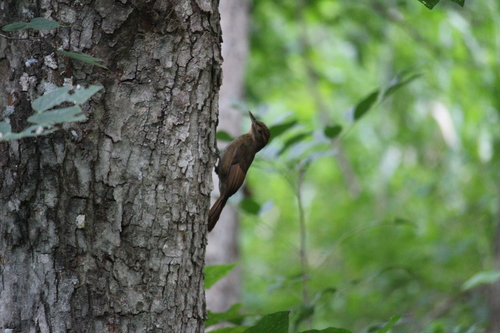 tawny-winged woodcreeper
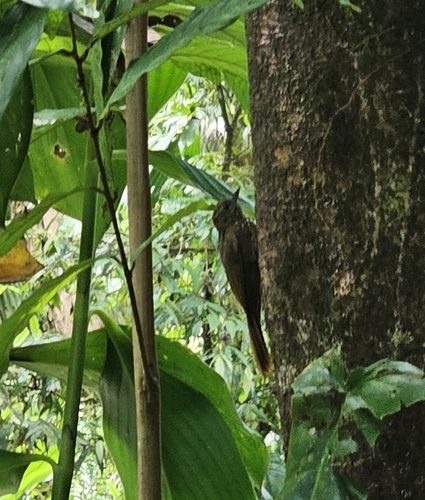 arapaçu-bico-de-cunha
Em resumo
O tawny-winged woodcreeper e o arapaçu-bico-de-cunha podem ser distinguidos principalmente pela forma do bico e pela plumagem. O tawny-winged tem um bico reto e uma aparência levemente crestada, enquanto o arapaçu-bico-de-cunha apresenta um bico distintamente em forma de cunha. Ambas as espécies são encontradas em habitats florestais, mas diferem em suas vocalizações e preferências específicas de habitat.
Dicas de identificação
A forma do bico é a marca de campo mais confiável: procure o bico reto do tawny-winged woodcreeper em comparação com o bico em forma de cunha do arapaçu-bico-de-cunha. Note a aparência levemente crestada do tawny-winged. Ouça o chamado seco e áspero do arapaçu-bico-de-cunha, especialmente em bandos mistos.
Plumagem
O tawny-winged woodcreeper é de cor marrom-oliva escura com um supercílios e garganta marginalmente mais claros. Em contraste, os detalhes da plumagem do arapaçu-bico-de-cunha não são especificados, mas é implícito que pode haver mais variação devido às suas 13 subespécies.
Habitat
O tawny-winged woodcreeper prefere florestas úmidas de sempre-vivas, manguezais e crescimento semi-decíduo, predominantemente em áreas de baixada, mas pode ascender até 1500 m. O arapaçu-bico-de-cunha é frequentemente encontrado em bandos de espécies mistas, indicando uma gama mais ampla de habitats florestais.
Voz
O arapaçu-bico-de-cunha é conhecido por seu chamado seco e áspero, que é ouvido regularmente, enquanto as vocalizações do tawny-winged woodcreeper não são detalhadas.
tawny-winged woodcreeper · arapaçu-bico-de-cunha · Minhas aves difíceis