
White-throated Spadebill vs Sepia-capped Flycatcher
Platyrinchus mystaceus contro Leptopogon amaurocephalus
Fai un quiz con White-throated Spadebill e Sepia-capped Flycatcher
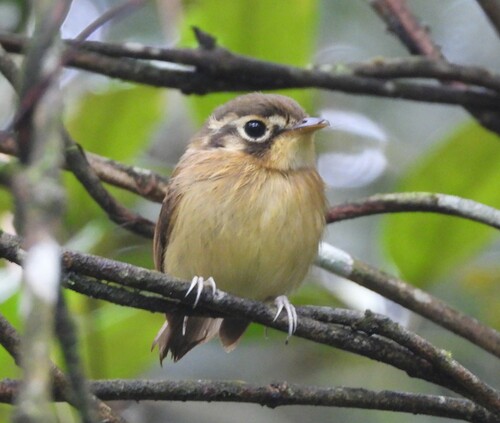 White-throated Spadebill
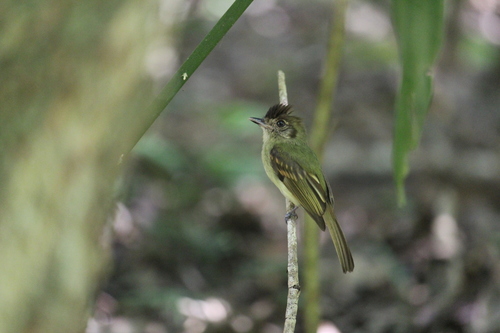 Sepia-capped Flycatcher
In breve
Il White-throated Spadebill e il Sepia-capped Flycatcher possono essere distinti dalle loro preferenze di habitat e vocalizzazioni. Lo Spadebill si trova tipicamente nel sottobosco delle foreste umide ed è meno comune a quote più elevate, mentre il Flycatcher è noto per la sua struttura del nido distintiva. Anche le vocalizzazioni differiscono, con il richiamo del Flycatcher che è notevolmente più grande del previsto per le sue dimensioni.
Consigli di identificazione
Ascolta la vocalizzazione più grande del previsto del Sepia-capped Flycatcher. Osserva l'habitat: il White-throated Spadebill è più probabile trovarlo nel denso sottobosco delle foreste umide.
Habitat
Il White-throated Spadebill abita il sottobosco delle foreste umide di pianura e montane, così come la vegetazione secondaria alta e le foreste galleria. È generalmente meno numeroso a quote più elevate. Il Sepia-capped Flycatcher non è specificamente noto per tali preferenze di habitat nelle note fornite.
Voce
La vocalizzazione del Sepia-capped Flycatcher è descritta come sorprendentemente grande per le sue dimensioni, suggerendo un richiamo più robusto rispetto al White-throated Spadebill.
White-throated Spadebill · Sepia-capped Flycatcher · I miei uccelli difficili