
Witkeelbreedbektiran vs Bruinkopoortiran
Platyrinchus mystaceus versus Leptopogon amaurocephalus
Speel een quiz met Witkeelbreedbektiran en Bruinkopoortiran
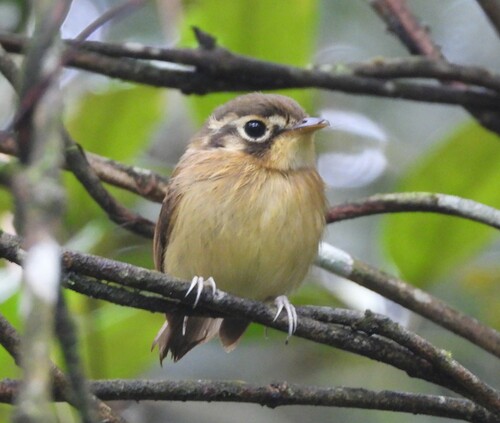 Witkeelbreedbektiran
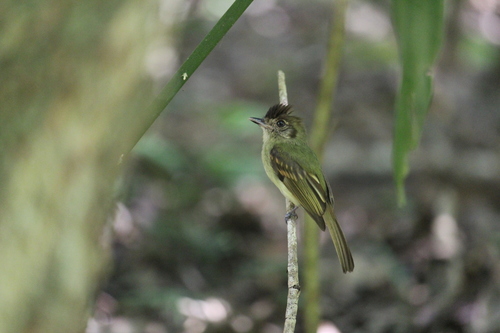 Bruinkopoortiran
Kort gezegd
De Witkeelbreedbektiran en Bruinkopoortiran kunnen worden onderscheiden op basis van hun habitatvoorkeuren en vocalisaties. De Breedbektiran wordt typisch aangetroffen in de ondergroei van vochtige bossen en is minder gebruikelijk op hogere hoogtes, terwijl de Flycatcher opvalt door zijn kenmerkende neststructuur. Vocalisaties verschillen ook, waarbij de roep van de Flycatcher opmerkelijk groter is dan verwacht voor zijn grootte.
Herkenningstips
Luister naar de groter-dan-verwachte vocalisatie van de Bruinkopoortiran. Observeer het habitat: de Witkeelbreedbektiran is waarschijnlijker in dichte ondergroei van vochtige bossen.
Habitat
De Witkeelbreedbektiran bewoont de ondergroei van vochtige laagland- en bergbossen, evenals hoge tweede groei en galerijbos. Het is over het algemeen minder talrijk op hogere hoogtes. De Bruinkopoortiran wordt niet specifiek genoemd voor dergelijke habitatvoorkeuren in de gegeven aantekeningen.
Geluid
De vocalisatie van de Bruinkopoortiran wordt beschreven als verrassend groot voor zijn grootte, wat wijst op een robuustere roep in vergelijking met de Witkeelbreedbektiran.
Witkeelbreedbektiran · Bruinkopoortiran · Mijn lastige vogels