Birdr

White-throated Spadebill vs Sepia-capped Flycatcher

Platyrinchus mystaceus versus Leptopogon amaurocephalus

Play a quiz with White-throated Spadebill and Sepia-capped Flycatcher

White-throated Spadebill (Platyrinchus mystaceus) White-throated Spadebill
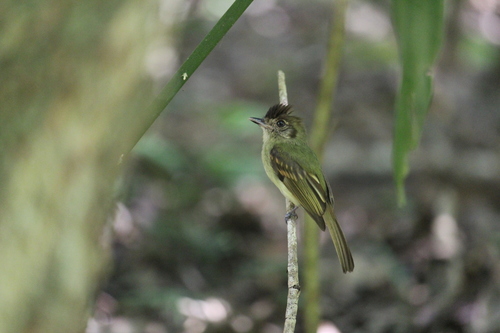
Sepia-capped Flycatcher (Leptopogon amaurocephalus) Sepia-capped Flycatcher

Media

Loading…

In short

The White-throated Spadebill and Sepia-capped Flycatcher can be distinguished by their structure and behavior. The Spadebill has a distinctive broad, flat bill and a stubby tail, while the Flycatcher is more elongated with a longer tail. Vocalizations differ significantly, aiding identification.

Identification tips

1. Bill Shape: Look for the broad, flat bill of the White-throated Spadebill. 2. Tail Length: The Spadebill has a stubby tail, whereas the Flycatcher has a longer tail. 3. Behavior: Note the wing-lifting behavior of the Sepia-capped Flycatcher. 4. Habitat: Consider the forest type and region; Spadebills prefer dense undergrowth. 5. Vocalization: Listen for the explosive calls of the Sepia-capped Flycatcher.

Size

The Sepia-capped Flycatcher is slightly larger and more elongated compared to the compact and stubby White-throated Spadebill.

Plumage

Both species have a pale throat, but the White-throated Spadebill has a more prominent white throat patch. The Sepia-capped Flycatcher has a sepia-toned cap and a pale 'tear-drop' marking below the eye.

Behaviour

The Sepia-capped Flycatcher often lifts one wing over its back while perched and is known for hover-gleaning. The White-throated Spadebill is more secretive, often found in dense undergrowth.

Habitat

The White-throated Spadebill inhabits humid lowland and montane forests, while the Sepia-capped Flycatcher ranges from Mexico to northern Argentina, often in mixed flocks.

Voice

The Sepia-capped Flycatcher has explosive vocalizations that sound larger than its size, while the White-throated Spadebill's calls are less conspicuous.

Submit a better description

Use the same sections as the comparison. Your text is published immediately.

The White-throated Spadebill and Sepia-capped Flycatcher can be distinguished by their structure and behavior. The Spadebill has a distinctive broad, flat bill and a stubby tail, while the Flycatcher is more elongated with a longer tail. Vocalizations differ significantly, aiding identification.

1. Bill Shape: Look for the broad, flat bill of the White-throated Spadebill. 2. Tail Length: The Spadebill has a stubby tail, whereas the Flycatcher has a longer tail. 3. Behavior: Note the wing-lifting behavior of the Sepia-capped Flycatcher. 4. Habitat: Consider the forest type and region; Spadebills prefer dense undergrowth. 5. Vocalization: Listen for the explosive calls of the Sepia-capped Flycatcher.

The Sepia-capped Flycatcher is slightly larger and more elongated compared to the compact and stubby White-throated Spadebill.

Both species have a pale throat, but the White-throated Spadebill has a more prominent white throat patch. The Sepia-capped Flycatcher has a sepia-toned cap and a pale 'tear-drop' marking below the eye.

The Sepia-capped Flycatcher often lifts one wing over its back while perched and is known for hover-gleaning. The White-throated Spadebill is more secretive, often found in dense undergrowth.

The White-throated Spadebill inhabits humid lowland and montane forests, while the Sepia-capped Flycatcher ranges from Mexico to northern Argentina, often in mixed flocks.

The Sepia-capped Flycatcher has explosive vocalizations that sound larger than its size, while the White-throated Spadebill's calls are less conspicuous.

Discard your changes?

You have unsaved edits. If you leave now, those changes will be lost.

White-throated Spadebill · Sepia-capped Flycatcher · My Tricky Birds