Birdr

Wilgenfeetiran vs Kleine feetiran

Empidonax traillii versus Empidonax minimus

Speel een quiz met Wilgenfeetiran en Kleine feetiran
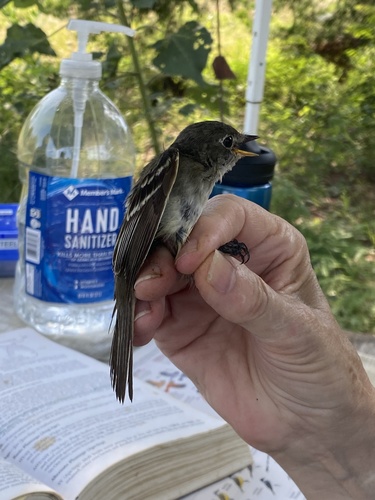
Wilgenfeetiran (Empidonax traillii) Wilgenfeetiran
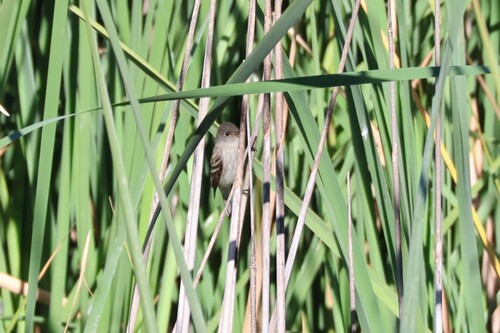
Kleine feetiran (Empidonax minimus) Kleine feetiran

Media

Laden…

Kort gezegd

De Wilgenfeetiran en Kleine feetiran zijn beide kleine Empidonax-soorten, maar ze kunnen worden onderscheiden door hun vocalisaties en gedrag. De Wilgenfeetiran is meer solitair, terwijl de Kleine feetiran vaak clusters van territoria vormt. Vocalisaties zijn essentieel voor identificatie, aangezien visuele verschillen subtiel zijn.

Herkenningstips

Luister naar vocalisaties om deze soorten te onderscheiden. Observeer het sociale gedrag: Kleine feetiran vormen clusters, terwijl Wilgenfeetiran meer solitair zijn. Habitatoverlap met Elzenfeetiran kan identificatie compliceren, dus focus op vocale aanwijzingen.

Gedrag

Wilgenfeetiran zijn doorgaans solitair, terwijl Kleine feetiran vaak dichte clusters van territoria vormen tijdens het broedseizoen, wat wijst op een socialere aard.

Habitat

Kleine feetiran broeden in loofbossen of gemengde bossen en staan bekend om hun geclusterde territoria, terwijl Wilgenfeetiran meer solitair zijn en kunnen overlappen met de habitats van Elzenfeetiran.

Geluid

Vocalisaties zijn cruciaal voor het onderscheiden van deze soorten. Het lied van de Wilgenfeetiran is verschillend van het kenmerkende lied van de Kleine feetiran, dat vaak te horen is tijdens hun onophoudelijke gezang in de lente.

Stuur een betere beschrijving

Gebruik dezelfde onderdelen als de vergelijking. Je tekst staat meteen live.

The Willow Flycatcher and Least Flycatcher are both small Empidonax species, but they can be distinguished by their vocalizations and behavior. The Willow Flycatcher is more solitary, while the Least Flycatcher often forms clusters of territories. Vocalizations are key to identification, as visual differences are subtle.

Listen for vocalizations to differentiate these species. Observe the social behavior: Least Flycatchers form clusters, while Willow Flycatchers are more solitary. Habitat overlap with Alder Flycatchers can complicate identification, so focus on vocal cues.

Willow Flycatchers are typically solitary, whereas Least Flycatchers often form dense clusters of territories during the breeding season, indicating a more social nature.

Least Flycatchers breed in deciduous or mixed forests and are known for their clustered territories, while Willow Flycatchers are more solitary and can overlap with Alder Flycatcher habitats.

Vocalizations are crucial for distinguishing these species. The Willow Flycatcher's song is distinct from the Least Flycatcher's characteristic song, which is often heard during their incessant singing in spring.

Wijzigingen weggooien?

Je hebt niet-opgeslagen wijzigingen. Als je nu weggaat, gaan die verloren.

Wilgenfeetiran · Kleine feetiran · Mijn lastige vogels