Willow Flycatcher vs Least Flycatcher
Empidonax traillii versus Empidonax minimus
Play a quiz with Willow Flycatcher and Least Flycatcher
Willow Flycatcher
Least Flycatcher
In short
Willow Flycatcher and Least Flycatcher are both small Empidonax flycatchers, but they can be distinguished by their vocalizations and habitat preferences. Willow Flycatcher is best identified by its distinctive 'fitz-bew' song, while the Least Flycatcher is known for its 'che-bek' call. In the field, structural differences are subtle, making vocal cues crucial.
Identification tips
- Listen for vocalizations: 'fitz-bew' for Willow Flycatcher, 'che-bek' for Least Flycatcher. 2. Observe habitat: riparian areas for Willow, deciduous/mixed forests for Least. 3. Note social behavior: solitary Willow versus clustered Least territories.
Size
Both species are similar in size, typical of small Empidonax flycatchers.
Plumage
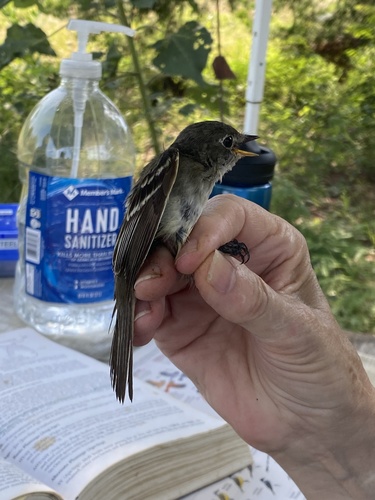
Plumage is very similar between the two, with both having olive-gray upperparts and pale underparts. These features are not reliable for distinguishing them.
Behaviour
Willow Flycatchers are often solitary during the breeding season, while Least Flycatchers form dense clusters of territories, suggesting a more social behavior.
Habitat
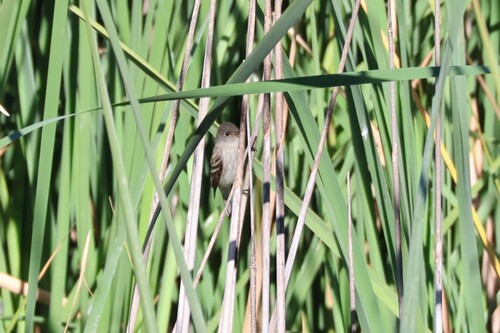
Willow Flycatchers are typically found in riparian habitats, especially in the West, whereas Least Flycatchers prefer deciduous or mixed forests and are often found in more clustered territories.
Voice
Willow Flycatcher's song is a distinctive 'fitz-bew', while the Least Flycatcher has a characteristic 'che-bek' call. These vocalizations are the most reliable way to differentiate the two species.