
half-collared kingfisher vs pica-peixe-riscado
Alcedo semitorquata versus Halcyon chelicuti
Jogue um quiz com half-collared kingfisher e pica-peixe-riscado
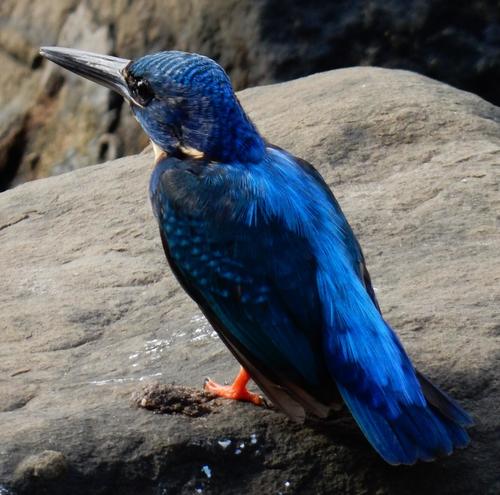 half-collared kingfisher
 pica-peixe-riscado
Em resumo
A melhor marca de campo para separar esses dois é a cor geral e o padrão das asas: o guarda-rios-de-colar é um pássaro azul e branco impressionante com um distinto meio colar e partes inferiores laranja, enquanto o pica-peixe-riscado é principalmente cinza-acastanhado por cima, com azul limitado à parte inferior das costas, asas e cauda, e exibe uma mancha branca na asa e uma barra preta em voo. Os juvenis do pica-peixe-riscado são mais claros e têm menos azul nas asas, o que pode causar confusão, mas o half-collared sempre parece muito mais azul e não tem listras marrons. A cor do bico e o padrão da cabeça também são fundamentais: o half-collared tem um bico preto sólido (macho) ou principalmente preto (fêmea) e uma coroa azul, enquanto o pica-peixe-riscado mostra um bico bicolor e uma coroa marrom listrada. Ambos são semelhantes em tamanho e massa, mas sua estrutura e habitats preferidos diferem.
Dicas de identificação
- O habitat é frequentemente decisivo: Se o pássaro for visto longe da água, especialmente em florestas abertas ou savana, é o pica-peixe-riscado. O guarda-rios-de-colar quase nunca é encontrado longe da água com vegetação densa.
- Cor geral: O guarda-rios-de-colar sempre parece um azul vívido por cima com partes inferiores laranja e uma garganta branca. O pica-peixe-riscado é cinza-acastanhado por cima, com azul limitado à parte inferior das costas, asas e cauda, e partes inferiores de branco a buff com listras marrons.
- Padrão da cabeça: O half-collared tem uma coroa azul com faixas alternadas de azul claro e escuro e uma faixa branca cremosa na lateral do pescoço. O pica-peixe-riscado tem uma coroa marrom listrada, uma linha preta através do olho e ao redor do pescoço, e não possui a coroa azul e o meio colar.
- Cor do bico: O macho do half-collared tem um bico totalmente preto; a fêmea tem um pouco de vermelho na base da mandíbula inferior. O pica-peixe-riscado tem um bico bicolor: acinzentado por cima e na ponta, avermelhado-alaranjado por baixo, com juvenis mostrando vermelho mais apagado.
- Padrão das asas em voo: O pica-peixe-riscado mostra uma mancha branca na base das primárias, uma barra preta na base das primárias (machos) e forros brancos nas asas com uma borda preta. O guarda-rios-de-colar não possui essas características e permanece azul por cima em todas as vistas.
- Confusão juvenil: O juvenil do pica-peixe-riscado é mais claro, com menos azul nas asas e uma coroa mais escura, mas ainda mostra listras marrons e não possui o azul vívido e laranja do half-collared. O juvenil do half-collared não é descrito, mas deve sempre ser azul por cima e nunca listrado de marrom.
- Partes inferiores: O guarda-rios-de-colar tem partes inferiores laranja pálido limpas; o pica-peixe-riscado tem partes inferiores de branco a buff com listras marrons (especialmente no sul da África).
- Pescoço e colar: O half-collared tem um distinto 'meio colar' azul escuro na lateral do pescoço; o pica-peixe-riscado tem um colar branco contornado acima por uma linha preta.
- Cor das pernas: Ambos têm pernas vermelhas ou avermelhadas, não sendo um separador confiável.
- Comportamento de empoleiramento: O half-collared é geralmente baixo sobre a água, muitas vezes em galhos expostos. O pica-peixe-riscado empoleira-se mais alto, muitas vezes no topo das árvores, e exibe ao agitar as asas e levantar a cauda.
- Vocalizações: Somente o pica-peixe-riscado tem um chamado distinto e que se propaga longe, frequentemente ouvido ao anoitecer ou durante a exibição. Se você ouvir as vocalizações descritas, é o pica-peixe-riscado.
- Diferenças sexuais: No pica-peixe-riscado, os machos têm uma coroa cinza-buff e uma barra preta na base das primárias; as fêmeas têm uma coroa acastanhada e não possuem a barra preta. No half-collared, apenas a cor do bico difere ligeiramente entre os sexos.
- Contexto: Se visto pescando ou mergulhando na água, especialmente em habitat ripário denso, pense no half-collared. Se visto saindo de uma copa de árvore ou exibindo, pense no pica-peixe-riscado.
- Listras: O pica-peixe-riscado sempre mostra algumas listras marrons na coroa e nas partes inferiores (especialmente os pássaros do sul); o half-collared nunca mostra.
- Extensão do azul: Somente o half-collared é azul em geral; o azul do pica-peixe-riscado é restrito e só é óbvio em voo.
Tamanho
Ambas as espécies são muito semelhantes em tamanho, com o guarda-rios-de-colar medindo cerca de 18 cm de comprimento e o pica-peixe-riscado variando de 16 a 18 cm. Suas massas corporais também são quase idênticas (Half-collared: 35–40 g, Striped: ~38 g) [wikipedia][wikidata]. No campo, nenhuma das espécies é confiavelmente maior, então o tamanho sozinho não é um separador seguro.
Plumagem
- Pássaros juvenis/imaturos: Os juvenis do pica-peixe-riscado são mais claros que os adultos, com menos azul nas asas, uma coroa mais escura e pontas escuras nas penas do peito. Eles também têm um vermelho mais apagado na mandíbula inferior. Os juvenis do guarda-rios-de-colar não são descritos em detalhes, mas todas as idades mostram partes superiores azul forte e não têm listras marrons.
- Adultos empoleirados: O guarda-rios-de-colar é azul vívido por cima com uma garganta branca, partes inferiores laranja e uma coroa azul com faixas alternadas de azul claro e escuro. Ele tem uma faixa branca cremosa em cada lado do pescoço e um 'meio colar' azul escuro. Os adultos do pica-peixe-riscado são principalmente cinza-acastanhado por cima, com azul metálico limitado à parte inferior das costas, penas secundárias de voo e cauda. As partes inferiores são de branco a buff com listras marrons, especialmente no peito e nas laterais. A cabeça é listrada de marrom escuro, com um fundo cinza-buff (macho) ou acastanhado (fêmea), e uma linha preta através do olho e ao redor do pescoço.
- Em voo: O pica-peixe-riscado revela uma mancha branca na base das primárias e uma barra preta na base das primárias (nos machos), com forros brancos nas asas contornados em preto. Esses padrões de asas são muito mais visíveis em voo do que quando empoleirados. O guarda-rios-de-colar não mostra esses padrões de asas e permanece azul por cima em todas as vistas.
Comportamento
O guarda-rios-de-colar é quase sempre visto perto da água, empoleirando-se silenciosamente em galhos baixos sobre riachos, rios ou lagos, e mergulhando para pegar peixes. O pica-peixe-riscado é mais arbóreo, frequentemente visto empoleirado alto nas árvores, às vezes longe da água, e é mais propenso a ser visto exibindo com a cauda levantada e as asas agitando, especialmente durante as vocalizações. O pica-peixe-riscado também tende a ser mais conspícuo em florestas abertas ou savana, enquanto o guarda-rios-de-colar é mais secreto e está ligado a vegetação ripária densa.
Habitat
O guarda-rios-de-colar é restrito a riachos, rios e lagos bem vegetados no sul e leste da África, sempre perto da água e de cobertura densa na margem. O pica-peixe-riscado é muito mais flexível, encontrado em florestas abertas, savana e áreas arbustivas, muitas vezes bem longe da água, e não está ligado a habitats aquáticos. Se você ver um guarda-rios longe da água ou em floresta seca, é quase certamente o pica-peixe-riscado.
Voz
O pica-peixe-riscado tem um chamado distinto e que se propaga longe: um 'cheer-cherrrrrr' agudo ou 'KEW, kerrrrrrrrr' com um trinado descendente, frequentemente dado durante a exibição com as asas agitadas. As vocalizações do guarda-rios-de-colar não são descritas nas notas, então a voz é apenas diagnóstica para o pica-peixe-riscado.
half-collared kingfisher · pica-peixe-riscado · Minhas aves difíceis