Birdr

red-crested bustard vs cape weaver

Lophotis ruficrista versus Ploceus capensis

Jogue um quiz com red-crested bustard e cape weaver
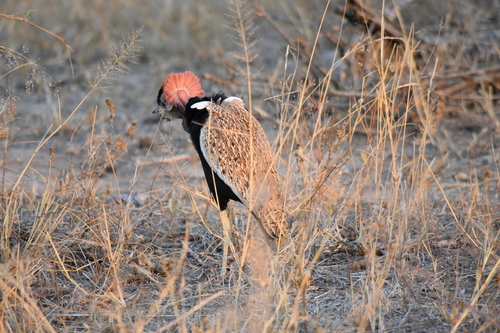
red-crested bustard (Lophotis ruficrista) red-crested bustard
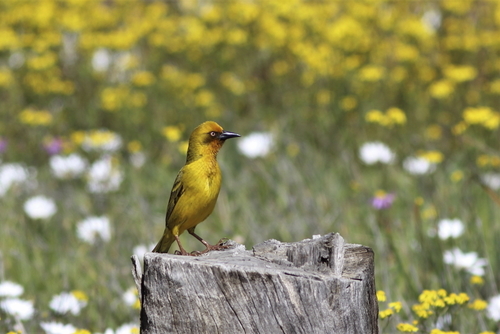
cape weaver (Ploceus capensis) cape weaver

Mídia

Carregando…

Em resumo

O red-crested bustard e o cape weaver são facilmente distinguidos pelo seu habitat e plumagem. O bustard é encontrado em áreas arborizadas e exibe uma exibição aérea única, enquanto o weaver é amarelo brilhante e habita campos abertos com árvores e água. Essas diferenças tornam improvável a confusão no campo.

Dicas de identificação

  1. Habitat: Procure o bustard em áreas arborizadas e o weaver em áreas abertas com água. 2. Plumagem: Note o rosto amarelo brilhante e marrom-alaranjado do cape weaver, contrastando com as cores mais suaves do red-crested bustard. 3. Comportamento: Observe a exibição aérea do bustard em comparação com o comportamento de nidificação colonial do weaver.

Plumagem

O red-crested bustard não possui a plumagem amarelo brilhante do cape weaver. Em vez disso, tem uma coloração mais suave, sem características amarelas ou alaranjadas marcantes. Em contraste, o macho do cape weaver é amarelo brilhante com marrom-alaranjado no rosto e um bico preto, enquanto a fêmea é oliva com uma garganta e ventre amarelos.

Comportamento

O red-crested bustard é conhecido por sua espetacular exibição aérea, onde dispara para cima, para, faz acrobacias e despenca para baixo. O cape weaver, por outro lado, constrói grandes colônias de ninhos e é frequentemente visto em bandos.

Habitat

O red-crested bustard é encontrado em habitats arborizados, incluindo áreas de mopane e acácia, enquanto o cape weaver habita campos abertos com algumas árvores e água permanente, evitando florestas.

Enviar uma descrição melhor

Use as mesmas seções da comparação. Seu texto é publicado na hora.

The Red-crested Bustard and Cape Weaver are easily distinguished by their habitat and plumage. The bustard is found in wooded areas and displays a unique aerial display, while the weaver is bright yellow and inhabits open country with trees and water. These differences make them unlikely to be confused in the field.

  1. Habitat: Look for the bustard in wooded areas and the weaver in open areas with water. 2. Plumage: Note the bright yellow and orange-brown face of the Cape Weaver, contrasting with the more subdued colors of the Red-crested Bustard. 3. Behavior: Observe the bustard's aerial display versus the weaver's colonial nesting behavior.

The Red-crested Bustard lacks the bright yellow plumage of the Cape Weaver. Instead, it has a more subdued coloration with no bold yellow or orange features. In contrast, the Cape Weaver male is bright yellow with orange-brown on the face and a black bill, while the female is olive with a yellow throat and belly.

The Red-crested Bustard is known for its spectacular aerial display, where it shoots upwards, stalls, somersaults, and plummets downwards. The Cape Weaver, on the other hand, builds large colonies of nests and is often seen in flocks.

The Red-crested Bustard is found in wooded habitats, including mopane and acacia areas, while the Cape Weaver inhabits open country with some trees and permanent water, avoiding forests.

Descartar as alterações?

Você tem edições não salvas. Se sair agora, elas serão perdidas.

red-crested bustard · cape weaver · Minhas aves difíceis