Birdr

Red-crested Bustard vs Cape Weaver

Lophotis ruficrista versus Ploceus capensis

Play a quiz with Red-crested Bustard and Cape Weaver
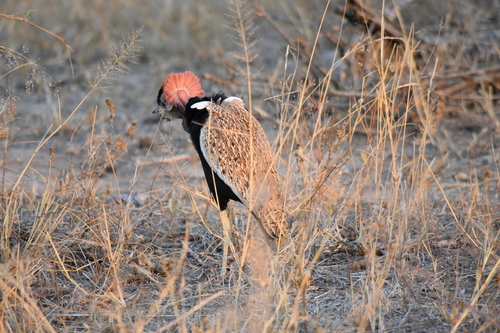
Red-crested Bustard (Lophotis ruficrista) Red-crested Bustard
Cape Weaver (Ploceus capensis) Cape Weaver

Media

Loading…

In short

The Red-crested Bustard and Cape Weaver are distinct in appearance and habitat preferences. The bustard is a ground-dwelling bird with a unique aerial display, while the weaver is a brightly colored, arboreal species found in flocks. Observing their behavior and habitat can quickly differentiate them.

Identification tips

Look for the Red-crested Bustard's aerial display and red crest in wooded areas. Spot the Cape Weaver by its bright yellow plumage and social behavior in open habitats with water. Note the bustard's larger size and ground-dwelling habits versus the weaver's arboreal nature.

Size

The Red-crested Bustard is larger and more robust compared to the smaller, more slender Cape Weaver.

Plumage

The Red-crested Bustard has a more subdued plumage with a red crest, while the Cape Weaver male is bright yellow with orange-brown on the face and a black bill. The female weaver is olive with a yellow throat and belly.

Behaviour

Red-crested Bustards display in leks and perform aerial displays, while Cape Weavers are social, often found in flocks and forming large roosts.

Habitat

Red-crested Bustards prefer wooded habitats like mopane and acacia, whereas Cape Weavers are found in open country with trees and permanent water, avoiding forests.

Voice

The Red-crested Bustard is known for its vocal displays during lekking, while the Cape Weaver's vocalizations are not highlighted as distinctive.

Submit a better description

Use the same sections as the comparison. Your text is published immediately.

The Red-crested Bustard and Cape Weaver are distinct in appearance and habitat preferences. The bustard is a ground-dwelling bird with a unique aerial display, while the weaver is a brightly colored, arboreal species found in flocks. Observing their behavior and habitat can quickly differentiate them.

Look for the Red-crested Bustard's aerial display and red crest in wooded areas. Spot the Cape Weaver by its bright yellow plumage and social behavior in open habitats with water. Note the bustard's larger size and ground-dwelling habits versus the weaver's arboreal nature.

The Red-crested Bustard is larger and more robust compared to the smaller, more slender Cape Weaver.

The Red-crested Bustard has a more subdued plumage with a red crest, while the Cape Weaver male is bright yellow with orange-brown on the face and a black bill. The female weaver is olive with a yellow throat and belly.

Red-crested Bustards display in leks and perform aerial displays, while Cape Weavers are social, often found in flocks and forming large roosts.

Red-crested Bustards prefer wooded habitats like mopane and acacia, whereas Cape Weavers are found in open country with trees and permanent water, avoiding forests.

The Red-crested Bustard is known for its vocal displays during lekking, while the Cape Weaver's vocalizations are not highlighted as distinctive.

Discard your changes?

You have unsaved edits. If you leave now, those changes will be lost.

Red-crested Bustard · Cape Weaver · My Tricky Birds