
speckled warbler vs buff-rumped thornbill
Pyrrholaemus sagittatus versus Acanthiza reguloides
Jogue um quiz com speckled warbler e buff-rumped thornbill
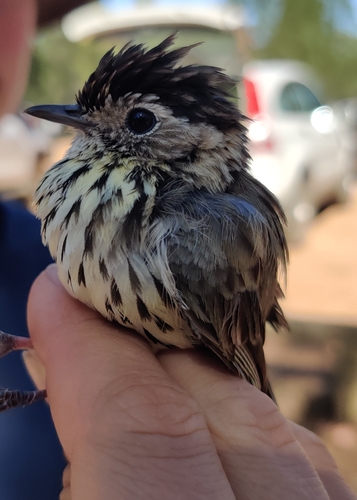 speckled warbler
 buff-rumped thornbill
Em resumo
A marca de campo mais confiável para separar o speckled warbler do buff-rumped thornbill é a presença de listras pretas ousadas na parte inferior e uma coroa salpicada no warbler, em contraste com a parte inferior amarela-pálida e a coroa simples do thornbill. Os juvenis e adultos de buff-rumped thornbill sempre mostram uma mancha distinta de rabo buff, que nunca está presente no speckled warbler. Em voo, o rabo do thornbill é óbvio, enquanto o peito listrado e a cabeça salpicada do warbler permanecem diagnósticos em repouso ou quando assustados. Ambas as espécies são pequenas, aves forrageadoras do solo das florestas do leste da Austrália, mas o warbler é maior e mais robusto, com um bico mais pesado e uma aparência mais críptica e listrada.
Dicas de identificação
- Listras na parte inferior: O speckled warbler de todas as idades mostra listras pretas ousadas na parte inferior amarelo-esbranquiçada; o buff-rumped thornbill é sempre liso e amarelo-pálido por baixo. Esta é a marca mais confiável.
- Padrão da coroa: O speckled warbler tem uma coroa marrom com manchas brancas óbvias (macho com margem de sobrancelha escura, fêmea marrom-avermelhada); a coroa do buff-rumped thornbill é simples, nunca salpicada ou listrada.
- Cor do rabo: O buff-rumped thornbill sempre mostra uma mancha distinta de rabo buff, visível tanto empoleirado quanto em voo. O rabo do speckled warbler não é contrastante e se mistura com as partes superiores listradas.
- Padrão da cauda: Ambos têm uma faixa subterminal escura e ponta clara, mas a cauda do thornbill é proporcionalmente mais curta e o rabo buff é frequentemente visível acima dela.
- Marcas faciais: O speckled warbler tem um rosto off-white com listras marrons-buffy nas coberturas auriculares; o rosto do buff-rumped thornbill é simples e carece de marcas fortes.
- Estrutura do bico: O warbler tem um bico mais pesado e robusto; o bico do thornbill é mais fino e mais pontudo, típico de Acanthiza.
- Cor da íris: O adulto buff-rumped thornbill tem olhos brancos; os juvenis têm olhos escuros. O speckled warbler tem olhos marrons em todas as idades.
- Tamanho e forma: O warbler é maior (11,5–12,5 cm vs. 8–10 cm), mais robusto e mais forte; o thornbill é menor, mais delicado e compacto.
- Comportamento em bandos: Os thornbills estão frequentemente em grupos maiores e barulhentos, movendo-se inquietos e acrobaticamente; os warblers são mais silenciosos, geralmente em pares ou pequenos grupos, e mais secretos.
- Voo: Os thornbills mostram um voo ondulante e o rabo buff é frequentemente visível; os warblers voam baixo e direto, às vezes fazendo um som distinto de zumbido com suas asas.
- Vocalizações: Os thornbills são muito mais vocais, com chamadas rápidas e contínuas; os warblers são mais silenciosos, com canções suaves e musicais e imitações.
- Diferenças sexuais: O macho do speckled warbler tem uma margem de sobrancelha preta, a fêmea é marrom-avermelhada; o buff-rumped thornbill não mostra dimorfismo sexual óbvio em campo.
- Confusão juvenil: O juvenil do speckled warbler é semelhante à fêmea, mas as manchas da coroa são mais difusas; o juvenil do thornbill é como o adulto, mas com olhos escuros e sempre tem um rabo buff.
- Forrageamento no solo: Ambas as espécies forrageiam no solo ou perto dele, mas os warblers são mais propensos a serem vistos retornando rapidamente ao solo após serem assustados, enquanto os thornbills podem forragear mais alto e são mais acrobáticos.
- Contexto: Se vistos em um bando misto, observe o tamanho e o comportamento—o warbler é a ave maior, listrada e mais silenciosa; o thornbill é menor, simples e mais ativo.
Tamanho
O speckled warbler é visivelmente maior, medindo 11,5–12,5 cm e pesando cerca de 13,5 g [wikipedia], enquanto o buff-rumped thornbill é menor, com 8–10 cm [wikipedia]. O warbler parece mais robusto e forte, enquanto o thornbill é mais delicado e compacto. Em bandos mistos, o warbler se destaca como a ave maior e mais pesada.
Plumagem
- Juvenil/imaturo: O juvenil do speckled warbler se assemelha à fêmea, mas com uma coroa mais difusamente manchada; as partes inferiores ainda são listradas. O juvenil do buff-rumped thornbill tem olhos escuros (os adultos têm brancos), mas sempre mostra o rabo buff e carece de manchas na cabeça ou listras na parte inferior.
- Adulto: O speckled warbler tem uma coroa marrom com manchas brancas (macho com margem de sobrancelha escura, fêmea marrom-avermelhada), rosto off-white listrado com marrons-buffy, e partes inferiores amarelo-esbranquiçadas fortemente listradas. As partes superiores são marrom-cinza com listras mais escuras. A cauda é marrom-escura com uma faixa subterminal preta e pontas brancas. O buff-rumped thornbill é simples, verde-marrom por cima, muito amarelo-pálido por baixo, com um rabo buff distinto e uma cauda com uma ampla faixa escura e ponta clara. A coroa é simples, sem manchas ou listras. Sem listras nas partes inferiores. A íris do thornbill é branca em adultos, escura em juvenis.
Comportamento
Ambas as espécies forrageiam no solo ou perto dele e podem se juntar a bandos de espécies mistas, mas o buff-rumped thornbill é mais propenso a ser visto em grupos maiores e falantes (até 20 ou mais), frequentemente se movendo acrobaticamente através da folhagem mais baixa e às vezes pendurado de cabeça para baixo. O speckled warbler é mais silencioso, mais solitário ou em pares, e mais secreto, frequentemente retornando rapidamente ao solo após ser assustado. Os thornbills são mais inquietos e vocais enquanto forrageiam, enquanto os warblers são contidos e dependem de camuflagem.
Habitat
Ambas as espécies habitam florestas secas e matas abertas do leste da Austrália. O speckled warbler está mais estritamente ligado a florestas temperadas e é frequentemente encontrado em áreas com densa cobertura do solo ou detritos. O buff-rumped thornbill é mais adaptável, ocorrendo em uma gama mais ampla de matas abertas de eucalipto e florestas esclerófilas, frequentemente onde o sub-bosque é escasso. Seus habitats se sobrepõem amplamente, então o habitat sozinho não é diagnóstico.
Voz
O speckled warbler tem uma canção suave, melódica e musical com apitos agudos, e é capaz de imitação; suas chamadas são silenciosas e menos persistentes. Quando assustado, pode emitir um piar estridente. O buff-rumped thornbill é muito mais vocal, com uma chamada rápida e contínua 'pitta-pitta-pitta-pit' e um twitter constante enquanto forrageia. Os thornbills são geralmente mais barulhentos e mais conspícuos pelo som.
speckled warbler · buff-rumped thornbill · Minhas aves difíceis