Birdr

African Snipe vs Wood Sandpiper

Gallinago nigripennis versus Tringa glareola

Play a quiz with African Snipe and Wood Sandpiper
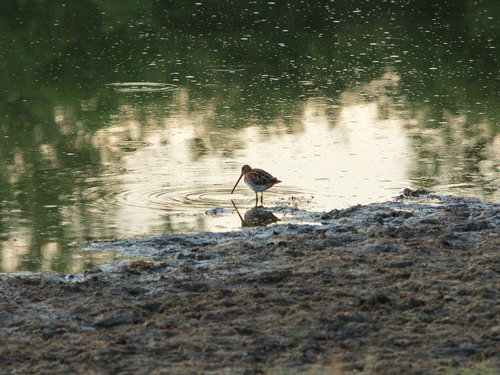
African Snipe (Gallinago nigripennis) African Snipe
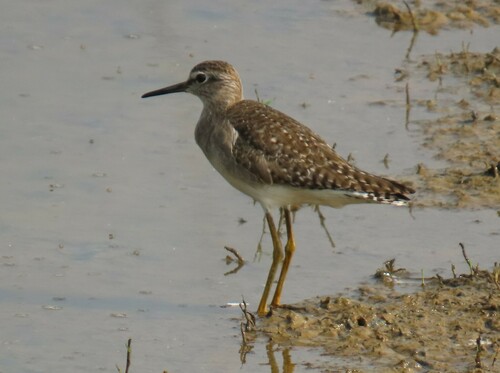
Wood Sandpiper (Tringa glareola) Wood Sandpiper

Media

Loading…

In short

The African Snipe and Wood Sandpiper can be distinguished by their structure and behavior. The African Snipe has a shorter, stockier build with a long, straight bill, while the Wood Sandpiper is more slender with a medium-length, slightly upturned bill. Behaviorally, the African Snipe is more likely to be seen in dense, marshy vegetation, whereas the Wood Sandpiper prefers open, shallow water habitats.

Identification tips

Look for the bill shape: African Snipe has a long, straight bill, while Wood Sandpiper's is medium-length and slightly upturned. Observe the habitat: African Snipe is in dense marshes; Wood Sandpiper is in open, shallow waters. Note the plumage: African Snipe is more cryptic; Wood Sandpiper has a distinct white supercilium.

Size

The African Snipe is generally stockier and more robust compared to the slender Wood Sandpiper.

Plumage

The African Snipe typically has more cryptic, mottled plumage suited for camouflage in marshy environments, whereas the Wood Sandpiper has a more uniform, spotted appearance with a distinct white supercilium.

Behaviour

African Snipes are often seen skulking in dense vegetation, while Wood Sandpipers are more active and visible in open areas, often seen wading in shallow waters.

Habitat

African Snipes prefer dense, marshy habitats, while Wood Sandpipers are found in open, shallow water bodies like ponds and flooded fields.

Submit a better description

Use the same sections as the comparison. Your text is published immediately.

The African Snipe and Wood Sandpiper can be distinguished by their structure and behavior. The African Snipe has a shorter, stockier build with a long, straight bill, while the Wood Sandpiper is more slender with a medium-length, slightly upturned bill. Behaviorally, the African Snipe is more likely to be seen in dense, marshy vegetation, whereas the Wood Sandpiper prefers open, shallow water habitats.

Look for the bill shape: African Snipe has a long, straight bill, while Wood Sandpiper's is medium-length and slightly upturned. Observe the habitat: African Snipe is in dense marshes; Wood Sandpiper is in open, shallow waters. Note the plumage: African Snipe is more cryptic; Wood Sandpiper has a distinct white supercilium.

The African Snipe is generally stockier and more robust compared to the slender Wood Sandpiper.

The African Snipe typically has more cryptic, mottled plumage suited for camouflage in marshy environments, whereas the Wood Sandpiper has a more uniform, spotted appearance with a distinct white supercilium.

African Snipes are often seen skulking in dense vegetation, while Wood Sandpipers are more active and visible in open areas, often seen wading in shallow waters.

African Snipes prefer dense, marshy habitats, while Wood Sandpipers are found in open, shallow water bodies like ponds and flooded fields.

Discard your changes?

You have unsaved edits. If you leave now, those changes will be lost.

African Snipe · Wood Sandpiper · My Tricky Birds