Allen's Gallinule vs Watercock
Porphyrio alleni versus Gallicrex cinerea
Play a quiz with Allen's Gallinule and Watercock
Allen's Gallinule
Watercock
In short
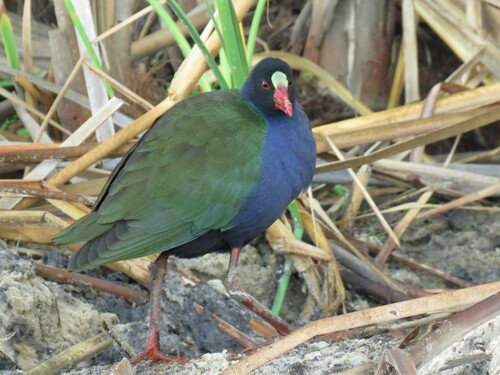
The most reliable field mark to distinguish Allen's Gallinule from the Watercock is the bill and frontal shield: Allen's Gallinule has a bright red bill with a greenish frontal shield, while the Watercock has a yellowish bill with a red frontal shield. Additionally, the Watercock is larger and bulkier compared to the more slender Allen's Gallinule.
Identification tips
1. Bill and Frontal Shield: Look for the bright red bill with a greenish frontal shield in Allen's Gallinule versus the yellowish bill with a red frontal shield in the Watercock. 2. Size and Structure: Note the larger, bulkier size of the Watercock compared to the more slender Allen's Gallinule. 3. Plumage: Check for the greenish and blue tones in Allen's Gallinule versus the darker, more uniform plumage of the Watercock. 4. Habitat: Consider the habitat; Allen's Gallinule is more likely in freshwater wetlands, while Watercocks are often in marshes and rice paddies. 5. Vocalizations: Listen for the distinct calls; Allen's Gallinule has clucking notes, while the Watercock has a variety of grunts and whistles.
Size
The Watercock is larger and more robust than Allen's Gallinule.
Plumage
Allen's Gallinule has a predominantly greenish body with a blue head and breast, while the Watercock is generally darker with a more uniform brownish or blackish plumage, especially in males.
Behaviour
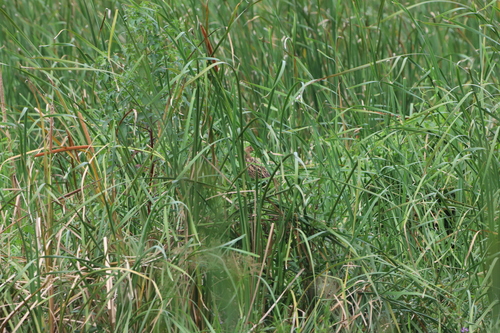
Both species are secretive and often found in dense vegetation, but the Watercock is more likely to be seen in open fields during the breeding season.
Habitat
Allen's Gallinule is typically found in freshwater wetlands, while the Watercock prefers marshes and rice paddies, often in more open areas.
Voice
The vocalizations of these species differ, with Allen's Gallinule having a series of clucking notes, while the Watercock has a more varied range of calls, including grunts and whistles.