Birdr

American Crow vs Lapland Bunting

Corvus brachyrhynchos versus Calcarius lapponicus

Play a quiz with American Crow and Lapland Bunting
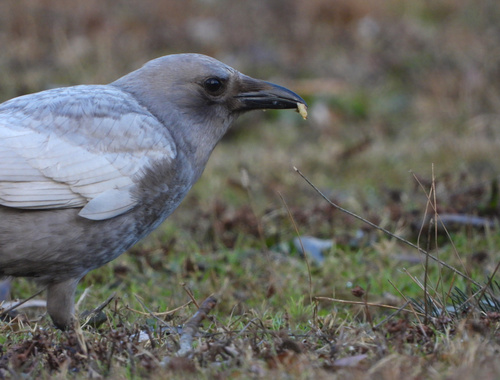
American Crow (Corvus brachyrhynchos) American Crow
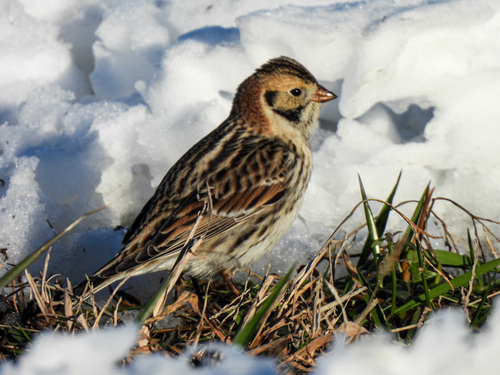
Lapland Bunting (Calcarius lapponicus) Lapland Bunting

Media

Loading…

In short

The American Crow and Lapland Bunting are easily distinguished by size and shape: the crow is a large, all-black bird, while the bunting is a small, sparrow-like bird with distinctive plumage patterns. Observing their behavior and habitat can also aid in identification.

Identification tips

Size and shape: Look for a large, black bird for the crow versus a small, patterned bird for the bunting. Plumage: Uniform black for crow, streaked and patterned for bunting. Vocalization: Listen for the crow's 'caw' versus the bunting's melodic song. Habitat: Consider the environment; crows are versatile, buntings prefer open, tundra-like areas.

Size

The American Crow is significantly larger than the Lapland Bunting, with a robust body and strong bill, whereas the bunting is small and delicate.

Plumage

The American Crow is uniformly black, while the Lapland Bunting has a complex pattern with streaked brown and white plumage, often with a distinctive face pattern.

Behaviour

American Crows are often seen in groups and are highly social, whereas Lapland Buntings are more solitary or found in small flocks during migration.

Habitat

American Crows are adaptable and found in a variety of habitats including urban areas, while Lapland Buntings are typically found in tundra and open fields during breeding and migration.

Voice

American Crows have a distinctive 'caw' that is loud and harsh, contrasting with the Lapland Bunting's more melodic and varied song.

Submit a better description

Use the same sections as the comparison. Your text is published immediately.

The American Crow and Lapland Bunting are easily distinguished by size and shape: the crow is a large, all-black bird, while the bunting is a small, sparrow-like bird with distinctive plumage patterns. Observing their behavior and habitat can also aid in identification.

Size and shape: Look for a large, black bird for the crow versus a small, patterned bird for the bunting. Plumage: Uniform black for crow, streaked and patterned for bunting. Vocalization: Listen for the crow's 'caw' versus the bunting's melodic song. Habitat: Consider the environment; crows are versatile, buntings prefer open, tundra-like areas.

The American Crow is significantly larger than the Lapland Bunting, with a robust body and strong bill, whereas the bunting is small and delicate.

The American Crow is uniformly black, while the Lapland Bunting has a complex pattern with streaked brown and white plumage, often with a distinctive face pattern.

American Crows are often seen in groups and are highly social, whereas Lapland Buntings are more solitary or found in small flocks during migration.

American Crows are adaptable and found in a variety of habitats including urban areas, while Lapland Buntings are typically found in tundra and open fields during breeding and migration.

American Crows have a distinctive 'caw' that is loud and harsh, contrasting with the Lapland Bunting's more melodic and varied song.

Discard your changes?

You have unsaved edits. If you leave now, those changes will be lost.

American Crow · Lapland Bunting · My Tricky Birds