Birdr

Azure Gallinule vs Grey-breasted Crake

Porphyrio flavirostris versus Laterallus exilis

Play a quiz with Azure Gallinule and Grey-breasted Crake
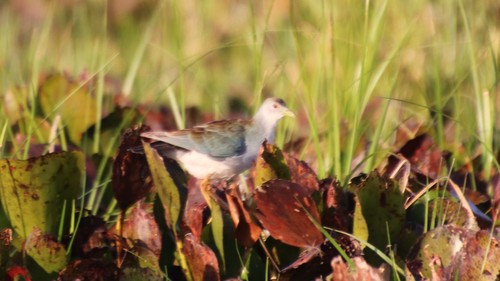
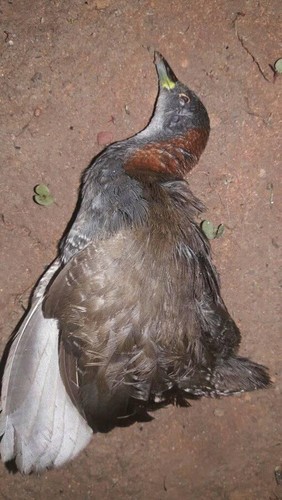
Azure Gallinule (Porphyrio flavirostris) Azure Gallinule
Grey-breasted Crake (Laterallus exilis) Grey-breasted Crake

Media

Loading…

In short

The Azure Gallinule and Grey-breasted Crake are both secretive wetland birds, but they differ in size and coloration. The Azure Gallinule is larger with a distinctive yellow bill and pale blue plumage, while the Grey-breasted Crake is smaller and more uniformly colored with a grey breast.

Identification tips

  1. Look for the yellow bill and frontal shield of the Azure Gallinule. 2. Note the pale blue plumage of the Azure Gallinule compared to the Grey-breasted Crake's uniform grey breast. 3. Consider size: the Azure Gallinule is larger. 4. Observe behavior: Azure Gallinules bend vegetation, while Grey-breasted Crakes use runways.

Size

The Azure Gallinule is larger than the Grey-breasted Crake.

Plumage

The Azure Gallinule has pale, faded blue on the head, neck, flanks, and wings with a yellow bill and frontal shield. The Grey-breasted Crake has a more uniform grey breast and lacks the bright yellow bill.

Behaviour

Both species are secretive and often hide in dense vegetation. The Azure Gallinule is known to bend vegetation to feed, while the Grey-breasted Crake uses 'runways' under grass.

Habitat

Both species inhabit wetlands, but the Azure Gallinule is found in northern South America, while the Grey-breasted Crake has a more expansive range with patchy distribution.

Voice

Vocalizations are important for identifying the Grey-breasted Crake, but specific calls are not detailed here.

Submit a better description

Use the same sections as the comparison. Your text is published immediately.

The Azure Gallinule and Grey-breasted Crake are both secretive wetland birds, but they differ in size and coloration. The Azure Gallinule is larger with a distinctive yellow bill and pale blue plumage, while the Grey-breasted Crake is smaller and more uniformly colored with a grey breast.

  1. Look for the yellow bill and frontal shield of the Azure Gallinule. 2. Note the pale blue plumage of the Azure Gallinule compared to the Grey-breasted Crake's uniform grey breast. 3. Consider size: the Azure Gallinule is larger. 4. Observe behavior: Azure Gallinules bend vegetation, while Grey-breasted Crakes use runways.

The Azure Gallinule is larger than the Grey-breasted Crake.

The Azure Gallinule has pale, faded blue on the head, neck, flanks, and wings with a yellow bill and frontal shield. The Grey-breasted Crake has a more uniform grey breast and lacks the bright yellow bill.

Both species are secretive and often hide in dense vegetation. The Azure Gallinule is known to bend vegetation to feed, while the Grey-breasted Crake uses 'runways' under grass.

Both species inhabit wetlands, but the Azure Gallinule is found in northern South America, while the Grey-breasted Crake has a more expansive range with patchy distribution.

Vocalizations are important for identifying the Grey-breasted Crake, but specific calls are not detailed here.

Discard your changes?

You have unsaved edits. If you leave now, those changes will be lost.

Azure Gallinule · Grey-breasted Crake · My Tricky Birds