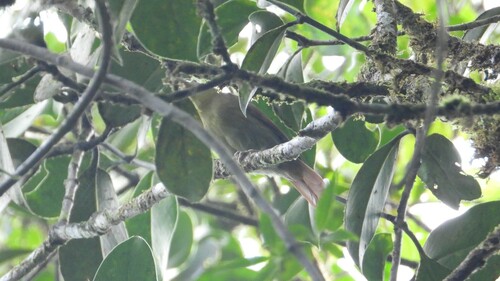
Barred Antshrike vs Russet Antshrike
Thamnophilus doliatus versus Thamnistes anabatinus
Play a quiz with Barred Antshrike and Russet Antshrike
Barred Antshrike
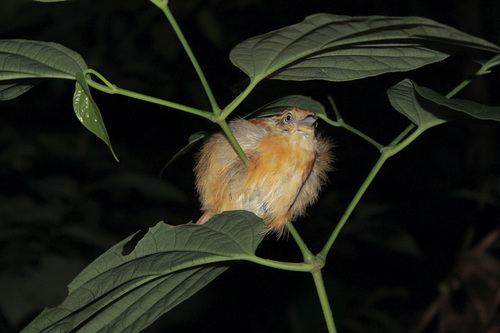
Russet Antshrike
In short
The Barred Antshrike and Russet Antshrike are both members of the antbird family but can be distinguished by their plumage and habitat preferences. The Barred Antshrike features distinctive black and white barring, while the Russet Antshrike has a more uniform russet coloration. Behaviorally, the Barred Antshrike is more likely to be found in lower forest strata, whereas the Russet Antshrike often forages higher in the canopy.
Identification tips
- Look for the bold black and white barring on the Barred Antshrike, especially in males. 2. Note the russet or brown plumage of the Russet Antshrike. 3. Observe the foraging height: Barred Antshrikes are often lower, while Russet Antshrikes are higher in the canopy. 4. Listen for the duet songs of Barred Antshrikes, which are accompanied by visual displays.
Size
Both species are similar in size, typical of small antbirds.
Plumage
The Barred Antshrike male displays bold black and white bars across its body, with females showing cinnamon-rufous upperparts and ochraceous-buff underparts. In contrast, the Russet Antshrike has a more uniform russet or brown plumage, lacking the striking barring of the Barred Antshrike.
Behaviour
Barred Antshrikes often forage by foliage gleaning and may follow ant swarms opportunistically. Russet Antshrikes forage at various heights but prefer the canopy and subcanopy, often mistaken for foliage-gleaners or vireos due to their behavior.
Habitat
Barred Antshrikes are found in a variety of habitats, often in lower forest layers. Russet Antshrikes are more common in evergreen foothill forests, typically between 400 m and 1,000 m, and are often found higher in the forest canopy.
Voice
Barred Antshrikes are known for their 2-3 second long songs, often performed in duets with visual displays. Vocalizations of the Russet Antshrike are less documented, but they do not typically perform such displays.