Birdr

Black-bellied Whistling-Duck vs Lark Bunting

Dendrocygna autumnalis versus Calamospiza melanocorys

Play a quiz with Black-bellied Whistling-Duck and Lark Bunting
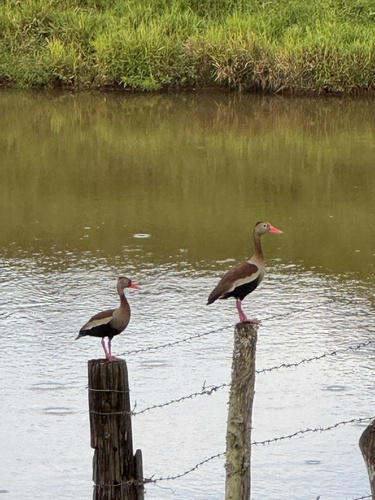
Black-bellied Whistling-Duck (Dendrocygna autumnalis) Black-bellied Whistling-Duck
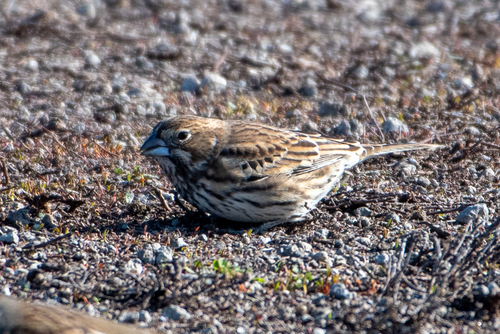
Lark Bunting (Calamospiza melanocorys) Lark Bunting

Media

Loading…

In short

The Black-bellied Whistling-Duck and Lark Bunting are easily distinguished by their habitat and appearance. The whistling-duck is a waterfowl with a distinctive black belly and pink bill, while the Lark Bunting is a grassland sparrow with a striking seasonal plumage change in males. Observing their environment and plumage will quickly separate these two species.

Identification tips

  1. Habitat: Look for Black-bellied Whistling-Ducks near water and Lark Buntings in open grasslands. 2. Size and Shape: The whistling-duck is much larger with a long neck and legs. 3. Plumage: Note the black belly and pink bill of the whistling-duck, and the seasonal plumage change in male Lark Buntings. 4. Vocalization: Listen for the whistling-duck's high-pitched calls and the Lark Bunting's flight songs.

Size

The Black-bellied Whistling-Duck is considerably larger than the Lark Bunting, as it is a duck compared to a sparrow-sized bird.

Plumage

The Black-bellied Whistling-Duck has a black belly, chestnut body, and pink bill, while the Lark Bunting male in breeding plumage is black with white wing patches, and in non-breeding plumage, it is brown and streaked.

Behaviour

The Black-bellied Whistling-Duck is often seen in flocks near water, while the Lark Bunting is more solitary or in small groups in grasslands.

Habitat

Black-bellied Whistling-Ducks are found near water bodies like ponds and marshes, whereas Lark Buntings inhabit open grasslands and prairies.

Voice

The Black-bellied Whistling-Duck is known for its high-pitched whistling calls, while the Lark Bunting has two distinct flight songs, especially during breeding displays.

Submit a better description

Use the same sections as the comparison. Your text is published immediately.

The Black-bellied Whistling-Duck and Lark Bunting are easily distinguished by their habitat and appearance. The whistling-duck is a waterfowl with a distinctive black belly and pink bill, while the Lark Bunting is a grassland sparrow with a striking seasonal plumage change in males. Observing their environment and plumage will quickly separate these two species.

  1. Habitat: Look for Black-bellied Whistling-Ducks near water and Lark Buntings in open grasslands. 2. Size and Shape: The whistling-duck is much larger with a long neck and legs. 3. Plumage: Note the black belly and pink bill of the whistling-duck, and the seasonal plumage change in male Lark Buntings. 4. Vocalization: Listen for the whistling-duck's high-pitched calls and the Lark Bunting's flight songs.

The Black-bellied Whistling-Duck is considerably larger than the Lark Bunting, as it is a duck compared to a sparrow-sized bird.

The Black-bellied Whistling-Duck has a black belly, chestnut body, and pink bill, while the Lark Bunting male in breeding plumage is black with white wing patches, and in non-breeding plumage, it is brown and streaked.

The Black-bellied Whistling-Duck is often seen in flocks near water, while the Lark Bunting is more solitary or in small groups in grasslands.

Black-bellied Whistling-Ducks are found near water bodies like ponds and marshes, whereas Lark Buntings inhabit open grasslands and prairies.

The Black-bellied Whistling-Duck is known for its high-pitched whistling calls, while the Lark Bunting has two distinct flight songs, especially during breeding displays.

Discard your changes?

You have unsaved edits. If you leave now, those changes will be lost.

Black-bellied Whistling-Duck · Lark Bunting · My Tricky Birds