Birdr

Black-faced Bunting vs Chestnut Bunting

Emberiza spodocephala versus Emberiza rutila

Play a quiz with Black-faced Bunting and Chestnut Bunting
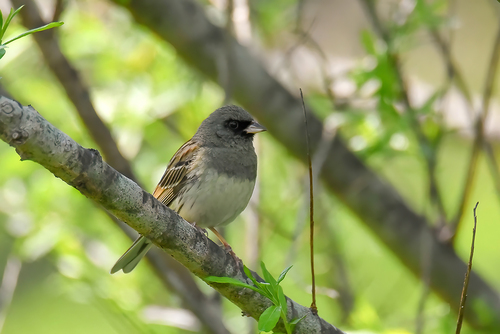
Black-faced Bunting (Emberiza spodocephala) Black-faced Bunting
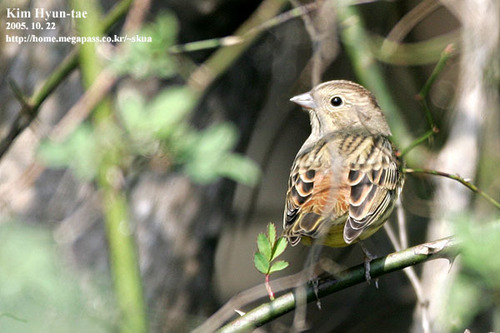
Chestnut Bunting (Emberiza rutila) Chestnut Bunting

Media

Loading…

In short

The Black-faced Bunting and Chestnut Bunting can be differentiated by their plumage and bill structure. Black-faced Buntings have a gray head and breast with rich brown upperparts and broad black streaking, while Chestnut Buntings are more uniformly chestnut-colored. Both species share similar habitats but have distinct plumage features.

Identification tips

Size

Both species are similar in size, typical of Old World buntings.

Plumage

Black-faced Buntings have a gray head and breast, rich brown upperparts with broad black streaking, and whitish or yellow underparts. In contrast, Chestnut Buntings are more uniformly chestnut-colored, especially in males, with less streaking.

Habitat

Both species inhabit similar regions in eastern Asia, including parts of China and Japan, often found in brushy and forested areas.

Submit a better description

Use the same sections as the comparison. Your text is published immediately.

The Black-faced Bunting and Chestnut Bunting can be differentiated by their plumage and bill structure. Black-faced Buntings have a gray head and breast with rich brown upperparts and broad black streaking, while Chestnut Buntings are more uniformly chestnut-colored. Both species share similar habitats but have distinct plumage features.

  • Bill Structure: Black-faced Buntings have a comparatively slight bill.
  • Plumage: Look for the gray head and streaked brown upperparts in Black-faced Buntings versus the more uniform chestnut color in Chestnut Buntings.
  • Seasonal Variation: Be aware that Black-faced Buntings' underparts become more yellow as you move east.
  • Habitat Overlap: Both species can be found in similar habitats, so focus on plumage for identification.

Both species are similar in size, typical of Old World buntings.

Black-faced Buntings have a gray head and breast, rich brown upperparts with broad black streaking, and whitish or yellow underparts. In contrast, Chestnut Buntings are more uniformly chestnut-colored, especially in males, with less streaking.

Both species inhabit similar regions in eastern Asia, including parts of China and Japan, often found in brushy and forested areas.

Discard your changes?

You have unsaved edits. If you leave now, those changes will be lost.

Black-faced Bunting · Chestnut Bunting · My Tricky Birds