Birdr

Blue-and-yellow Macaw vs Wilson's Warbler

Ara ararauna versus Cardellina pusilla

Play a quiz with Blue-and-yellow Macaw and Wilson's Warbler
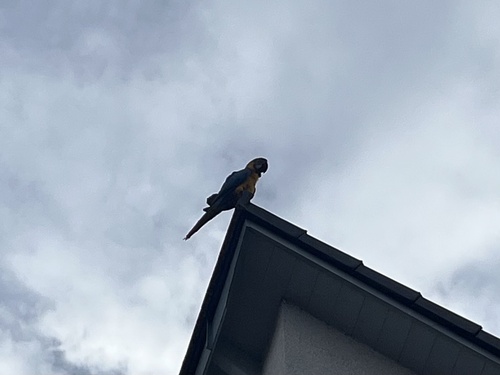
Blue-and-yellow Macaw (Ara ararauna) Blue-and-yellow Macaw
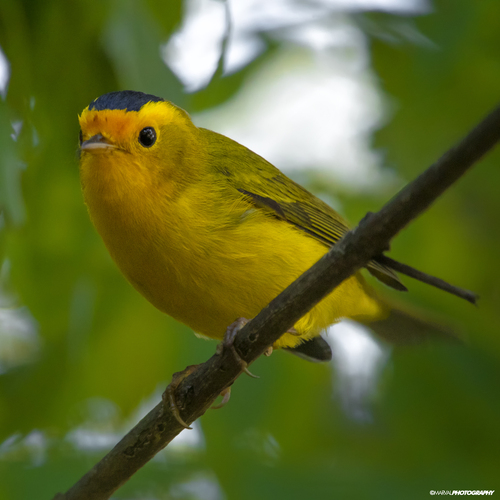
Wilson's Warbler (Cardellina pusilla) Wilson's Warbler

Media

Loading…

In short

The Blue-and-yellow Macaw is a large, vibrant parrot easily distinguished by its striking blue and yellow plumage, while Wilson's Warbler is a small, active songbird with a distinctive black cap. These species differ greatly in size, habitat, and behavior, making confusion unlikely in the field.

Identification tips

Size and habitat: Blue-and-yellow Macaws are large and found in tropical forests; Wilson's Warblers are small and found in shrubby, wet habitats. Plumage: Look for the macaw's blue and yellow colors versus the warbler's yellow body and black cap. Behavior: Macaws are often seen in pairs; warblers are more solitary or in mixed flocks.

Size

The Blue-and-yellow Macaw is a large bird, about 86 cm in length, whereas Wilson's Warbler is much smaller, around 12 cm.

Plumage

The Blue-and-yellow Macaw has bright blue upperparts and yellow underparts, with a green forehead. In contrast, Wilson's Warbler is primarily yellow with a distinctive black cap on its head.

Behaviour

Blue-and-yellow Macaws are often seen in pairs or small groups, feeding on fruits and nuts high in the canopy. Wilson's Warblers are more solitary or found in mixed-species flocks, flitting through low shrubs and undergrowth.

Habitat

Blue-and-yellow Macaws inhabit tropical rainforests, particularly in seasonally flooded areas, while Wilson's Warblers are found in wet habitats like riparian zones and meadows during breeding, and diverse environments in winter.

Voice

The Blue-and-yellow Macaw has loud, harsh calls, while Wilson's Warbler produces a short, chattering song.

Submit a better description

Use the same sections as the comparison. Your text is published immediately.

The Blue-and-yellow Macaw is a large, vibrant parrot easily distinguished by its striking blue and yellow plumage, while Wilson's Warbler is a small, active songbird with a distinctive black cap. These species differ greatly in size, habitat, and behavior, making confusion unlikely in the field.

Size and habitat: Blue-and-yellow Macaws are large and found in tropical forests; Wilson's Warblers are small and found in shrubby, wet habitats. Plumage: Look for the macaw's blue and yellow colors versus the warbler's yellow body and black cap. Behavior: Macaws are often seen in pairs; warblers are more solitary or in mixed flocks.

The Blue-and-yellow Macaw is a large bird, about 86 cm in length, whereas Wilson's Warbler is much smaller, around 12 cm.

The Blue-and-yellow Macaw has bright blue upperparts and yellow underparts, with a green forehead. In contrast, Wilson's Warbler is primarily yellow with a distinctive black cap on its head.

Blue-and-yellow Macaws are often seen in pairs or small groups, feeding on fruits and nuts high in the canopy. Wilson's Warblers are more solitary or found in mixed-species flocks, flitting through low shrubs and undergrowth.

Blue-and-yellow Macaws inhabit tropical rainforests, particularly in seasonally flooded areas, while Wilson's Warblers are found in wet habitats like riparian zones and meadows during breeding, and diverse environments in winter.

The Blue-and-yellow Macaw has loud, harsh calls, while Wilson's Warbler produces a short, chattering song.

Discard your changes?

You have unsaved edits. If you leave now, those changes will be lost.

Blue-and-yellow Macaw · Wilson's Warbler · My Tricky Birds