Birdr

Blue-grey Gnatcatcher vs Black-tailed Gnatcatcher

Polioptila caerulea versus Polioptila melanura

Play a quiz with Blue-grey Gnatcatcher and Black-tailed Gnatcatcher
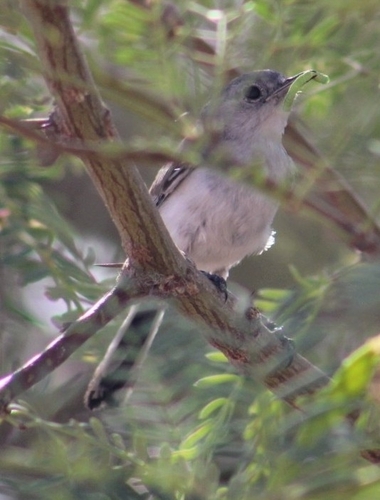
Blue-grey Gnatcatcher (Polioptila caerulea) Blue-grey Gnatcatcher
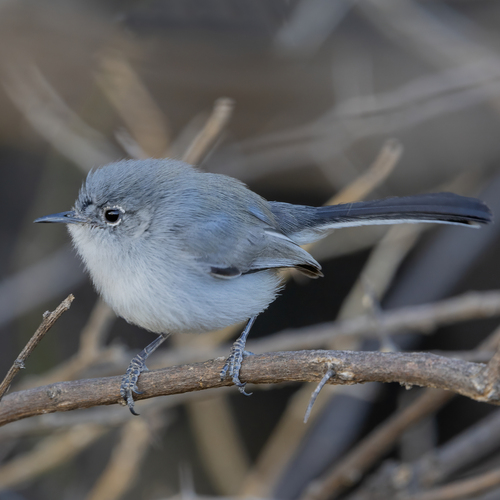
Black-tailed Gnatcatcher (Polioptila melanura) Black-tailed Gnatcatcher

Media

Loading…

In short

The Blue-grey Gnatcatcher and Black-tailed Gnatcatcher are small, active insectivores that can be distinguished by tail markings and habitat preferences. The Blue-grey Gnatcatcher has a mostly white tail with black edges, while the Black-tailed Gnatcatcher has a predominantly black tail. Habitat is another key difference, with the Blue-grey favoring moist, broad-leaved areas and the Black-tailed inhabiting desert thorn scrub.

Identification tips

Size

Both species are similar in size, being among the smallest North American songbirds.

Plumage

The Blue-grey Gnatcatcher has a blue-grey upper body and a mostly white tail with black edges. The Black-tailed Gnatcatcher is similar in coloration but has a predominantly black tail, which is a key distinguishing feature.

Behaviour

Both species are active foragers, but the Black-tailed Gnatcatcher is noted for its distinctive tail-wagging behavior. The Blue-grey Gnatcatcher is more likely to be seen hovering and sallying for insects.

Habitat

The Blue-grey Gnatcatcher prefers moist, broad-leaved wooded areas, often near habitat edges. In contrast, the Black-tailed Gnatcatcher is found in dense thorn scrub and thickets in desert regions.

Voice

The Blue-grey Gnatcatcher's calls are high-pitched and nasal. The Black-tailed Gnatcatcher is known for its 'zhee-zhee-zhee' call, which is often the first indication of its presence.

Submit a better description

Use the same sections as the comparison. Your text is published immediately.

The Blue-grey Gnatcatcher and Black-tailed Gnatcatcher are small, active insectivores that can be distinguished by tail markings and habitat preferences. The Blue-grey Gnatcatcher has a mostly white tail with black edges, while the Black-tailed Gnatcatcher has a predominantly black tail. Habitat is another key difference, with the Blue-grey favoring moist, broad-leaved areas and the Black-tailed inhabiting desert thorn scrub.

  • Tail color: Look for the mostly white tail with black edges in the Blue-grey Gnatcatcher, versus the predominantly black tail of the Black-tailed Gnatcatcher.
  • Habitat: Note the environment; Blue-grey Gnatcatchers are in moist, broad-leaved areas, while Black-tailed Gnatcatchers are in desert thorn scrub.
  • Behavior: Watch for the Black-tailed Gnatcatcher's distinctive tail-wagging.
  • Vocalizations: Listen for the high-pitched, nasal calls of the Blue-grey and the 'zhee-zhee-zhee' of the Black-tailed.

Both species are similar in size, being among the smallest North American songbirds.

The Blue-grey Gnatcatcher has a blue-grey upper body and a mostly white tail with black edges. The Black-tailed Gnatcatcher is similar in coloration but has a predominantly black tail, which is a key distinguishing feature.

Both species are active foragers, but the Black-tailed Gnatcatcher is noted for its distinctive tail-wagging behavior. The Blue-grey Gnatcatcher is more likely to be seen hovering and sallying for insects.

The Blue-grey Gnatcatcher prefers moist, broad-leaved wooded areas, often near habitat edges. In contrast, the Black-tailed Gnatcatcher is found in dense thorn scrub and thickets in desert regions.

The Blue-grey Gnatcatcher's calls are high-pitched and nasal. The Black-tailed Gnatcatcher is known for its 'zhee-zhee-zhee' call, which is often the first indication of its presence.

Discard your changes?

You have unsaved edits. If you leave now, those changes will be lost.

Blue-grey Gnatcatcher · Black-tailed Gnatcatcher · My Tricky Birds