Birdr

Buff-collared Nightjar vs Eastern Whip-poor-will

Antrostomus ridgwayi versus Antrostomus vociferus

Play a quiz with Buff-collared Nightjar and Eastern Whip-poor-will
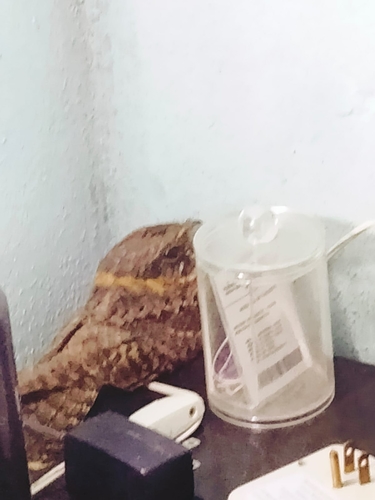
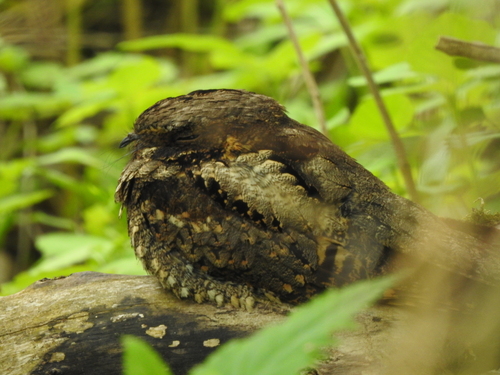
Buff-collared Nightjar (Antrostomus ridgwayi) Buff-collared Nightjar
Eastern Whip-poor-will (Antrostomus vociferus) Eastern Whip-poor-will

Media

Loading…

In short

The Buff-collared Nightjar and Eastern Whip-poor-will are both nocturnal birds with cryptic plumage, but they can be distinguished by their vocalizations and habitat preferences. The Buff-collared Nightjar is often found in dry thornscrub and has a unique metallic song, while the Eastern Whip-poor-will is more commonly associated with large woodland areas and is known for its distinctive 'WHIP-poor-WILL' call.

Identification tips

Size

Both species are similar in size, typical of nightjars, with no significant differences in overall dimensions.

Plumage

Both species exhibit cryptic plumage suitable for camouflage, but the Buff-collared Nightjar has a buffy collar that can be a distinguishing feature. The Eastern Whip-poor-will lacks this collar and has more uniformly mottled plumage.

Behaviour

Both species are nocturnal and ground-nesting, but the Eastern Whip-poor-will is known for its crepuscular foraging behavior, often active at dawn and dusk, and sometimes during moonlit nights.

Habitat

The Buff-collared Nightjar prefers dry thornscrub habitats, while the Eastern Whip-poor-will is typically found in large woodland territories.

Voice

The Buff-collared Nightjar has a bizarre, ascending metallic song, contrasting with the Eastern Whip-poor-will's distinctive and emphatic 'WHIP-poor-WILL' call.

Submit a better description

Use the same sections as the comparison. Your text is published immediately.

The Buff-collared Nightjar and Eastern Whip-poor-will are both nocturnal birds with cryptic plumage, but they can be distinguished by their vocalizations and habitat preferences. The Buff-collared Nightjar is often found in dry thornscrub and has a unique metallic song, while the Eastern Whip-poor-will is more commonly associated with large woodland areas and is known for its distinctive 'WHIP-poor-WILL' call.

  • Listen for vocalizations: The Buff-collared Nightjar's metallic song vs. the Eastern Whip-poor-will's 'WHIP-poor-WILL' call.
  • Check habitat: Buff-collared Nightjar in dry thornscrub vs. Eastern Whip-poor-will in woodlands.
  • Look for the buffy collar: Present in Buff-collared Nightjar, absent in Eastern Whip-poor-will.

Both species are similar in size, typical of nightjars, with no significant differences in overall dimensions.

Both species exhibit cryptic plumage suitable for camouflage, but the Buff-collared Nightjar has a buffy collar that can be a distinguishing feature. The Eastern Whip-poor-will lacks this collar and has more uniformly mottled plumage.

Both species are nocturnal and ground-nesting, but the Eastern Whip-poor-will is known for its crepuscular foraging behavior, often active at dawn and dusk, and sometimes during moonlit nights.

The Buff-collared Nightjar prefers dry thornscrub habitats, while the Eastern Whip-poor-will is typically found in large woodland territories.

The Buff-collared Nightjar has a bizarre, ascending metallic song, contrasting with the Eastern Whip-poor-will's distinctive and emphatic 'WHIP-poor-WILL' call.

Discard your changes?

You have unsaved edits. If you leave now, those changes will be lost.

Buff-collared Nightjar · Eastern Whip-poor-will · My Tricky Birds