
Chestnut-bellied Seedeater vs Ruddy-breasted Seedeater
Sporophila castaneiventris versus Sporophila minuta
Play a quiz with Chestnut-bellied Seedeater and Ruddy-breasted Seedeater
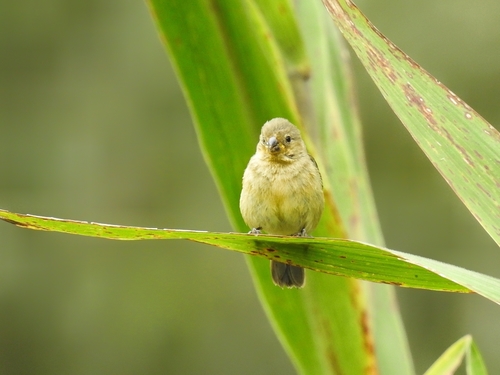
Chestnut-bellied Seedeater
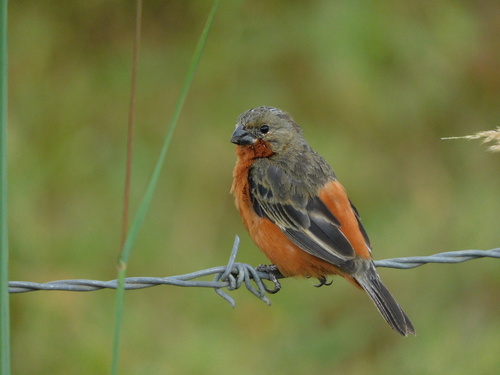
Ruddy-breasted Seedeater
In short
The male Chestnut-bellied Seedeater is best distinguished from the Ruddy-breasted Seedeater by its lack of a rufous rump, which is a prominent feature in the Ruddy-breasted male. Females of both species are nondescript and mostly brown, making them difficult to separate without the presence of a male.
Identification tips
- Male plumage: Look for the absence of a rufous rump in the Chestnut-bellied Seedeater.
- Female identification: Best identified when accompanied by a male.
- Habitat overlap: Be aware of their overlapping ranges in northeastern South America.
Size
Both species are similar in size, typical of small seedeaters.
Plumage
Male Chestnut-bellied Seedeaters lack the rufous rump seen in male Ruddy-breasted Seedeaters. Females of both species are mostly brown and difficult to distinguish.
Behaviour
Both species exhibit typical seedeater behavior, often seen foraging in flocks outside of the breeding season.
Habitat
Both species can be found in similar habitats across northeastern South America, though the Ruddy-breasted Seedeater is noted to be more common in areas like Trinidad.
Chestnut-bellied Seedeater · Ruddy-breasted Seedeater · My Tricky Birds