Birdr

Cinnamon Bittern vs Indian Pond Heron

Botaurus cinnamomeus versus Ardeola grayii

Play a quiz with Cinnamon Bittern and Indian Pond Heron
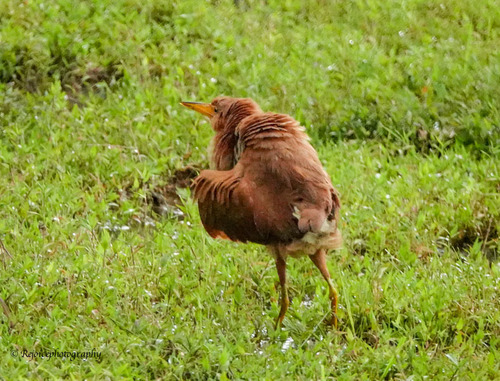
Cinnamon Bittern (Botaurus cinnamomeus) Cinnamon Bittern
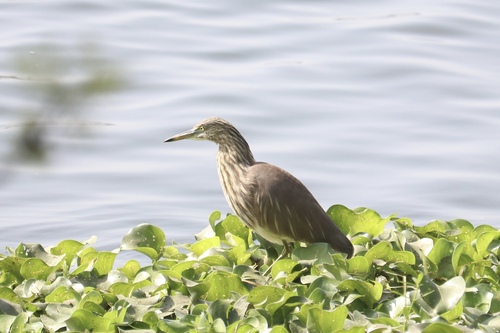
Indian Pond Heron (Ardeola grayii) Indian Pond Heron

Media

Loading…

In short

The Cinnamon Bittern and Indian Pond Heron are both small herons, but they can be distinguished by their plumage and behavior. The Cinnamon Bittern is more uniformly cinnamon-brown, while the Indian Pond Heron has a more varied plumage with a distinctive white wing patch visible in flight.

Identification tips

  1. Look for the white wing patch in the Indian Pond Heron during flight. 2. Observe the plumage: Cinnamon Bittern is uniformly cinnamon-brown, while Indian Pond Heron has a streaked appearance. 3. Consider the habitat: Cinnamon Bitterns are more likely in dense vegetation, Indian Pond Herons in open areas. 4. Note behavior: Indian Pond Herons are more often seen in open areas.

Size

Both species are similar in size, but the Indian Pond Heron may appear slightly bulkier.

Plumage

The Cinnamon Bittern is predominantly cinnamon-brown with a more uniform appearance. In contrast, the Indian Pond Heron has a streaked brown and buff body with a striking white wing patch that is especially visible in flight.

Behaviour

Cinnamon Bitterns are more secretive and often remain hidden in dense vegetation, while Indian Pond Herons are more likely to be seen in the open, often along the edges of water bodies.

Habitat

Both species inhabit wetlands, but the Cinnamon Bittern prefers dense reed beds and marshes, whereas the Indian Pond Heron is commonly found around ponds, lakes, and rice paddies.

Voice

Vocalizations are not the most reliable distinguishing feature, as both species are generally quiet. The Cinnamon Bittern may occasionally produce a low, booming call.

Submit a better description

Use the same sections as the comparison. Your text is published immediately.

The Cinnamon Bittern and Indian Pond Heron are both small herons, but they can be distinguished by their plumage and behavior. The Cinnamon Bittern is more uniformly cinnamon-brown, while the Indian Pond Heron has a more varied plumage with a distinctive white wing patch visible in flight.

  1. Look for the white wing patch in the Indian Pond Heron during flight. 2. Observe the plumage: Cinnamon Bittern is uniformly cinnamon-brown, while Indian Pond Heron has a streaked appearance. 3. Consider the habitat: Cinnamon Bitterns are more likely in dense vegetation, Indian Pond Herons in open areas. 4. Note behavior: Indian Pond Herons are more often seen in open areas.

Both species are similar in size, but the Indian Pond Heron may appear slightly bulkier.

The Cinnamon Bittern is predominantly cinnamon-brown with a more uniform appearance. In contrast, the Indian Pond Heron has a streaked brown and buff body with a striking white wing patch that is especially visible in flight.

Cinnamon Bitterns are more secretive and often remain hidden in dense vegetation, while Indian Pond Herons are more likely to be seen in the open, often along the edges of water bodies.

Both species inhabit wetlands, but the Cinnamon Bittern prefers dense reed beds and marshes, whereas the Indian Pond Heron is commonly found around ponds, lakes, and rice paddies.

Vocalizations are not the most reliable distinguishing feature, as both species are generally quiet. The Cinnamon Bittern may occasionally produce a low, booming call.

Discard your changes?

You have unsaved edits. If you leave now, those changes will be lost.

Cinnamon Bittern · Indian Pond Heron · My Tricky Birds