Birdr

Common Greenshank vs Ruddy Turnstone

Tringa nebularia versus Arenaria interpres

Play a quiz with Common Greenshank and Ruddy Turnstone
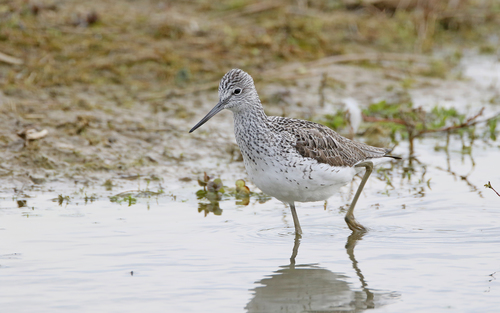
Common Greenshank (Tringa nebularia) Common Greenshank
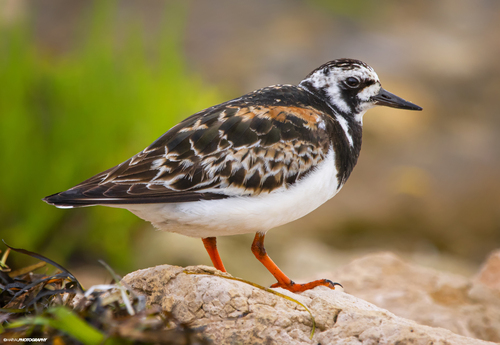
Ruddy Turnstone (Arenaria interpres) Ruddy Turnstone

Media

Loading…

In short

The Common Greenshank and Ruddy Turnstone are distinct in structure and behavior. The Greenshank has a slender, slightly upturned bill and long legs, while the Turnstone is stockier with a short, stout bill. In flight, the Greenshank shows a white wedge on its back, contrasting with the Turnstone's bold black and white wing pattern.

Identification tips

1. Bill Shape: Look for the Greenshank's slender, slightly upturned bill versus the Turnstone's short, stout bill. 2. Leg Length: Greenshank has longer legs. 3. Flight Pattern: Note the Greenshank's white wedge on the back in flight, contrasting with the Turnstone's bold black and white wing pattern. 4. Habitat Preference: Consider the habitat; Greenshanks prefer wetlands, Turnstones prefer rocky shores.

Size

The Common Greenshank is larger and more slender compared to the stockier Ruddy Turnstone.

Plumage

The Greenshank has a more uniform grey and white plumage, whereas the Turnstone displays a striking black and white pattern with rufous tones, especially in breeding plumage.

Behaviour

The Greenshank often wades in shallow water, while the Turnstone is typically seen flipping over stones and debris along rocky shores.

Habitat

Common Greenshanks are found in wetlands, mudflats, and estuaries, whereas Ruddy Turnstones prefer rocky coastlines and shores.

Submit a better description

Use the same sections as the comparison. Your text is published immediately.

The Common Greenshank and Ruddy Turnstone are distinct in structure and behavior. The Greenshank has a slender, slightly upturned bill and long legs, while the Turnstone is stockier with a short, stout bill. In flight, the Greenshank shows a white wedge on its back, contrasting with the Turnstone's bold black and white wing pattern.

1. Bill Shape: Look for the Greenshank's slender, slightly upturned bill versus the Turnstone's short, stout bill. 2. Leg Length: Greenshank has longer legs. 3. Flight Pattern: Note the Greenshank's white wedge on the back in flight, contrasting with the Turnstone's bold black and white wing pattern. 4. Habitat Preference: Consider the habitat; Greenshanks prefer wetlands, Turnstones prefer rocky shores.

The Common Greenshank is larger and more slender compared to the stockier Ruddy Turnstone.

The Greenshank has a more uniform grey and white plumage, whereas the Turnstone displays a striking black and white pattern with rufous tones, especially in breeding plumage.

The Greenshank often wades in shallow water, while the Turnstone is typically seen flipping over stones and debris along rocky shores.

Common Greenshanks are found in wetlands, mudflats, and estuaries, whereas Ruddy Turnstones prefer rocky coastlines and shores.

Discard your changes?

You have unsaved edits. If you leave now, those changes will be lost.

Common Greenshank · Ruddy Turnstone · My Tricky Birds