Birdr

Common Linnet vs Scottish Crossbill

Linaria cannabina versus Loxia scotica

Play a quiz with Common Linnet and Scottish Crossbill
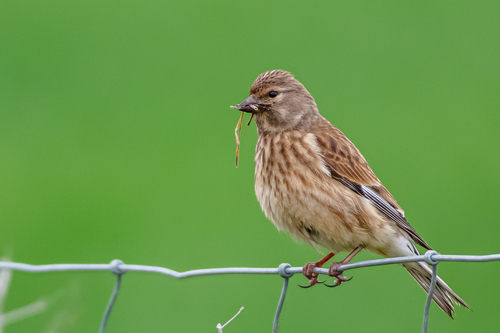
Common Linnet (Linaria cannabina) Common Linnet
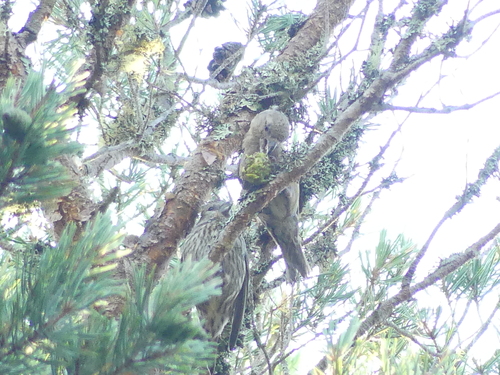
Scottish Crossbill (Loxia scotica) Scottish Crossbill

Media

Loading…

In short

The Common Linnet and Scottish Crossbill are both finches but differ significantly in habitat and vocalizations. The Linnet is more widespread and often found in open areas, while the Scottish Crossbill is restricted to the Caledonian pinewoods of Scotland and is best identified by its unique calls.

Identification tips

  1. Habitat: Check the environment; Scottish Crossbill is only in Scottish pinewoods. 2. Vocalizations: Listen for the Scottish Crossbill's metallic calls. 3. Plumage: Note the red breast of male Linnets versus the orange of male Crossbills. 4. Bill Shape: Observe the bill; crossbills have a distinctive crossed bill, unlike the Linnet.

Size

Both species are similar in size, with the Scottish Crossbill being slightly larger, around 17 cm, compared to the Linnet's average size.

Plumage

The Common Linnet males have a distinctive red breast and forehead, while females are more brownish. In contrast, the Scottish Crossbill males are brick-red to orange, and females are olive-green to grayish yellow. Both species have dark wings, but the Linnet lacks the crossbill's deeper-based bill.

Behaviour

The Linnet is often seen in flocks in open areas, whereas the Scottish Crossbill forms flocks that roam through forests, often mixing with other crossbill species.

Habitat

Common Linnets inhabit open areas such as farmland and heathland across Europe, while Scottish Crossbills are confined to the Caledonian pinewoods and commercial plantations in Scotland.

Voice

Scottish Crossbill identification relies heavily on its distinctive metallic flight call and 'excitement call,' which must be analyzed via sonograms. The Linnet's song is a pleasant, twittering series of notes, quite different from the crossbill's calls.

Submit a better description

Use the same sections as the comparison. Your text is published immediately.

The Common Linnet and Scottish Crossbill are both finches but differ significantly in habitat and vocalizations. The Linnet is more widespread and often found in open areas, while the Scottish Crossbill is restricted to the Caledonian pinewoods of Scotland and is best identified by its unique calls.

  1. Habitat: Check the environment; Scottish Crossbill is only in Scottish pinewoods. 2. Vocalizations: Listen for the Scottish Crossbill's metallic calls. 3. Plumage: Note the red breast of male Linnets versus the orange of male Crossbills. 4. Bill Shape: Observe the bill; crossbills have a distinctive crossed bill, unlike the Linnet.

Both species are similar in size, with the Scottish Crossbill being slightly larger, around 17 cm, compared to the Linnet's average size.

The Common Linnet males have a distinctive red breast and forehead, while females are more brownish. In contrast, the Scottish Crossbill males are brick-red to orange, and females are olive-green to grayish yellow. Both species have dark wings, but the Linnet lacks the crossbill's deeper-based bill.

The Linnet is often seen in flocks in open areas, whereas the Scottish Crossbill forms flocks that roam through forests, often mixing with other crossbill species.

Common Linnets inhabit open areas such as farmland and heathland across Europe, while Scottish Crossbills are confined to the Caledonian pinewoods and commercial plantations in Scotland.

Scottish Crossbill identification relies heavily on its distinctive metallic flight call and 'excitement call,' which must be analyzed via sonograms. The Linnet's song is a pleasant, twittering series of notes, quite different from the crossbill's calls.

Discard your changes?

You have unsaved edits. If you leave now, those changes will be lost.

Common Linnet · Scottish Crossbill · My Tricky Birds