
Common Sandpiper vs Wood Sandpiper
Actitis hypoleucos versus Tringa glareola
Play a quiz with Common Sandpiper and Wood Sandpiper
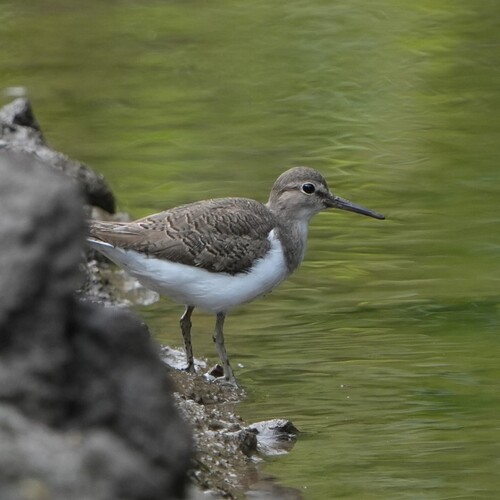 Common Sandpiper
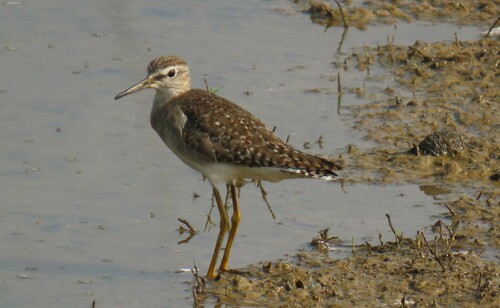 Wood Sandpiper
In short
The most reliable field mark to separate Common Sandpiper from Wood Sandpiper is leg length and structure: Common Sandpiper has short, dark yellowish legs and a compact, low-slung look, while Wood Sandpiper is noticeably longer-legged and more upright, with brighter yellowish legs. In flight, juvenile Common Sandpipers show crisp barring and buff-edged wing feathers, while Wood Sandpipers lack such strong barring. Both species have brown upperparts and white underparts, but the overall shape, leg color, and stance are key. Watch for the Common Sandpiper's distinctive stiff-winged, low flight style compared to the Wood Sandpiper's more buoyant, shank-like flight.
Identification tips
- Leg length and color: Common Sandpiper has short, dark yellowish legs; Wood Sandpiper has much longer, brighter yellowish legs. This is the quickest way to separate them at any age or season.
- Structure and stance: Common Sandpiper appears compact, low-slung, and crouched, often with its body close to the ground. Wood Sandpiper stands taller and more upright, with a delicate, shank-like build.
- Flight style: Common Sandpiper flies low over water with stiff, shallow wingbeats; Wood Sandpiper has a more buoyant, shank-like flight with longer legs trailing behind.
- Juvenile wing pattern: Juvenile Common Sandpipers show crisp barring and buff-edged wing feathers above, especially noticeable in flight or at close range. Wood Sandpiper juveniles lack this strong barring; their upperparts are more diffusely mottled.
- Adult wing pattern: In flight, Common Sandpiper shows a crisper, more contrasting wing pattern than Wood Sandpiper, though this is subtle and best seen at close range.
- Bill shape: Both have a pale-based, dark-tipped bill, but Wood Sandpiper's is finer and slightly longer relative to head size. This is a supporting mark, not primary.
- Breast markings: Wood Sandpiper has smaller, more diffuse brownish spots on the breast and neck, while Common Sandpiper's underparts are clean white with little to no spotting.
- Tail movement: Common Sandpiper frequently bobs its tail and thrusts its head while foraging; Wood Sandpiper is less animated in this way.
- Habitat preference: If seen in a marshy, vegetated freshwater site, especially away from the coast, Wood Sandpiper is more likely. Along rocky or muddy riverbanks and lake edges, especially in solitary birds, Common Sandpiper is more expected.
- Group behavior: Common Sandpiper is usually alone or in small groups, rarely joining mixed flocks. Wood Sandpiper may be seen with other waders in suitable wetland habitats.
- Leg color in poor light: In dull or muddy conditions, Wood Sandpiper's legs can appear less bright, but their length remains distinctive compared to the short legs of Common Sandpiper.
- Confusion in non-breeding plumage: Both species become duller in winter, but the structural differences (leg length, stance) still separate them reliably.
- Size impression: Wood Sandpiper is slightly heavier and looks more delicate and taller; Common Sandpiper is smaller, chunkier, and lower to the ground.
- Voice: Not diagnostic from the provided notes; rely on structure and plumage instead.
- Pitfall: Do not rely solely on upperpart color, as both can look brownish in poor light—focus on leg length, stance, and flight style for a confident ID.
Size
Wood Sandpiper is heavier (body mass about 67.5 g [wikidata]) and appears more delicate and longer-legged than the Common Sandpiper, which is slightly smaller and more compact (adult length 18–20 cm, wingspan 32–35 cm [wikipedia]). The Wood Sandpiper is the smallest of the shanks but still looks taller and leggier than the squat, low-slung Common Sandpiper.
Plumage
- Juvenile/immature birds: Common Sandpiper juveniles are heavily barred above with buff edges to the wing feathers, creating a crisp, patterned look in flight or at rest. Wood Sandpiper juveniles do not show such strong barring; their upperparts are brown with some darker mottling, and their breast and neck have diffuse brownish spots rather than crisp bars.
- Adults: Both species have brown upperparts and white underparts, but Common Sandpiper's upperparts are greyer-brown, and its wing pattern in flight is crisper. Wood Sandpiper adults have a more subdued, light-brown back with smaller, less contrasting markings. In winter, Common Sandpiper becomes duller with more visible wing barring at close range, but this is still more distinct than in Wood Sandpiper.
- Legs: Common Sandpiper's legs are short and dark yellowish; Wood Sandpiper's are longer and brighter yellowish.
- Bill: Both have a pale-based, dark-tipped bill, but Wood Sandpiper's is finer and slightly longer relative to head size.
Behaviour
Common Sandpiper is usually solitary or in small groups, rarely joining mixed flocks. It forages with a distinctive tail-bobbing motion and often pumps its tail and thrusts its head as it walks. Its flight is stiff-winged and low over water, hugging the surface. Wood Sandpiper forages in shallow water or mud, probing with its bill, and appears more buoyant and upright, both when feeding and in flight. Wood Sandpiper's flight is more typical of shanks, with longer legs trailing and a less stiff wingbeat.
Habitat
Common Sandpiper is most often found along freshwater or coastal margins, especially riverbanks, lakeshores, and estuaries, but tends to avoid large mixed flocks. Wood Sandpiper prefers freshwater wetlands, marshes, and muddy pools, and is less likely to be found on open coasts. While both species overlap in some inland wetland habitats, Wood Sandpiper is more strictly associated with marshy, vegetated freshwater sites.