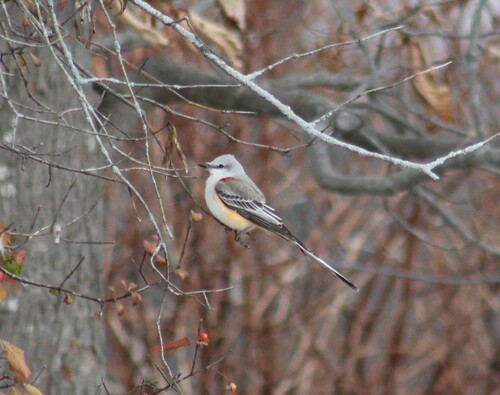
Common Snipe vs Scissor-tailed Flycatcher
Gallinago gallinago versus Tyrannus forficatus
Play a quiz with Common Snipe and Scissor-tailed Flycatcher
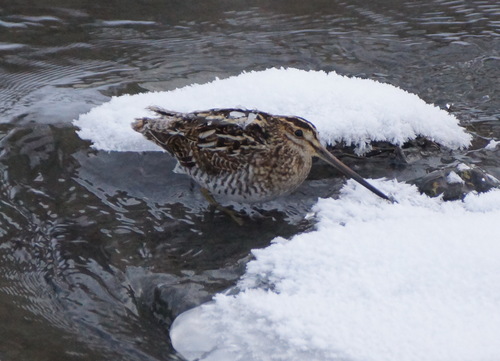
Common Snipe
Scissor-tailed Flycatcher
In short
The Common Snipe and Scissor-tailed Flycatcher are easily distinguished by their tail and habitat preferences. The Snipe has a short, stocky body with a long bill, while the Flycatcher is known for its dramatically elongated tail feathers. They occupy different habitats, with the Snipe in wetlands and the Flycatcher in open grasslands.
Identification tips
- Tail: Look for the long, forked tail of the Scissor-tailed Flycatcher. 2. Bill: Note the long, straight bill of the Common Snipe. 3. Habitat: Consider the habitat—wetlands for Snipe, open fields for Flycatcher. 4. Behavior: Observe feeding behavior—probing for Snipe, aerial foraging for Flycatcher.
Size
The Common Snipe is a medium-sized wader, whereas the Scissor-tailed Flycatcher is a larger passerine with a notably long tail.
Plumage
The Common Snipe has cryptic brown and buff plumage with stripes and bars for camouflage, while the Scissor-tailed Flycatcher features pale gray and white plumage with striking black and salmon-pink highlights on the wings and tail.
Behaviour
The Snipe is often seen probing mud for invertebrates, while the Flycatcher is more aerial, catching insects in flight with agile swoops.
Habitat
Common Snipes are found in marshes, bogs, and wet meadows, whereas Scissor-tailed Flycatchers prefer open grasslands with scattered trees or shrubs.
Voice
The Common Snipe is known for its 'drumming' sound during display flights, while the Scissor-tailed Flycatcher has a series of sharp, metallic calls.