Birdr

Dark-throated Seedeater vs Marsh Seedeater

Sporophila ruficollis versus Sporophila palustris

Play a quiz with Dark-throated Seedeater and Marsh Seedeater
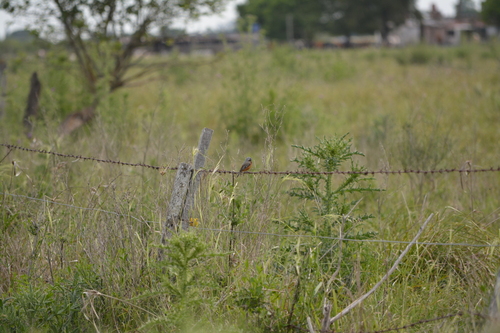
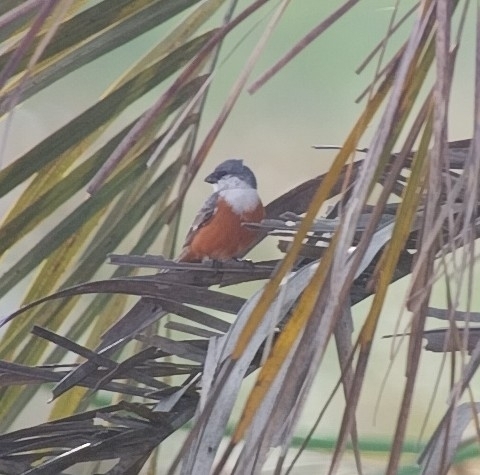
Dark-throated Seedeater (Sporophila ruficollis) Dark-throated Seedeater
Marsh Seedeater (Sporophila palustris) Marsh Seedeater

Media

Loading…

In short

The Dark-throated Seedeater and Marsh Seedeater are both small, migratory birds in the 'capuchino' group, often found in grasslands. The most reliable field mark is the male Dark-throated's rich rusty-brown throat, contrasting with its chestnut belly, while the Marsh Seedeater males have a more uniform appearance with less contrast. Both species forage on grass seeds but differ in habitat preference during breeding.

Identification tips

  1. Look for the rusty-brown throat on male Dark-throated Seedeaters. 2. Observe habitat: Marsh Seedeaters are more likely in marsh-adjacent grasslands. 3. Note that females are indistinguishable by plumage. 4. Consider the season and location, as both species are migratory.

Size

Both species are similar in size, typical of small seedeaters.

Plumage

Male Dark-throated Seedeaters have a distinct rusty-brown throat and chestnut belly, while Marsh Seedeater males are more uniformly colored without the pronounced throat contrast. Females of both species are dull and buffy brown, making them difficult to distinguish.

Behaviour

Both species forage on grass seeds, often perching on grass stalks. They can be found in mixed-species flocks during migration.

Habitat

Dark-throated Seedeaters are found in open country areas south of the Amazon Basin during winter, while Marsh Seedeaters are more specialized, breeding in high grasslands adjacent to marshes.

Submit a better description

Use the same sections as the comparison. Your text is published immediately.

The Dark-throated Seedeater and Marsh Seedeater are both small, migratory birds in the 'capuchino' group, often found in grasslands. The most reliable field mark is the male Dark-throated's rich rusty-brown throat, contrasting with its chestnut belly, while the Marsh Seedeater males have a more uniform appearance with less contrast. Both species forage on grass seeds but differ in habitat preference during breeding.

  1. Look for the rusty-brown throat on male Dark-throated Seedeaters. 2. Observe habitat: Marsh Seedeaters are more likely in marsh-adjacent grasslands. 3. Note that females are indistinguishable by plumage. 4. Consider the season and location, as both species are migratory.

Both species are similar in size, typical of small seedeaters.

Male Dark-throated Seedeaters have a distinct rusty-brown throat and chestnut belly, while Marsh Seedeater males are more uniformly colored without the pronounced throat contrast. Females of both species are dull and buffy brown, making them difficult to distinguish.

Both species forage on grass seeds, often perching on grass stalks. They can be found in mixed-species flocks during migration.

Dark-throated Seedeaters are found in open country areas south of the Amazon Basin during winter, while Marsh Seedeaters are more specialized, breeding in high grasslands adjacent to marshes.

Discard your changes?

You have unsaved edits. If you leave now, those changes will be lost.

Dark-throated Seedeater · Marsh Seedeater · My Tricky Birds