
Eastern Black-eared Wheatear vs Pied Wheatear
Oenanthe melanoleuca versus Oenanthe pleschanka
Play a quiz with Eastern Black-eared Wheatear and Pied Wheatear
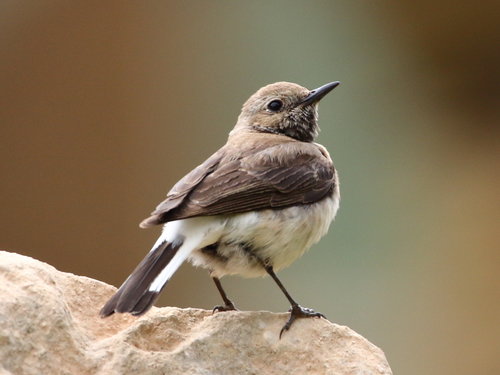
Eastern Black-eared Wheatear
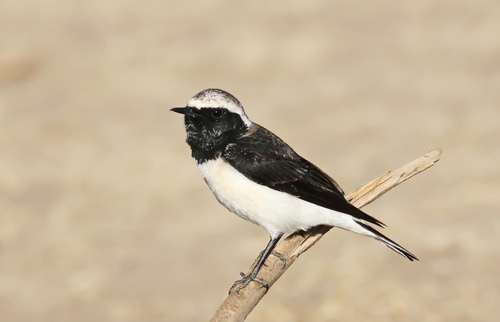
Pied Wheatear
In short
The Eastern Black-eared Wheatear and the Pied Wheatear are closely related and can be challenging to distinguish in the field. The most reliable field mark is the color of the throat and face in males during the breeding season: the Eastern Black-eared Wheatear typically has a black throat and face, while the Pied Wheatear often shows a white throat with a black mask. Females and non-breeding males are more difficult to separate.
Identification tips
- In breeding males, check the throat and face color: black in Eastern Black-eared Wheatear, white with a black mask in Pied Wheatear. 2. Observe the habitat and geographic location, as they have overlapping but distinct ranges. 3. Listen for song differences if possible, but be cautious as these can be subtle. 4. Females and non-breeding males are best identified by location and subtle plumage differences, though these can be unreliable.
Size
Both species are similar in size, typical of small wheatears.
Plumage
Breeding male Eastern Black-eared Wheatears have a black throat and face, contrasting with the white throat and black mask of the Pied Wheatear. Females and non-breeding males of both species are more similar, with subtle differences in the tone of their upperparts and underparts, which can be difficult to discern in the field.
Behaviour
Both species exhibit typical wheatear behavior, often seen perched on rocks or low shrubs and making short flights to catch insects.
Habitat
Both species prefer open, rocky habitats but can be found in slightly different regions. The Eastern Black-eared Wheatear is more common in southeastern Europe and the eastern Mediterranean, while the Pied Wheatear is found further east, extending into Central Asia.
Voice
Vocalizations are similar, but the Pied Wheatear's song is generally more varied and complex compared to the simpler song of the Eastern Black-eared Wheatear. Calls are not typically reliable for field identification.
Eastern Black-eared Wheatear · Pied Wheatear · My Tricky Birds