Eurasian Nightjar vs Violet-backed Starling
Caprimulgus europaeus versus Cinnyricinclus leucogaster
Play a quiz with Eurasian Nightjar and Violet-backed Starling

Eurasian Nightjar
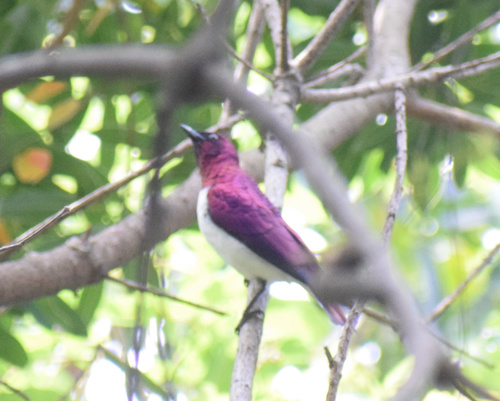
Violet-backed Starling
In short
The Eurasian Nightjar and Violet-backed Starling are easily distinguished by their size, plumage, and behavior. The nightjar has cryptic, mottled plumage suited for camouflage, while the starling is striking with its iridescent violet back. Their habitats and behaviors also differ significantly, aiding in identification.
Identification tips
- Size and Shape: Look for the larger, elongated body of the nightjar versus the compact starling.
- Plumage: Note the nightjar's cryptic colors and the starling's vivid violet back.
- Behavior: Observe the time of activity; nightjars are active at dusk, starlings during the day.
- Habitat: Consider the environment; nightjars prefer open woodlands, starlings are often near water.
- Vocalization: Listen for the nightjar's churring at dusk, contrasting with the starling's melodious song.
Size
The Eurasian Nightjar is larger and more elongated compared to the smaller, more compact Violet-backed Starling.
Plumage
The Eurasian Nightjar has cryptic, mottled brown and gray plumage, with males showing white patches on the wings and tail. In contrast, the Violet-backed Starling is unmistakable with its glossy violet back and white underparts.
Behaviour
The nightjar is nocturnal and often seen at dusk or dawn, relying on camouflage during the day. The starling is diurnal, often seen foraging in flocks.
Habitat
Eurasian Nightjars are found in open woodlands and heathlands, while Violet-backed Starlings inhabit savannas and open woodlands, often near water.
Voice
The nightjar produces a distinctive churring song at dusk, whereas the starling has a varied, melodious song.
Eurasian Nightjar · Violet-backed Starling · My Tricky Birds