
Green Sandpiper vs Common Redshank
Tringa ochropus versus Tringa totanus
Play a quiz with Green Sandpiper and Common Redshank
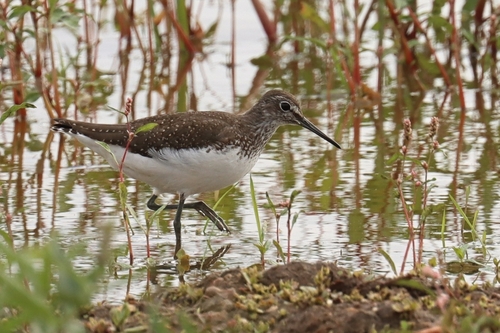
Green Sandpiper
Common Redshank
In short
The Green Sandpiper and Common Redshank are both medium-sized waders, but they can be distinguished by leg color and overall plumage tone. The Green Sandpiper has dark greenish legs and a more contrasting plumage, while the Common Redshank sports bright red legs and a paler overall appearance.
Identification tips
- Leg color: Green Sandpiper has dark greenish legs; Common Redshank has bright red legs. 2. Plumage contrast: Green Sandpiper shows a stark contrast between dark upperparts and white underparts; Common Redshank is more uniformly brownish-grey. 3. Rump pattern in flight: Green Sandpiper has a distinct white rump; Common Redshank lacks this feature. 4. Habitat preference: Look for Green Sandpiper in freshwater habitats with cover, and Common Redshank in open coastal areas.
Size
Both species are similar in size, but the Common Redshank is slightly larger and more robust.
Plumage
The Green Sandpiper has a dark, contrasting plumage with a white belly and a distinct white rump visible in flight. The Common Redshank is paler with a more uniform brownish-grey upperpart and lacks the stark contrast seen in the Green Sandpiper.
Behaviour
Both species forage in shallow waters, but the Common Redshank is more likely to be seen in open mudflats, while the Green Sandpiper prefers wooded or vegetated wetlands.
Habitat
Green Sandpipers are often found in freshwater habitats like ponds and marshes with some cover, whereas Common Redshanks are more commonly seen in open coastal areas and mudflats.
Voice
The Green Sandpiper's call is a sharp 'twee-wee-wee', while the Common Redshank has a more musical, whistling 'teu-teu-teu'.