Grey-backed Thrush vs Blue Rock Thrush
Turdus hortulorum versus Monticola solitarius
Play a quiz with Grey-backed Thrush and Blue Rock Thrush
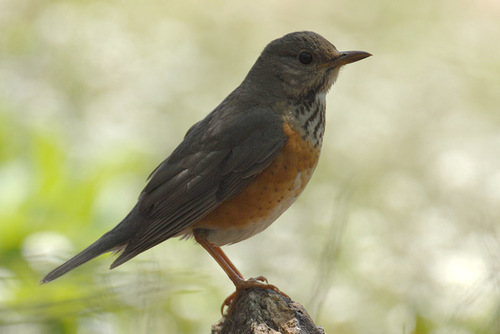
Grey-backed Thrush
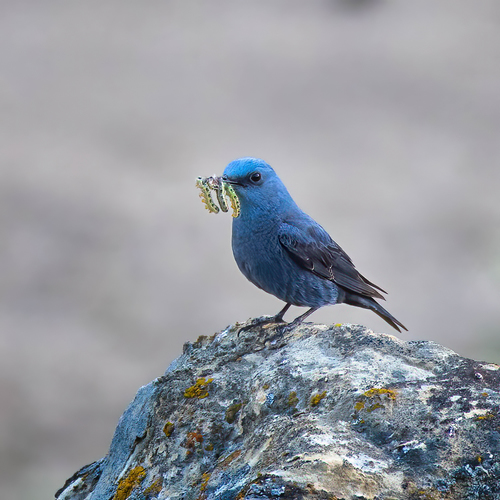
Blue Rock Thrush
In short
The Grey-backed Thrush and Blue Rock Thrush can be distinguished by habitat and plumage. The Grey-backed Thrush typically inhabits forested areas, while the Blue Rock Thrush is found in rocky, open landscapes. In terms of plumage, the Grey-backed Thrush has a grey back and orange flanks, whereas the male Blue Rock Thrush displays a striking blue coloration.
Identification tips
- Habitat: Check the surroundings; forested areas suggest Grey-backed Thrush, rocky landscapes suggest Blue Rock Thrush. 2. Plumage: Look for grey and orange tones for Grey-backed Thrush, and blue for male Blue Rock Thrush. 3. Behavior: Note the perching habits; exposed perches are typical for Blue Rock Thrush.
Size
Both species are similar in size, but the Blue Rock Thrush may appear slightly more robust.
Plumage
The Grey-backed Thrush has a grey back and orange flanks, with a white belly. The male Blue Rock Thrush is predominantly blue, while females and juveniles are brownish with a scaled appearance.
Behaviour
The Blue Rock Thrush often perches on exposed rocks and cliffs, while the Grey-backed Thrush is more likely to be seen foraging on the forest floor.
Habitat
Grey-backed Thrushes are found in forested areas, whereas Blue Rock Thrushes prefer rocky, open landscapes, often near cliffs or coastal regions.
Voice
The vocalizations of both species are not well-documented in the provided sources, but generally, thrushes have melodious songs.