Birdr

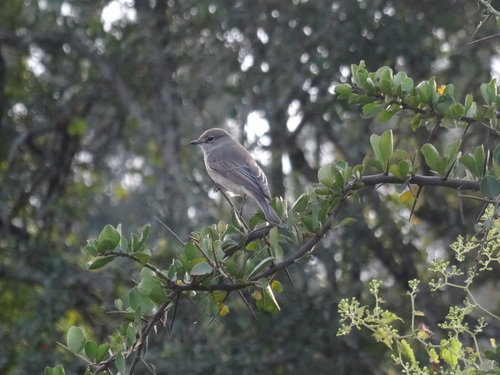
Grey-headed Bushshrike vs Pale Flycatcher

Malaconotus blanchoti versus Agricola pallidus

Play a quiz with Grey-headed Bushshrike and Pale Flycatcher
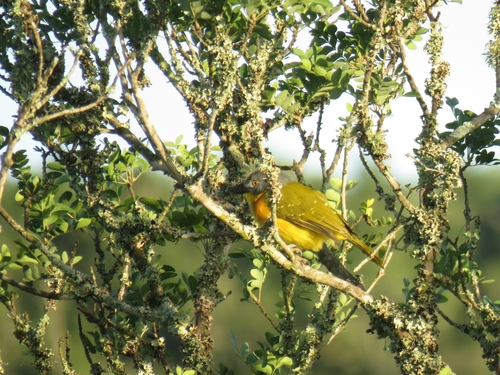
Grey-headed Bushshrike (Malaconotus blanchoti) Grey-headed Bushshrike
Pale Flycatcher (Agricola pallidus) Pale Flycatcher

Media

Loading…

In short

The Grey-headed Bushshrike and Pale Flycatcher can be distinguished primarily by their size and coloration. The Bushshrike is larger with a distinctive grey head, while the Flycatcher is smaller and paler overall. Their habitats and behaviors also differ, aiding in identification.

Identification tips

1. Size: Look for the larger size of the Bushshrike. 2. Head Color: The grey head of the Bushshrike is a key feature. 3. Behavior: Note the skulking behavior of the Bushshrike versus the active flycatching of the Pale Flycatcher. 4. Habitat: Consider the habitat; dense thickets suggest Bushshrike, open areas suggest Flycatcher. 5. Vocalization: Listen for the loud, melodious call of the Bushshrike compared to the softer call of the Flycatcher.

Size

The Grey-headed Bushshrike is notably larger than the Pale Flycatcher.

Plumage

The Bushshrike has a grey head and more vibrant plumage, whereas the Flycatcher is uniformly pale with no striking color contrasts.

Behaviour

Bushshrikes are often more secretive, skulking in dense vegetation, while Flycatchers are more active and visible, often seen sallying for insects.

Habitat

Grey-headed Bushshrikes prefer dense woodland and thickets, whereas Pale Flycatchers are found in open woodlands and savannas.

Voice

The Bushshrike has a loud, melodious call, while the Flycatcher's call is softer and less complex.

Submit a better description

Use the same sections as the comparison. Your text is published immediately.

The Grey-headed Bushshrike and Pale Flycatcher can be distinguished primarily by their size and coloration. The Bushshrike is larger with a distinctive grey head, while the Flycatcher is smaller and paler overall. Their habitats and behaviors also differ, aiding in identification.

1. Size: Look for the larger size of the Bushshrike. 2. Head Color: The grey head of the Bushshrike is a key feature. 3. Behavior: Note the skulking behavior of the Bushshrike versus the active flycatching of the Pale Flycatcher. 4. Habitat: Consider the habitat; dense thickets suggest Bushshrike, open areas suggest Flycatcher. 5. Vocalization: Listen for the loud, melodious call of the Bushshrike compared to the softer call of the Flycatcher.

The Grey-headed Bushshrike is notably larger than the Pale Flycatcher.

The Bushshrike has a grey head and more vibrant plumage, whereas the Flycatcher is uniformly pale with no striking color contrasts.

Bushshrikes are often more secretive, skulking in dense vegetation, while Flycatchers are more active and visible, often seen sallying for insects.

Grey-headed Bushshrikes prefer dense woodland and thickets, whereas Pale Flycatchers are found in open woodlands and savannas.

The Bushshrike has a loud, melodious call, while the Flycatcher's call is softer and less complex.

Discard your changes?

You have unsaved edits. If you leave now, those changes will be lost.

Grey-headed Bushshrike · Pale Flycatcher · My Tricky Birds