Hazel Grouse vs Western Capercaillie
Tetrastes bonasia versus Tetrao urogallus
Play a quiz with Hazel Grouse and Western Capercaillie
Hazel Grouse
Western Capercaillie
In short
The Hazel Grouse and Western Capercaillie are both forest-dwelling grouse species, but they differ significantly in size and habitat preference. The Hazel Grouse is much smaller and more secretive, often found in dense, mixed forests, while the Western Capercaillie is larger and prefers open coniferous forests.
Identification tips
- Size: Western Capercaillie is much larger.
- Habitat: Hazel Grouse in dense forests; Western Capercaillie in open coniferous forests.
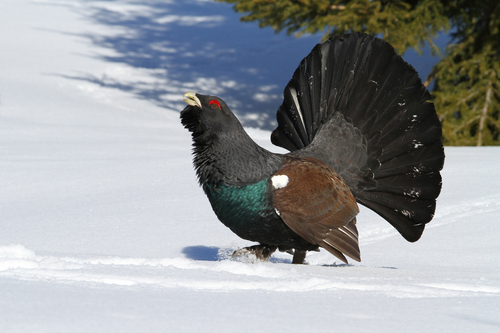
- Plumage: Look for the Western Capercaillie's glossy plumage and fan-shaped tail.
- Behavior: Western Capercaillies display more openly; Hazel Grouse are more secretive.
- Vocalizations: Listen for the Hazel Grouse's whistling versus the Capercaillie's clicking sounds.
Size
The Western Capercaillie is significantly larger than the Hazel Grouse, with the former being one of the largest grouse species.
Plumage
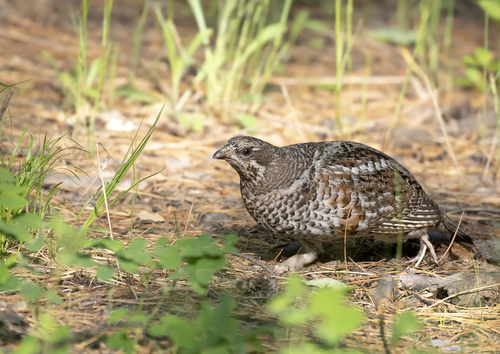
Male Western Capercaillies are striking with their dark, glossy plumage and prominent fan-shaped tail, while Hazel Grouse have more cryptic, mottled brown plumage that provides camouflage in dense undergrowth. Females of both species are more subdued in color, but the size difference remains a key identifier.
Behaviour
Hazel Grouse are more elusive and often solitary, while Western Capercaillies are more likely to be seen in small groups, especially during the breeding season when males display prominently.
Habitat
Hazel Grouse prefer dense, mixed forests with plenty of undergrowth, while Western Capercaillies are typically found in open coniferous forests, often with Scots pine and spruce.
Voice
The Hazel Grouse has a high-pitched, whistling call, whereas the Western Capercaillie produces a series of clicks and popping sounds during its display.