Birdr

King Rail vs Rufous-necked Wood-Rail

Rallus elegans versus Aramides axillaris

Play a quiz with King Rail and Rufous-necked Wood-Rail
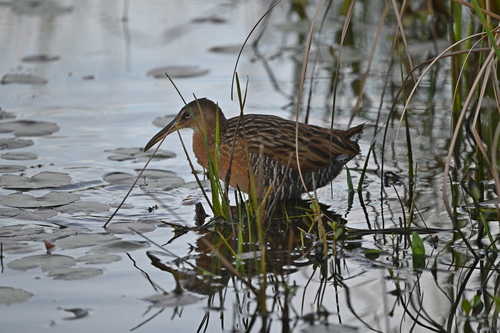
King Rail (Rallus elegans) King Rail
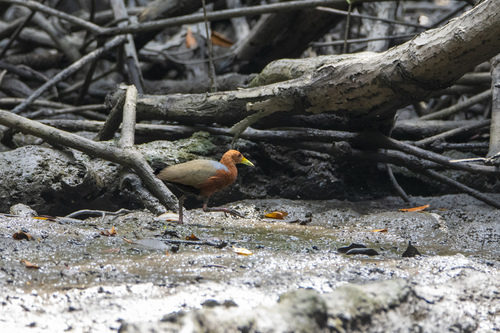
Rufous-necked Wood-Rail (Aramides axillaris) Rufous-necked Wood-Rail

Media

Loading…

In short

The King Rail and Rufous-necked Wood-Rail can be distinguished primarily by their habitat preferences and plumage details. King Rails are typically found in freshwater and brackish marshes, while Rufous-necked Wood-Rails inhabit mangrove swamps. Key plumage differences include the King Rail's more subdued coloration compared to the Rufous-necked Wood-Rail's vibrant rufous neck.

Identification tips

  1. Habitat: Check the habitat; King Rails are in freshwater/brackish marshes, Rufous-necked Wood-Rails in mangroves. 2. Size and Shape: Note the size; King Rails are larger and bulkier. 3. Plumage: Look for the rufous neck of the Rufous-necked Wood-Rail. 4. Vocalizations: Listen for the King Rail's clattering calls.

Size

King Rails are generally larger and bulkier than Rufous-necked Wood-Rails.

Plumage

King Rails have a more muted brown and gray plumage with a less distinct neck color, whereas Rufous-necked Wood-Rails exhibit a striking rufous neck and more vibrant overall plumage.

Behaviour

Both species are secretive and often seen skulking in dense vegetation, but the King Rail is more likely to be seen in open marshes.

Habitat

King Rails are found in freshwater and brackish marshes, often in rice fields, while Rufous-necked Wood-Rails prefer mangrove swamps and coastal areas.

Voice

The King Rail's vocalizations are typically a series of clattering calls, whereas the Rufous-necked Wood-Rail's calls are less documented but are generally softer and less frequent.

Submit a better description

Use the same sections as the comparison. Your text is published immediately.

The King Rail and Rufous-necked Wood-Rail can be distinguished primarily by their habitat preferences and plumage details. King Rails are typically found in freshwater and brackish marshes, while Rufous-necked Wood-Rails inhabit mangrove swamps. Key plumage differences include the King Rail's more subdued coloration compared to the Rufous-necked Wood-Rail's vibrant rufous neck.

  1. Habitat: Check the habitat; King Rails are in freshwater/brackish marshes, Rufous-necked Wood-Rails in mangroves. 2. Size and Shape: Note the size; King Rails are larger and bulkier. 3. Plumage: Look for the rufous neck of the Rufous-necked Wood-Rail. 4. Vocalizations: Listen for the King Rail's clattering calls.

King Rails are generally larger and bulkier than Rufous-necked Wood-Rails.

King Rails have a more muted brown and gray plumage with a less distinct neck color, whereas Rufous-necked Wood-Rails exhibit a striking rufous neck and more vibrant overall plumage.

Both species are secretive and often seen skulking in dense vegetation, but the King Rail is more likely to be seen in open marshes.

King Rails are found in freshwater and brackish marshes, often in rice fields, while Rufous-necked Wood-Rails prefer mangrove swamps and coastal areas.

The King Rail's vocalizations are typically a series of clattering calls, whereas the Rufous-necked Wood-Rail's calls are less documented but are generally softer and less frequent.

Discard your changes?

You have unsaved edits. If you leave now, those changes will be lost.

King Rail · Rufous-necked Wood-Rail · My Tricky Birds