Birdr

Large-tailed Nightjar vs Barred Buttonquail

Caprimulgus macrurus versus Turnix suscitator

Play a quiz with Large-tailed Nightjar and Barred Buttonquail
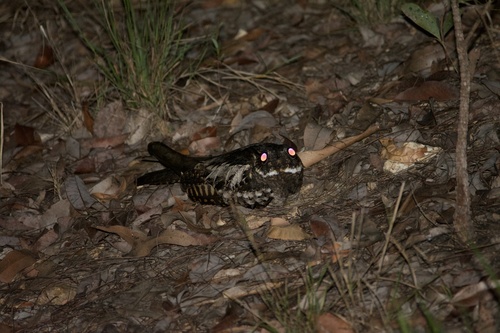
Large-tailed Nightjar (Caprimulgus macrurus) Large-tailed Nightjar
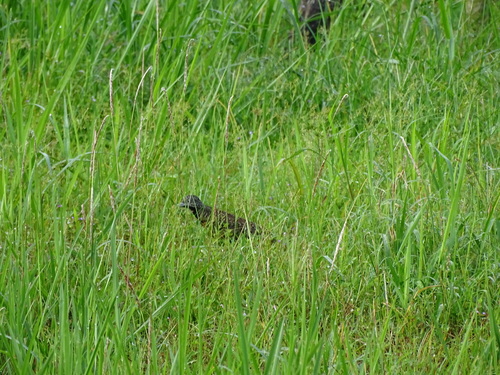
Barred Buttonquail (Turnix suscitator) Barred Buttonquail

Media

Loading…

In short

The Large-tailed Nightjar and the Barred Buttonquail are distinct in both appearance and behavior. The nightjar is a nocturnal bird with a cryptic plumage, while the buttonquail is a terrestrial bird with a barred pattern. Observing their activity patterns and habitats can quickly help differentiate them.

Identification tips

  1. Time of Activity: Nightjars are active at night; buttonquails are active during the day. 2. Habitat: Look for nightjars in wooded areas and buttonquails in grasslands. 3. Plumage: Nightjars have a cryptic pattern, while buttonquails have barred underparts. 4. Behavior: Nightjars rest on the ground during the day; buttonquails are often seen foraging.

Size

The Large-tailed Nightjar is generally larger with a longer tail, while the Barred Buttonquail is smaller and more compact.

Plumage

The nightjar has a mottled brown and gray plumage that provides excellent camouflage in wooded areas. In contrast, the buttonquail has a distinctive barred pattern on its underparts and a more uniform brown on its back.

Behaviour

The nightjar is primarily nocturnal and often seen resting on the ground during the day, whereas the buttonquail is diurnal and frequently seen foraging on the ground.

Habitat

The Large-tailed Nightjar is found in open forests and wooded areas, while the Barred Buttonquail prefers grasslands and scrubby areas.

Voice

The nightjar is known for its distinctive, repetitive calls at night, whereas the buttonquail's vocalizations are less prominent and not typically used for identification.

Submit a better description

Use the same sections as the comparison. Your text is published immediately.

The Large-tailed Nightjar and the Barred Buttonquail are distinct in both appearance and behavior. The nightjar is a nocturnal bird with a cryptic plumage, while the buttonquail is a terrestrial bird with a barred pattern. Observing their activity patterns and habitats can quickly help differentiate them.

  1. Time of Activity: Nightjars are active at night; buttonquails are active during the day. 2. Habitat: Look for nightjars in wooded areas and buttonquails in grasslands. 3. Plumage: Nightjars have a cryptic pattern, while buttonquails have barred underparts. 4. Behavior: Nightjars rest on the ground during the day; buttonquails are often seen foraging.

The Large-tailed Nightjar is generally larger with a longer tail, while the Barred Buttonquail is smaller and more compact.

The nightjar has a mottled brown and gray plumage that provides excellent camouflage in wooded areas. In contrast, the buttonquail has a distinctive barred pattern on its underparts and a more uniform brown on its back.

The nightjar is primarily nocturnal and often seen resting on the ground during the day, whereas the buttonquail is diurnal and frequently seen foraging on the ground.

The Large-tailed Nightjar is found in open forests and wooded areas, while the Barred Buttonquail prefers grasslands and scrubby areas.

The nightjar is known for its distinctive, repetitive calls at night, whereas the buttonquail's vocalizations are less prominent and not typically used for identification.

Discard your changes?

You have unsaved edits. If you leave now, those changes will be lost.

Large-tailed Nightjar · Barred Buttonquail · My Tricky Birds