Birdr

Lark Bunting vs American Tree Sparrow

Calamospiza melanocorys versus Spizelloides arborea

Play a quiz with Lark Bunting and American Tree Sparrow
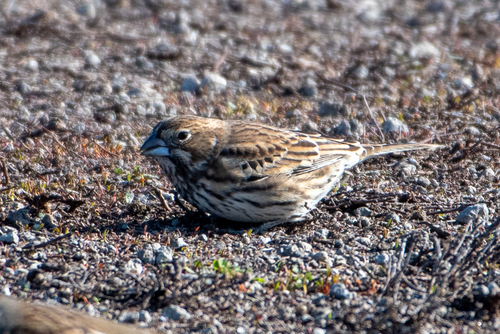
Lark Bunting (Calamospiza melanocorys) Lark Bunting
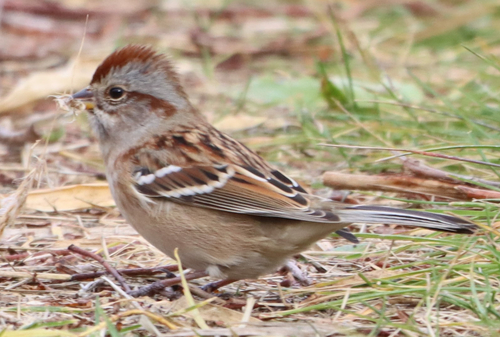
American Tree Sparrow (Spizelloides arborea) American Tree Sparrow

Media

Loading…

In short

The Lark Bunting and American Tree Sparrow can be distinguished by their plumage and behavior. Lark Buntings are known for their striking male alternate plumage and nomadic winter flocks, while American Tree Sparrows have a distinctive bicolored bill and are more solitary in winter.

Identification tips

  1. Look for the bold black and white plumage of male Lark Buntings in breeding season. 2. Note the rusty cap and bicolored bill of the American Tree Sparrow. 3. Observe flock behavior: large flocks suggest Lark Buntings, while solitary or small groups suggest American Tree Sparrows. 4. Consider habitat: open grasslands for Lark Buntings, shrubby areas for American Tree Sparrows.

Size

Both species are small sparrows, but the Lark Bunting is slightly larger and more robust compared to the American Tree Sparrow.

Plumage

Male Lark Buntings in breeding season have a bold black and white plumage, while females and non-breeding males are more subdued brown. American Tree Sparrows have a rusty cap, gray face with a rusty eye line, and a bicolored bill, which is consistent across seasons.

Behaviour

Lark Buntings are highly nomadic in winter, forming large flocks, whereas American Tree Sparrows are more solitary or found in small groups during the same period.

Habitat

Lark Buntings prefer open grasslands and can adapt to human-altered habitats, while American Tree Sparrows are often found in shrubby or brushy areas, especially during winter.

Voice

Lark Buntings have two distinct flight songs, while American Tree Sparrows have a musical, sweet song that is different from the Lark Bunting's vocalizations.

Submit a better description

Use the same sections as the comparison. Your text is published immediately.

The Lark Bunting and American Tree Sparrow can be distinguished by their plumage and behavior. Lark Buntings are known for their striking male alternate plumage and nomadic winter flocks, while American Tree Sparrows have a distinctive bicolored bill and are more solitary in winter.

  1. Look for the bold black and white plumage of male Lark Buntings in breeding season. 2. Note the rusty cap and bicolored bill of the American Tree Sparrow. 3. Observe flock behavior: large flocks suggest Lark Buntings, while solitary or small groups suggest American Tree Sparrows. 4. Consider habitat: open grasslands for Lark Buntings, shrubby areas for American Tree Sparrows.

Both species are small sparrows, but the Lark Bunting is slightly larger and more robust compared to the American Tree Sparrow.

Male Lark Buntings in breeding season have a bold black and white plumage, while females and non-breeding males are more subdued brown. American Tree Sparrows have a rusty cap, gray face with a rusty eye line, and a bicolored bill, which is consistent across seasons.

Lark Buntings are highly nomadic in winter, forming large flocks, whereas American Tree Sparrows are more solitary or found in small groups during the same period.

Lark Buntings prefer open grasslands and can adapt to human-altered habitats, while American Tree Sparrows are often found in shrubby or brushy areas, especially during winter.

Lark Buntings have two distinct flight songs, while American Tree Sparrows have a musical, sweet song that is different from the Lark Bunting's vocalizations.

Discard your changes?

You have unsaved edits. If you leave now, those changes will be lost.

Lark Bunting · American Tree Sparrow · My Tricky Birds