
Little Cuckoo-Dove vs Red-cheeked Cordonbleu
Macropygia ruficeps versus Uraeginthus bengalus
Play a quiz with Little Cuckoo-Dove and Red-cheeked Cordonbleu
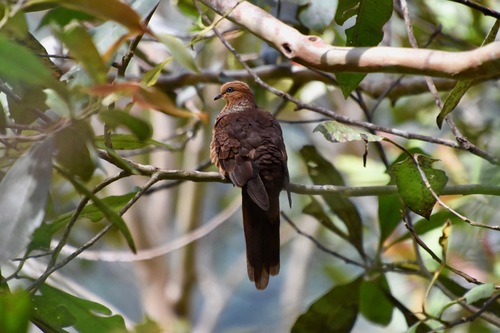 Little Cuckoo-Dove
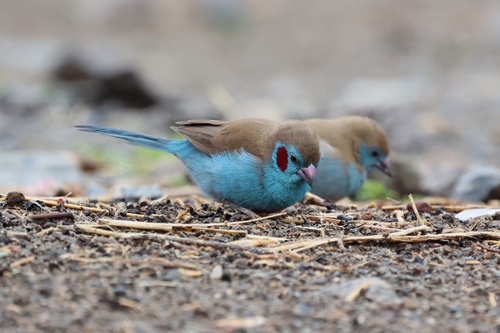 Red-cheeked Cordonbleu
In short
The most reliable way to separate Little Cuckoo-Dove from Red-cheeked Cordonbleu is by size and structure: the cuckoo-dove is a much larger, long-tailed reddish pigeon, while the cordonbleu is a tiny, delicate finch with a blue and brown plumage and, in males, a distinctive red cheek patch. Immature cordonbleus lack the red cheek and have blue only on the face and throat, but are still unmistakably small and finch-like. The cuckoo-dove’s cinnamon-buff coloration and long tail are unique among pigeons in its range, and it never shows the blue or red facial colors of the cordonbleu. Even at a distance, the difference in body size and shape is dramatic.
Identification tips
- Size is the most immediate clue: Little Cuckoo-Dove is nearly three times the length and over eight times the mass of Red-cheeked Cordonbleu. If the bird looks pigeon-sized, it cannot be a cordonbleu.
- Tail shape and length: The cuckoo-dove has a long, graduated tail typical of cuckoo-doves, while the cordonbleu’s tail is long but thin and pointed, fitting a small finch.
- Bill structure: The cuckoo-dove has a stout, pigeon-like bill (brown with black tip); the cordonbleu has a short, conical finch bill, pale in color.
- Plumage color: Little Cuckoo-Dove is cinnamon-buff to reddish brown all over, never showing blue or red on the face. Cordonbleu males have extensive blue on the face, breast, and flanks, with a red cheek patch; females and immatures are duller but always show some blue on the face and brown wings.
- Red cheek patch: Only adult male cordonbleus have a red cheek spot (sometimes orange/yellowish). No age or sex of cuckoo-dove shows any facial patch.
- Iris color: Cuckoo-dove has greyish white eyes, which can be visible at close range. Cordonbleu’s eye color is not distinctive in the field.
- Feet color: Cuckoo-dove has coral red feet, a subtle but sometimes visible mark when perched.
- Flight style: Cuckoo-dove flies with strong, direct wingbeats and glides, typical of pigeons. Cordonbleu has a rapid, undulating flight, typical of small finches.
- Perching posture: Cuckoo-dove perches upright, often in trees. Cordonbleu perches horizontally, often low or on the ground.
- Group behavior: Cuckoo-doves are often in loose flocks, sometimes in the canopy. Cordonbleus are usually in pairs or small groups, feeding on the ground.
- Habitat context: If you are in Southeast Asian forest or woodland, cuckoo-dove is possible; in dry, open African country, only cordonbleu is likely. They do not occur together.
- Geographic range: Cuckoo-dove is found in Southeast Asia; cordonbleu in sub-Saharan Africa. Any sighting outside these regions is likely a misidentification or escapee.
- Juvenile/immature confusion: Immature cordonbleus lack the red cheek and have less blue, but are still tiny and finch-like, never reddish or pigeon-shaped. No age of cuckoo-dove shows blue or a small finch structure.
- Sex differences: Only male cordonbleus have the red cheek; females and immatures lack it but retain blue on the face. Cuckoo-dove sexes are similar.
- No blue in cuckoo-dove: Any hint of blue on face, breast, or flanks rules out cuckoo-dove at all ages.
Size
Little Cuckoo-Dove is vastly larger, weighing about 82 g and measuring 27–30 cm in length, with a long tail and robust pigeon build. Red-cheeked Cordonbleu is one of the smallest finches, around 9.9 g and just 12.5–13 cm long, with a slim, delicate body and thin, pointed tail. Even without direct comparison, the size gap is extreme—no overlap. Through binoculars, the cuckoo-dove will appear pigeon-sized, the cordonbleu sparrow-sized or smaller.
Plumage
No age or flight-specific wing patterns are described for either species, so focus is on overall coloration and face pattern. Adult Little Cuckoo-Dove is uniformly cinnamon-buff to reddish brown, with a long, graduated tail and greyish white eyes. The bill is brown with a black tip, and the feet are coral red. There are no blue or red facial markings at any age. Red-cheeked Cordonbleu adult males have blue from face to breast and flanks, a red cheek patch, brown wings, and a long, thin tail; females are duller, lack the red cheek, and have less blue, while immatures resemble females but with blue only on the face and throat. The cordonbleu never shows the uniform reddish tones or pigeon-like features of the cuckoo-dove. In all ages, the cordonbleu’s blue and brown contrast is diagnostic, as is the male’s red cheek.
Behaviour
Little Cuckoo-Dove is typically seen in loose flocks, often perched in trees or flying with slow, direct wingbeats typical of pigeons. Its movements are more ponderous and it perches upright. Red-cheeked Cordonbleu is a ground-feeding finch, usually foraging for seeds in pairs or small groups, often on open ground or low in grass. Its flight is quick and undulating, and it perches with a horizontal posture. The two species’ behaviors rarely overlap, with the cuckoo-dove rarely feeding on the ground and the cordonbleu rarely perching high in trees.
Habitat
Little Cuckoo-Dove inhabits forested and wooded areas in Southeast Asia, from lowlands to hills, often in humid or semi-humid regions. Red-cheeked Cordonbleu is found in dry, open habitats of sub-Saharan Africa, such as savannas, gardens, and cultivated land. Their ranges do not overlap geographically, and their preferred habitats are very different: forest for the cuckoo-dove, open dry country for the cordonbleu.
Little Cuckoo-Dove · Red-cheeked Cordonbleu · My Tricky Birds