
Birdr

Malaysian Blue-banded Kingfisher vs Rufous-backed Dwarf-Kingfisher

Alcedo peninsulae versus Ceyx rufidorsa

Play a quiz with Malaysian Blue-banded Kingfisher and Rufous-backed Dwarf-Kingfisher

Malaysian Blue-banded Kingfisher (Alcedo peninsulae) Malaysian Blue-banded Kingfisher
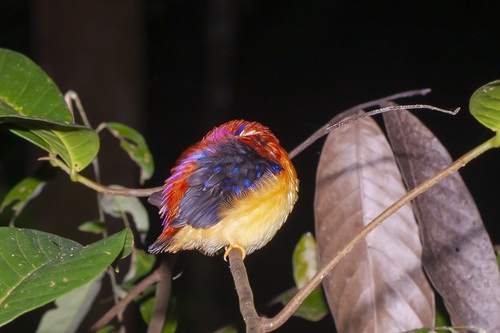
Rufous-backed Dwarf-Kingfisher (Ceyx rufidorsa) Rufous-backed Dwarf-Kingfisher

Media

Loading…

In short

The Malaysian Blue-banded Kingfisher and the Rufous-backed Dwarf-Kingfisher can be distinguished by their size and plumage. The Malaysian Blue-banded Kingfisher has a distinctive blue breast-band in males, while the Rufous-backed Dwarf-Kingfisher is notable for its rufous back and smaller size.

Identification tips

  1. Look for the blue breast-band in male Malaysian Blue-banded Kingfishers. 2. Note the rufous back of the Rufous-backed Dwarf-Kingfisher. 3. Consider the habitat: near water for Malaysian Blue-banded, forest for Rufous-backed. 4. Listen for high-pitched calls of the Rufous-backed Dwarf-Kingfisher.

Size

The Malaysian Blue-banded Kingfisher is larger than the Rufous-backed Dwarf-Kingfisher.

Plumage

The Malaysian Blue-banded Kingfisher male has a blue breast-band, while the Rufous-backed Dwarf-Kingfisher has a rufous back and lacks the blue breast-band.

Behaviour

The Rufous-backed Dwarf-Kingfisher is often seen flying rapidly through forests and is not always associated with water, unlike many other kingfishers.

Habitat

The Malaysian Blue-banded Kingfisher is typically found near water bodies, while the Rufous-backed Dwarf-Kingfisher can be found in forested areas and is less water-dependent.

Voice

The Rufous-backed Dwarf-Kingfisher gives high-pitched call notes, which may help in distinguishing it from the Malaysian Blue-banded Kingfisher.

Submit a better description

Use the same sections as the comparison. Your text is published immediately.

The Malaysian Blue-banded Kingfisher and the Rufous-backed Dwarf-Kingfisher can be distinguished by their size and plumage. The Malaysian Blue-banded Kingfisher has a distinctive blue breast-band in males, while the Rufous-backed Dwarf-Kingfisher is notable for its rufous back and smaller size.

  1. Look for the blue breast-band in male Malaysian Blue-banded Kingfishers. 2. Note the rufous back of the Rufous-backed Dwarf-Kingfisher. 3. Consider the habitat: near water for Malaysian Blue-banded, forest for Rufous-backed. 4. Listen for high-pitched calls of the Rufous-backed Dwarf-Kingfisher.

The Malaysian Blue-banded Kingfisher is larger than the Rufous-backed Dwarf-Kingfisher.

The Malaysian Blue-banded Kingfisher male has a blue breast-band, while the Rufous-backed Dwarf-Kingfisher has a rufous back and lacks the blue breast-band.

The Rufous-backed Dwarf-Kingfisher is often seen flying rapidly through forests and is not always associated with water, unlike many other kingfishers.

The Malaysian Blue-banded Kingfisher is typically found near water bodies, while the Rufous-backed Dwarf-Kingfisher can be found in forested areas and is less water-dependent.

The Rufous-backed Dwarf-Kingfisher gives high-pitched call notes, which may help in distinguishing it from the Malaysian Blue-banded Kingfisher.

Discard your changes?

You have unsaved edits. If you leave now, those changes will be lost.

Malaysian Blue-banded Kingfisher · Rufous-backed Dwarf-Kingfisher · My Tricky Birds