
Mexican Fan-tailed Warbler vs Wilson's Warbler
Euthlypis lachrymosa versus Cardellina pusilla
Play a quiz with Mexican Fan-tailed Warbler and Wilson's Warbler
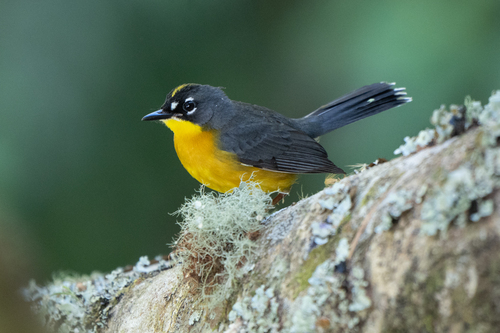 Mexican Fan-tailed Warbler
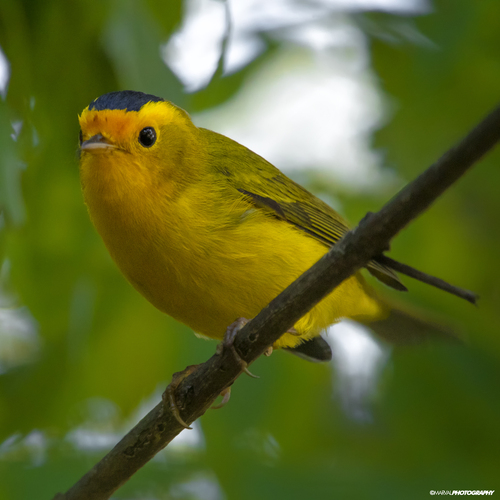 Wilson's Warbler
In short
The Mexican Fan-tailed Warbler and Wilson's Warbler can be distinguished primarily by their head markings and behavior. The Mexican Fan-tailed Warbler lacks the distinctive black cap of the Wilson's Warbler and is noted for its fan-shaped tail. In contrast, Wilson's Warbler is recognized by its simple, bright color pattern and characteristic tail-waving behavior.
Identification tips
- Look for the black cap on Wilson's Warbler. 2. Observe the tail-waving behavior of Wilson's Warbler. 3. Note the habitat: Wilson's Warbler is often in wet, shrubby areas. 4. Listen for Wilson's Warbler's short, chattering song.
Plumage
Wilson's Warbler is easily identified by its black cap and bright, simple color pattern. The Mexican Fan-tailed Warbler does not have a black cap and may exhibit different plumage characteristics, such as a fan-shaped tail.
Behaviour
Wilson's Warbler is known for its characteristic tail-waving and is often seen darting through shrub willows and undergrowth. This behavior is a key distinction from the Mexican Fan-tailed Warbler.
Habitat
Wilson's Warbler is commonly found in wet habitats, riparian areas, and wet meadows with deciduous shrub thickets, while the Mexican Fan-tailed Warbler's habitat preferences are not specified here.
Voice
Wilson's Warbler has a short, chattering song which is a distinguishing feature, but there is no specific vocalization information provided for the Mexican Fan-tailed Warbler.
Mexican Fan-tailed Warbler · Wilson's Warbler · My Tricky Birds