Morelet's Seedeater vs Yellow-bellied Seedeater
Sporophila morelleti versus Sporophila nigricollis
Play a quiz with Morelet's Seedeater and Yellow-bellied Seedeater
Morelet's Seedeater
Yellow-bellied Seedeater
In short
Morelet's Seedeater and Yellow-bellied Seedeater are both small, black-and-white birds, but they can be distinguished by the male's plumage and subtle habitat preferences. Morelet's Seedeater males have a more pronounced black-and-white contrast, while Yellow-bellied Seedeater males have a yellow wash on the underparts. Females and juveniles of both species are more challenging to differentiate.
Identification tips
1. Look for the yellow wash on the belly of male Yellow-bellied Seedeaters. 2. Observe habitat: Morelet's Seedeater prefers areas near water. 3. Note the time of year: Morelet's Seedeater males sing from March to October. 4. Be cautious with females and juveniles, as they are very similar in both species.
Size
Both species are similar in size, typical of small seedeaters.
Plumage
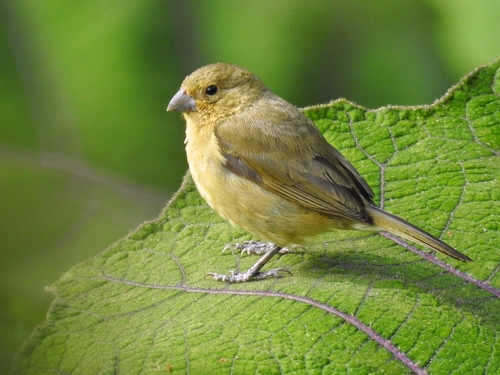
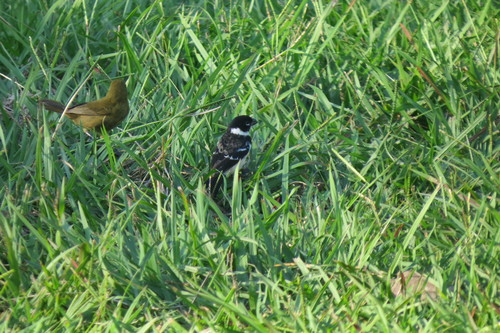
Male Morelet's Seedeaters have a stark black-and-white plumage, while male Yellow-bellied Seedeaters show a yellowish tint on the belly. Females and juveniles of both species are brownish and difficult to distinguish.
Behaviour
Morelet's Seedeater males are often seen singing conspicuously, while females are more secretive. Yellow-bellied Seedeater behavior is less documented but likely similar.
Habitat
Morelet's Seedeater is found in savannas, pastures, and brushy fields near water, primarily in Central America and parts of Texas. Yellow-bellied Seedeater's habitat overlaps but is less specific in the notes.
Voice
Vocalizations are not well-documented for both species, but Morelet's Seedeater males are noted for singing from March to October.
Morelet's Seedeater · Yellow-bellied Seedeater · My Tricky Birds