Birdr

Northern Hawk-Cuckoo vs Indian Cuckoo

Hierococcyx hyperythrus versus Cuculus micropterus

Play a quiz with Northern Hawk-Cuckoo and Indian Cuckoo

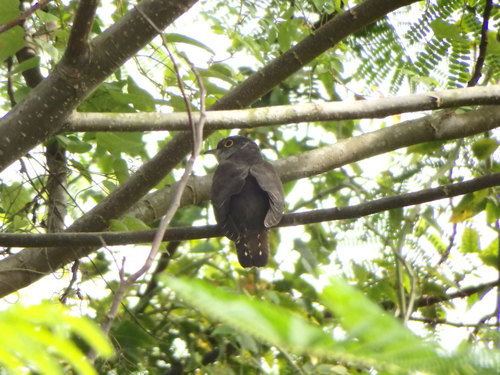
Northern Hawk-Cuckoo (Hierococcyx hyperythrus) Northern Hawk-Cuckoo
Indian Cuckoo (Cuculus micropterus) Indian Cuckoo

Media

Loading…

In short

The Northern Hawk-Cuckoo and Indian Cuckoo can be challenging to differentiate, but key differences in size and vocalizations are helpful. The Northern Hawk-Cuckoo is generally smaller and has a more pronounced supercilium, while the Indian Cuckoo is larger with a distinctive four-note call.

Identification tips

1. Size: Look for the smaller, more compact Northern Hawk-Cuckoo versus the larger Indian Cuckoo. 2. Supercilium: The Northern Hawk-Cuckoo has a more pronounced supercilium. 3. Vocalization: Listen for the Indian Cuckoo's distinctive four-note call. 4. Habitat: Consider the habitat; Northern Hawk-Cuckoo prefers cooler, more temperate forests.

Size

The Northern Hawk-Cuckoo is smaller and more compact compared to the larger Indian Cuckoo.

Plumage

Both species have similar barred underparts, but the Northern Hawk-Cuckoo tends to have a more pronounced supercilium and a slightly rufous wash on the breast.

Behaviour

Both species are secretive and often remain hidden in foliage, but the Northern Hawk-Cuckoo may be more active in the canopy.

Habitat

Both species inhabit forested areas, but the Northern Hawk-Cuckoo is more likely to be found in subtropical or temperate forests, while the Indian Cuckoo prefers deciduous forests and open woodlands.

Voice

The Northern Hawk-Cuckoo has a series of high-pitched notes, whereas the Indian Cuckoo is known for its distinctive four-note call, often transcribed as 'bo-ko-ta-ko'.

Submit a better description

Use the same sections as the comparison. Your text is published immediately.

The Northern Hawk-Cuckoo and Indian Cuckoo can be challenging to differentiate, but key differences in size and vocalizations are helpful. The Northern Hawk-Cuckoo is generally smaller and has a more pronounced supercilium, while the Indian Cuckoo is larger with a distinctive four-note call.

1. Size: Look for the smaller, more compact Northern Hawk-Cuckoo versus the larger Indian Cuckoo. 2. Supercilium: The Northern Hawk-Cuckoo has a more pronounced supercilium. 3. Vocalization: Listen for the Indian Cuckoo's distinctive four-note call. 4. Habitat: Consider the habitat; Northern Hawk-Cuckoo prefers cooler, more temperate forests.

The Northern Hawk-Cuckoo is smaller and more compact compared to the larger Indian Cuckoo.

Both species have similar barred underparts, but the Northern Hawk-Cuckoo tends to have a more pronounced supercilium and a slightly rufous wash on the breast.

Both species are secretive and often remain hidden in foliage, but the Northern Hawk-Cuckoo may be more active in the canopy.

Both species inhabit forested areas, but the Northern Hawk-Cuckoo is more likely to be found in subtropical or temperate forests, while the Indian Cuckoo prefers deciduous forests and open woodlands.

The Northern Hawk-Cuckoo has a series of high-pitched notes, whereas the Indian Cuckoo is known for its distinctive four-note call, often transcribed as 'bo-ko-ta-ko'.

Discard your changes?

You have unsaved edits. If you leave now, those changes will be lost.

Northern Hawk-Cuckoo · Indian Cuckoo · My Tricky Birds