Birdr

Pied Avocet vs Curlew Sandpiper

Recurvirostra avosetta versus Calidris ferruginea

Play a quiz with Pied Avocet and Curlew Sandpiper

Pied Avocet (Recurvirostra avosetta) Pied Avocet
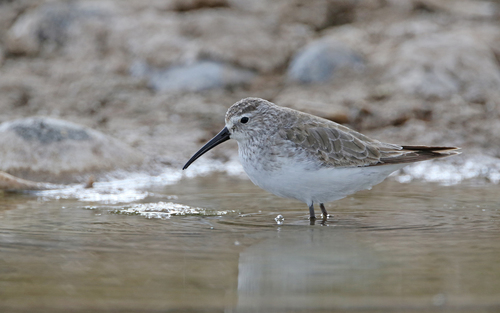
Curlew Sandpiper (Calidris ferruginea) Curlew Sandpiper

Media

Loading…

In short

The Pied Avocet and Curlew Sandpiper can be distinguished primarily by their bill shape and plumage patterns. The Avocet has a distinctively upturned bill and striking black and white plumage, while the Curlew Sandpiper features a slightly decurved bill and more muted, often reddish tones during breeding season.

Identification tips

  1. Bill Shape: Look for the Avocet's upturned bill versus the Sandpiper's slightly decurved bill. 2. Plumage: Note the Avocet's bold black and white pattern against the Sandpiper's more subdued tones. 3. Size: Avocets are larger and more robust. 4. Behavior: Observe feeding behavior; Avocets sweep their bills, Sandpipers probe. 5. Habitat: Consider the habitat; Avocets prefer saline wetlands, Sandpipers are often on mudflats.

Size

The Pied Avocet is larger and more robust compared to the smaller, more delicate Curlew Sandpiper.

Plumage

Pied Avocet displays bold black and white plumage year-round. Curlew Sandpiper, in breeding plumage, shows a reddish-brown color, but outside of breeding season, it appears more grayish-brown, lacking the stark contrast of the Avocet.

Behaviour

Pied Avocets often sweep their bills side-to-side in shallow water, while Curlew Sandpipers probe more directly into mudflats.

Habitat

Pied Avocets are typically found in saline or brackish wetlands, while Curlew Sandpipers frequent mudflats and coastal estuaries, especially during migration.

Voice

Pied Avocets have a distinctive, repetitive 'klute-klute' call, whereas Curlew Sandpipers are generally quieter, with softer, more subtle calls.

Submit a better description

Use the same sections as the comparison. Your text is published immediately.

The Pied Avocet and Curlew Sandpiper can be distinguished primarily by their bill shape and plumage patterns. The Avocet has a distinctively upturned bill and striking black and white plumage, while the Curlew Sandpiper features a slightly decurved bill and more muted, often reddish tones during breeding season.

  1. Bill Shape: Look for the Avocet's upturned bill versus the Sandpiper's slightly decurved bill. 2. Plumage: Note the Avocet's bold black and white pattern against the Sandpiper's more subdued tones. 3. Size: Avocets are larger and more robust. 4. Behavior: Observe feeding behavior; Avocets sweep their bills, Sandpipers probe. 5. Habitat: Consider the habitat; Avocets prefer saline wetlands, Sandpipers are often on mudflats.

The Pied Avocet is larger and more robust compared to the smaller, more delicate Curlew Sandpiper.

Pied Avocet displays bold black and white plumage year-round. Curlew Sandpiper, in breeding plumage, shows a reddish-brown color, but outside of breeding season, it appears more grayish-brown, lacking the stark contrast of the Avocet.

Pied Avocets often sweep their bills side-to-side in shallow water, while Curlew Sandpipers probe more directly into mudflats.

Pied Avocets are typically found in saline or brackish wetlands, while Curlew Sandpipers frequent mudflats and coastal estuaries, especially during migration.

Pied Avocets have a distinctive, repetitive 'klute-klute' call, whereas Curlew Sandpipers are generally quieter, with softer, more subtle calls.

Discard your changes?

You have unsaved edits. If you leave now, those changes will be lost.

Pied Avocet · Curlew Sandpiper · My Tricky Birds