Birdr

Pied Avocet vs Eurasian Oystercatcher

Recurvirostra avosetta versus Haematopus ostralegus

Play a quiz with Pied Avocet and Eurasian Oystercatcher
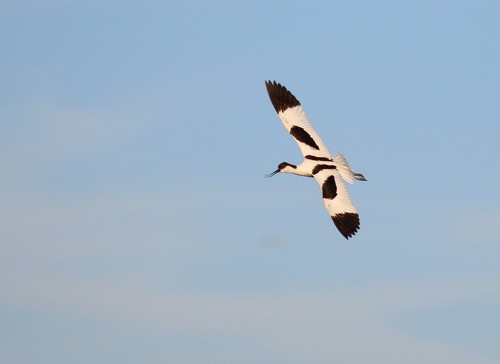
Pied Avocet (Recurvirostra avosetta) Pied Avocet
Eurasian Oystercatcher (Haematopus ostralegus) Eurasian Oystercatcher

Media

Loading…

In short

The Pied Avocet and Eurasian Oystercatcher are both striking shorebirds, but they can be distinguished by their bills and plumage. The Avocet has a slender, upturned bill and contrasting black-and-white plumage, while the Oystercatcher features a robust, straight bill and a more uniform black-and-white appearance.

Identification tips

1. Bill Shape: Look for the Avocet's slender, upturned bill versus the Oystercatcher's straight, robust bill. 2. Plumage: Note the Avocet's contrasting black-and-white pattern compared to the Oystercatcher's more uniform black upperparts. 3. Behavior: Observe feeding behavior; Avocets sweep their bills, while Oystercatchers probe or pry. 4. Habitat: Consider the habitat; Avocets favor shallow water, Oystercatchers prefer rocky or muddy shores. 5. Calls: Listen for the Avocet's softer calls versus the Oystercatcher's loud piping.

Size

Both species are similar in size, but the Eurasian Oystercatcher is generally bulkier with a more robust build compared to the slender Pied Avocet.

Plumage

The Pied Avocet has a distinctive black-and-white pattern with a white body and black wings and cap. In contrast, the Eurasian Oystercatcher is more uniformly black above and white below, with a striking white wingbar visible in flight.

Behaviour

Pied Avocets often feed by sweeping their upturned bills side to side in shallow water, while Eurasian Oystercatchers use their strong bills to pry open mollusks or probe for invertebrates.

Habitat

Both species can be found in coastal and wetland areas, but Pied Avocets prefer shallow lagoons and salt pans, whereas Eurasian Oystercatchers are more commonly seen on rocky shores and mudflats.

Voice

The Pied Avocet's calls are softer and more melodious, while the Eurasian Oystercatcher is known for its loud, piping calls.

Submit a better description

Use the same sections as the comparison. Your text is published immediately.

The Pied Avocet and Eurasian Oystercatcher are both striking shorebirds, but they can be distinguished by their bills and plumage. The Avocet has a slender, upturned bill and contrasting black-and-white plumage, while the Oystercatcher features a robust, straight bill and a more uniform black-and-white appearance.

1. Bill Shape: Look for the Avocet's slender, upturned bill versus the Oystercatcher's straight, robust bill. 2. Plumage: Note the Avocet's contrasting black-and-white pattern compared to the Oystercatcher's more uniform black upperparts. 3. Behavior: Observe feeding behavior; Avocets sweep their bills, while Oystercatchers probe or pry. 4. Habitat: Consider the habitat; Avocets favor shallow water, Oystercatchers prefer rocky or muddy shores. 5. Calls: Listen for the Avocet's softer calls versus the Oystercatcher's loud piping.

Both species are similar in size, but the Eurasian Oystercatcher is generally bulkier with a more robust build compared to the slender Pied Avocet.

The Pied Avocet has a distinctive black-and-white pattern with a white body and black wings and cap. In contrast, the Eurasian Oystercatcher is more uniformly black above and white below, with a striking white wingbar visible in flight.

Pied Avocets often feed by sweeping their upturned bills side to side in shallow water, while Eurasian Oystercatchers use their strong bills to pry open mollusks or probe for invertebrates.

Both species can be found in coastal and wetland areas, but Pied Avocets prefer shallow lagoons and salt pans, whereas Eurasian Oystercatchers are more commonly seen on rocky shores and mudflats.

The Pied Avocet's calls are softer and more melodious, while the Eurasian Oystercatcher is known for its loud, piping calls.

Discard your changes?

You have unsaved edits. If you leave now, those changes will be lost.

Pied Avocet · Eurasian Oystercatcher · My Tricky Birds