Birdr

Pygmy Nuthatch vs Sedge Wren

Sitta pygmaea versus Cistothorus stellaris

Play a quiz with Pygmy Nuthatch and Sedge Wren
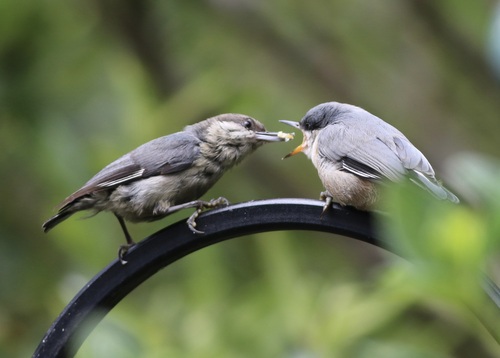
Pygmy Nuthatch (Sitta pygmaea) Pygmy Nuthatch
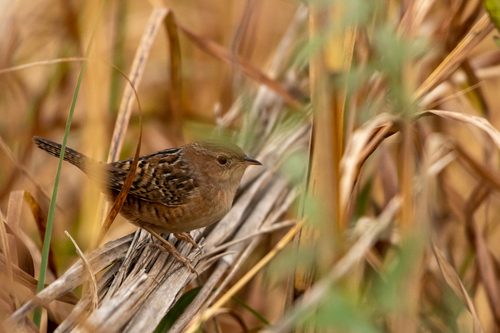
Sedge Wren (Cistothorus stellaris) Sedge Wren

Media

Loading…

In short

The Pygmy Nuthatch and Sedge Wren are easily distinguished by habitat and behavior. The Pygmy Nuthatch is a social, frenetic bird of pine forests, while the Sedge Wren is a more solitary species found in wet, grassy areas. Their vocalizations and plumage also offer clear differences.

Identification tips

  1. Habitat: Check the environment; Pygmy Nuthatches are in pine forests, Sedge Wrens in grassy wetlands. 2. Behavior: Look for social flocks in nuthatches versus solitary behavior in wrens. 3. Plumage: Note the bluish-gray and brown cap of the nuthatch versus the streaked brown of the wren. 4. Vocalization: Listen for the chattering of nuthatches and the buzzing notes of wrens.

Size

The Pygmy Nuthatch is slightly larger and stockier compared to the smaller, more delicate Sedge Wren.

Plumage

Pygmy Nuthatch has a bluish-gray back and a buffy underbelly with a distinctive brown cap. The Sedge Wren, in contrast, has a streaked brown back and a paler, streaked underbelly, with a less distinct cap.

Behaviour

Pygmy Nuthatches are highly social, often seen in flocks, moving energetically up and down trees. Sedge Wrens are more solitary and secretive, often skulking in dense vegetation.

Habitat

Pygmy Nuthatches are found in mature pine forests, especially those with ponderosa pines. Sedge Wrens inhabit wet meadows and marshes, preferring areas with dense, grassy vegetation.

Voice

Pygmy Nuthatches are known for their constant chattering. Sedge Wrens have a distinctive, rapid series of dry, buzzing notes.

Submit a better description

Use the same sections as the comparison. Your text is published immediately.

The Pygmy Nuthatch and Sedge Wren are easily distinguished by habitat and behavior. The Pygmy Nuthatch is a social, frenetic bird of pine forests, while the Sedge Wren is a more solitary species found in wet, grassy areas. Their vocalizations and plumage also offer clear differences.

  1. Habitat: Check the environment; Pygmy Nuthatches are in pine forests, Sedge Wrens in grassy wetlands. 2. Behavior: Look for social flocks in nuthatches versus solitary behavior in wrens. 3. Plumage: Note the bluish-gray and brown cap of the nuthatch versus the streaked brown of the wren. 4. Vocalization: Listen for the chattering of nuthatches and the buzzing notes of wrens.

The Pygmy Nuthatch is slightly larger and stockier compared to the smaller, more delicate Sedge Wren.

Pygmy Nuthatch has a bluish-gray back and a buffy underbelly with a distinctive brown cap. The Sedge Wren, in contrast, has a streaked brown back and a paler, streaked underbelly, with a less distinct cap.

Pygmy Nuthatches are highly social, often seen in flocks, moving energetically up and down trees. Sedge Wrens are more solitary and secretive, often skulking in dense vegetation.

Pygmy Nuthatches are found in mature pine forests, especially those with ponderosa pines. Sedge Wrens inhabit wet meadows and marshes, preferring areas with dense, grassy vegetation.

Pygmy Nuthatches are known for their constant chattering. Sedge Wrens have a distinctive, rapid series of dry, buzzing notes.

Discard your changes?

You have unsaved edits. If you leave now, those changes will be lost.

Pygmy Nuthatch · Sedge Wren · My Tricky Birds