Birdr

Red Knot vs Eastern Bluebird

Calidris canutus versus Sialia sialis

Play a quiz with Red Knot and Eastern Bluebird
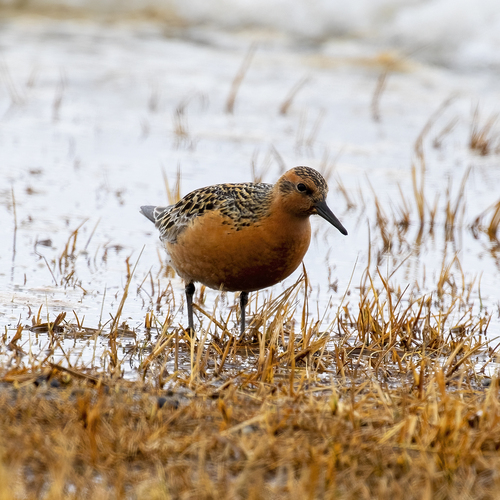
Red Knot (Calidris canutus) Red Knot
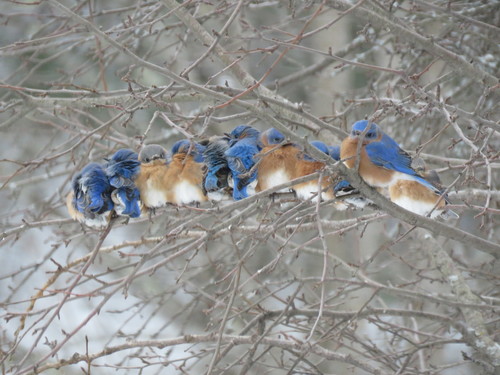
Eastern Bluebird (Sialia sialis) Eastern Bluebird

Media

Loading…

In short

The Red Knot and Eastern Bluebird are easily distinguished by their habitats and plumage. Red Knots are shorebirds with a gray and white plumage in winter, while Eastern Bluebirds are passerines with vibrant blue and orange plumage. Their behaviors and habitats are also distinct, with Red Knots frequenting coastal areas and Eastern Bluebirds inhabiting open, grassy areas with trees.

Identification tips

Check habitat first: Red Knots are typically seen along coastlines, while Eastern Bluebirds are found in open fields and wooded edges. Observe plumage: Red Knots in winter are gray and white, while Eastern Bluebirds are blue and orange. Behavioral cues: Look for Red Knots in flocks along shores, and Eastern Bluebirds perched on wires or low branches in open areas. Listen for calls: Eastern Bluebirds have a distinct, cheerful song, unlike the more subdued calls of Red Knots.

Size

Red Knots are medium-sized shorebirds, larger than the small, thrush-like Eastern Bluebirds.

Plumage

Red Knots in winter are dull gray dorsally and white ventrally, lacking distinct markings. Eastern Bluebirds have striking blue upperparts and orange underparts, with males being more vibrant than females.

Behaviour

Red Knots are migratory shorebirds, often seen in large flocks during migration. Eastern Bluebirds are often seen perched alone or in small groups, hunting insects from perches.

Habitat

Red Knots are found in marine coastal areas during non-breeding seasons. Eastern Bluebirds prefer open, grassy areas with scattered trees and are often found near human-modified habitats.

Voice

The vocalizations of these species differ significantly, with Red Knots having more subtle calls typical of shorebirds, while Eastern Bluebirds have a melodious song and various calls.

Submit a better description

Use the same sections as the comparison. Your text is published immediately.

The Red Knot and Eastern Bluebird are easily distinguished by their habitats and plumage. Red Knots are shorebirds with a gray and white plumage in winter, while Eastern Bluebirds are passerines with vibrant blue and orange plumage. Their behaviors and habitats are also distinct, with Red Knots frequenting coastal areas and Eastern Bluebirds inhabiting open, grassy areas with trees.

Check habitat first: Red Knots are typically seen along coastlines, while Eastern Bluebirds are found in open fields and wooded edges. Observe plumage: Red Knots in winter are gray and white, while Eastern Bluebirds are blue and orange. Behavioral cues: Look for Red Knots in flocks along shores, and Eastern Bluebirds perched on wires or low branches in open areas. Listen for calls: Eastern Bluebirds have a distinct, cheerful song, unlike the more subdued calls of Red Knots.

Red Knots are medium-sized shorebirds, larger than the small, thrush-like Eastern Bluebirds.

Red Knots in winter are dull gray dorsally and white ventrally, lacking distinct markings. Eastern Bluebirds have striking blue upperparts and orange underparts, with males being more vibrant than females.

Red Knots are migratory shorebirds, often seen in large flocks during migration. Eastern Bluebirds are often seen perched alone or in small groups, hunting insects from perches.

Red Knots are found in marine coastal areas during non-breeding seasons. Eastern Bluebirds prefer open, grassy areas with scattered trees and are often found near human-modified habitats.

The vocalizations of these species differ significantly, with Red Knots having more subtle calls typical of shorebirds, while Eastern Bluebirds have a melodious song and various calls.

Discard your changes?

You have unsaved edits. If you leave now, those changes will be lost.

Red Knot · Eastern Bluebird · My Tricky Birds