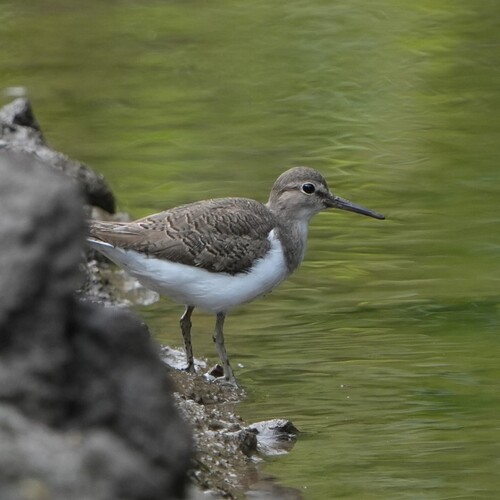
Red-necked Phalarope vs Common Sandpiper
Phalaropus lobatus versus Actitis hypoleucos
Play a quiz with Red-necked Phalarope and Common Sandpiper
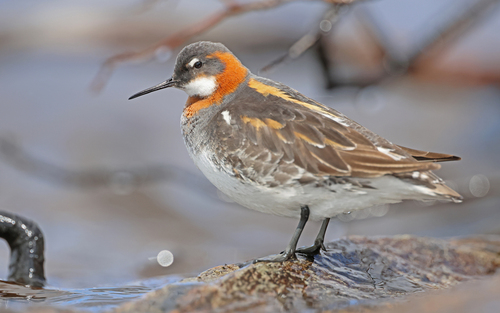
Red-necked Phalarope
Common Sandpiper
In short
The Red-necked Phalarope and Common Sandpiper can be distinguished by their habitat preferences and structural differences. Red-necked Phalaropes are often found in pelagic environments, while Common Sandpipers prefer freshwater and coastal habitats. The Red-necked Phalarope has a slender bill and body, whereas the Common Sandpiper has a more robust structure.
Identification tips
- Habitat: Check the habitat; Red-necked Phalaropes are more likely at sea, while Common Sandpipers are found near freshwater. 2. Bill and Body Structure: Look for the slender bill and body of the Red-necked Phalarope versus the more robust Common Sandpiper. 3. Plumage: Note the black eye-patch of the Red-necked Phalarope compared to the greenish-brown upperparts and white wingbar of the Common Sandpiper. 4. Behavior: Observe feeding behavior; spinning indicates a Red-necked Phalarope, while bobbing suggests a Common Sandpiper. 5. Vocalization: Listen for the Common Sandpiper's distinctive calls if audible.
Size
The Common Sandpiper is slightly larger, measuring 19–21 cm in length, compared to the more delicate Red-necked Phalarope.
Plumage
Red-necked Phalaropes in non-breeding plumage are largely white with gray mantles and black eye-patches. Common Sandpipers have greenish-brown upperparts with dark lateral breast patches and a white wingbar visible in flight.
Behaviour
Red-necked Phalaropes are known for spinning in circles to feed, while Common Sandpipers exhibit a characteristic bobbing motion. Both species are active foragers, but their feeding techniques differ significantly.
Habitat
Red-necked Phalaropes are pelagic, often found at sea or in hypersaline lakes during migration. Common Sandpipers prefer freshwater and coastal habitats, often seen along riverbanks and lakeshores.
Voice
Common Sandpipers have a distinctive song comprising rapid, repeated notes and a shrill 'swee-wee-wee' call. Red-necked Phalaropes are generally quieter, with less distinctive vocalizations.