Birdr

Schrenck's Bittern vs Dwarf Bittern

Botaurus eurhythmus versus Botaurus sturmii

Play a quiz with Schrenck's Bittern and Dwarf Bittern
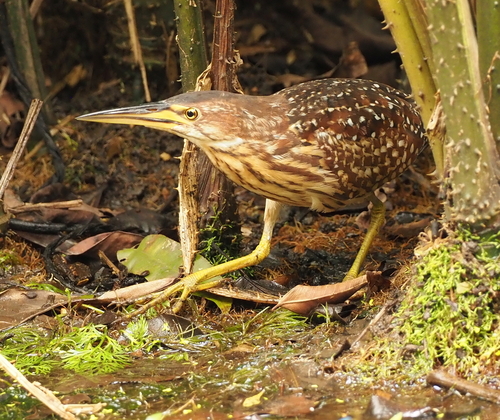
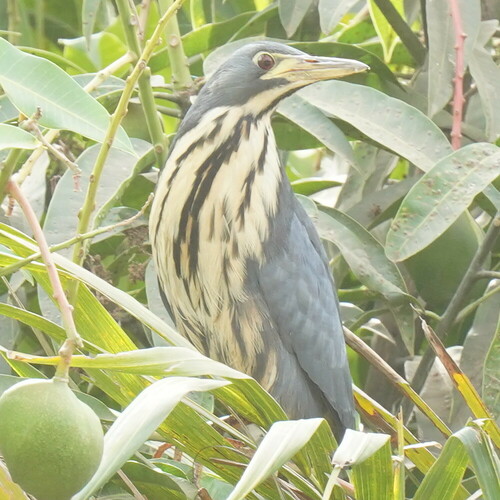
Schrenck's Bittern (Botaurus eurhythmus) Schrenck's Bittern
Dwarf Bittern (Botaurus sturmii) Dwarf Bittern

Media

Loading…

In short

Schrenck's Bittern and Dwarf Bittern are both small bitterns, but Schrenck's is generally found in East Asia, while Dwarf Bittern is native to sub-Saharan Africa. Schrenck's Bittern males have a distinctive black cap and back, whereas Dwarf Bitterns are more uniformly dark with a bluish tinge. Look for habitat differences: Schrenck's prefers reed beds, while Dwarf Bitterns are often in more open, dry areas.

Identification tips

  1. Location: Schrenck's in East Asia; Dwarf in sub-Saharan Africa. 2. Male plumage: Schrenck's has a black cap and back; Dwarf is uniformly dark. 3. Habitat: Schrenck's in dense reeds; Dwarf in open, dry areas. 4. Behavior: Both are skulking, but habitat context is key.

Size

Both species are small bitterns, but Schrenck's Bittern is slightly larger overall.

Plumage

Male Schrenck's Bitterns have a black cap and back with buffy underparts, while females are more rufous. Dwarf Bitterns are more uniformly dark with a bluish tinge, lacking the stark black cap of Schrenck's.

Behaviour

Both species exhibit typical bittern behavior, often skulking in dense vegetation. Schrenck's Bittern is more likely to be seen in dense reed beds, while Dwarf Bittern may be found in more open areas.

Habitat

Schrenck's Bittern is typically found in dense reed beds and marshes in East Asia. In contrast, Dwarf Bittern inhabits more open, dry areas in sub-Saharan Africa, including savannas and wetlands.

Voice

Vocalizations are not well-documented for either species, but Schrenck's Bittern is known for a low, booming call, while Dwarf Bittern's calls are less described.

Submit a better description

Use the same sections as the comparison. Your text is published immediately.

Schrenck's Bittern and Dwarf Bittern are both small bitterns, but Schrenck's is generally found in East Asia, while Dwarf Bittern is native to sub-Saharan Africa. Schrenck's Bittern males have a distinctive black cap and back, whereas Dwarf Bitterns are more uniformly dark with a bluish tinge. Look for habitat differences: Schrenck's prefers reed beds, while Dwarf Bitterns are often in more open, dry areas.

  1. Location: Schrenck's in East Asia; Dwarf in sub-Saharan Africa. 2. Male plumage: Schrenck's has a black cap and back; Dwarf is uniformly dark. 3. Habitat: Schrenck's in dense reeds; Dwarf in open, dry areas. 4. Behavior: Both are skulking, but habitat context is key.

Both species are small bitterns, but Schrenck's Bittern is slightly larger overall.

Male Schrenck's Bitterns have a black cap and back with buffy underparts, while females are more rufous. Dwarf Bitterns are more uniformly dark with a bluish tinge, lacking the stark black cap of Schrenck's.

Both species exhibit typical bittern behavior, often skulking in dense vegetation. Schrenck's Bittern is more likely to be seen in dense reed beds, while Dwarf Bittern may be found in more open areas.

Schrenck's Bittern is typically found in dense reed beds and marshes in East Asia. In contrast, Dwarf Bittern inhabits more open, dry areas in sub-Saharan Africa, including savannas and wetlands.

Vocalizations are not well-documented for either species, but Schrenck's Bittern is known for a low, booming call, while Dwarf Bittern's calls are less described.

Discard your changes?

You have unsaved edits. If you leave now, those changes will be lost.

Schrenck's Bittern · Dwarf Bittern · My Tricky Birds